Last updated October 8, 2026








Free written scope consultation - allowances, timeline, and change-order rules on paper before a single trade is scheduled
General Contractor Troubleshooting: Common Problems and How to Fix Them
Most contractor problems don’t start with a hammer. They start with a sentence that doesn’t quite sit right: a vague answer about the permit, a subcontractor you’ve never met walking through your door, a line item that shifted between the estimate and the invoice. The single most common complaint filed with California’s Contractors State License Board isn’t abandoned projects or shoddy work. It’s contract disputes, which means the paperwork problem was there from the very first conversation. This guide walks through the quiet problems that sink remodeling projects in Los Angeles and what to do about each one, step by step. For more guides & resources, visit our blog.
Quick Answer
Most general contractor problems fall into five categories: contract and pricing disputes, permit delays, subcontractor surprises, workmanship concerns, and schedule slippage. The fix for each depends on diagnosis first. Document everything with timestamped photos, get every change in writing, verify every person who walks onto your property, and know the difference between a CSLB complaint, a bond claim, and small claims court.
Styles & brands we work with







Table of Contents
- When the Contract and the Invoice Don’t Match
- Permit Delays: Is It the City or the Contractor?
- A Stranger Just Showed Up to Work on Your House
- Workmanship Problems: Building a Record Before You Need One
- Schedule Slippage: Diagnosing the Real Cause
- CSLB Complaints, Bond Claims, and Small Claims: Knowing Which Path to Take
- Common Mistakes to Avoid
- When to Call a Professional
- Frequently Asked Questions
When the Contract and the Invoice Don’t Match
The contract you signed should be the same document that produces your final invoice. When it doesn’t, the problem is rarely the invoice itself. The problem is that the change happened without a paper trail. Under California Business and Professions Code, any change to the scope, price, or schedule of a home improvement contract must be documented in a written change order signed by both parties. That’s not a courtesy. It’s the legal structure that determines whether a dispute is resolvable at all.
Here’s what to do when you see a line item that wasn’t in the written contract:
- Pull the original signed contract and put it next to the invoice. Circle anything that doesn’t match.
- Ask the contractor in writing (email is fine) to explain each circled line item. Specifically ask: “Was this work covered in the original contract, or is this a change order I should have approved before the work happened?”
- Request the written change order for anything that was added. If none exists, the contractor may not be entitled to collect for that work under California law.
- Do not pay the disputed portion while you work through the discrepancy. Pay the undisputed amount and document that you have done so.
- Get any verbal agreements converted to writing before the next payment is due.
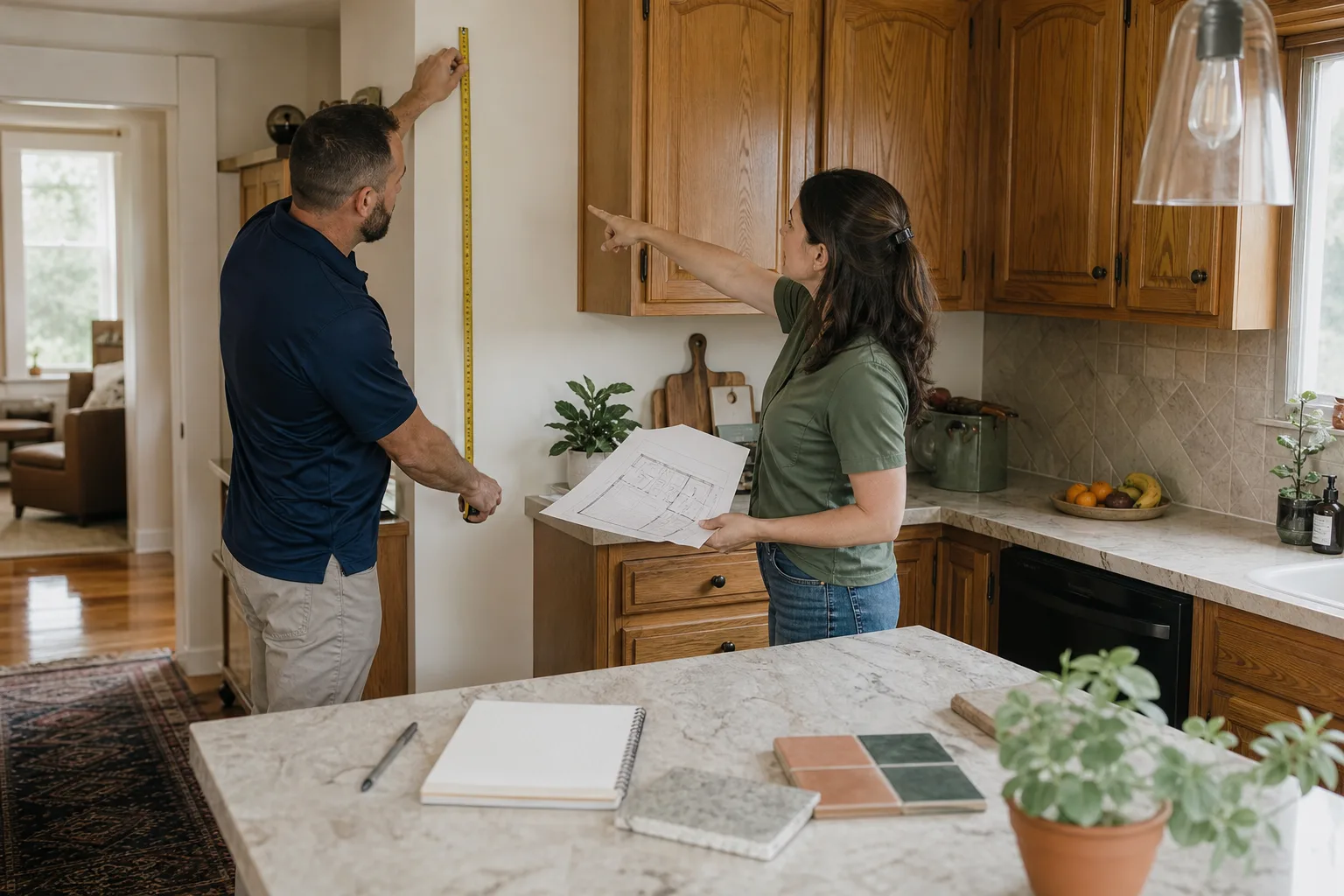
We’ve seen this situation enough in Los Angeles to know that most honest contractors will fix a paperwork gap quickly once it’s flagged clearly. The contractors who push back, get defensive, or refuse to itemize are telling you something important. A written price before any work starts isn’t a preference. It’s the only way to know what the invoice should look like at the end.
Permit Delays: Is It the City or the Contractor?
Permit delays in Los Angeles are real. The Los Angeles Department of Building and Safety processes thousands of permits a year, and depending on the scope of work, plan check can take anywhere from a few days for a simple bathroom remodel to several months for a major addition that triggers zoning review. A contractor who blames the city may be telling the truth. A contractor who uses the city as a blanket excuse may not be. Here’s how to tell the difference.
The single most useful question you can ask is: “What’s the permit number, and what’s the current status on the LADBS portal?” Every permit filed with the city gets a number and a status. If your contractor can’t produce that number, the permit hasn’t been filed. That’s a red flag, not a city delay. If the number exists but the status shows “Plan Check” for months, ask which city reviewer has the file and what correction comments have come back. Contractors who are managing the process well can tell you exactly where a permit sits in the queue.
City-side delays are not the contractor’s fault. A responsible contractor responds to them by communicating status updates without being asked and by re-sequencing work that doesn’t require a permit, like demolition or material procurement, so the project keeps moving where it legally can. A contractor who goes silent while “waiting on the city” is having a communication problem, not just a permit problem.
In Los Angeles specifically, some neighborhoods add extra layers. Homes in Historic Preservation Overlay Zones (like parts of Hancock Park, Angelino Heights, or West Adams) require additional review, and hillside properties above certain grades trigger geological and structural reviews that flat-lot homes in the Valley don’t face. A contractor who has done work in your specific neighborhood should know this before the permit is filed, not after.
A Stranger Just Showed Up to Work on Your House
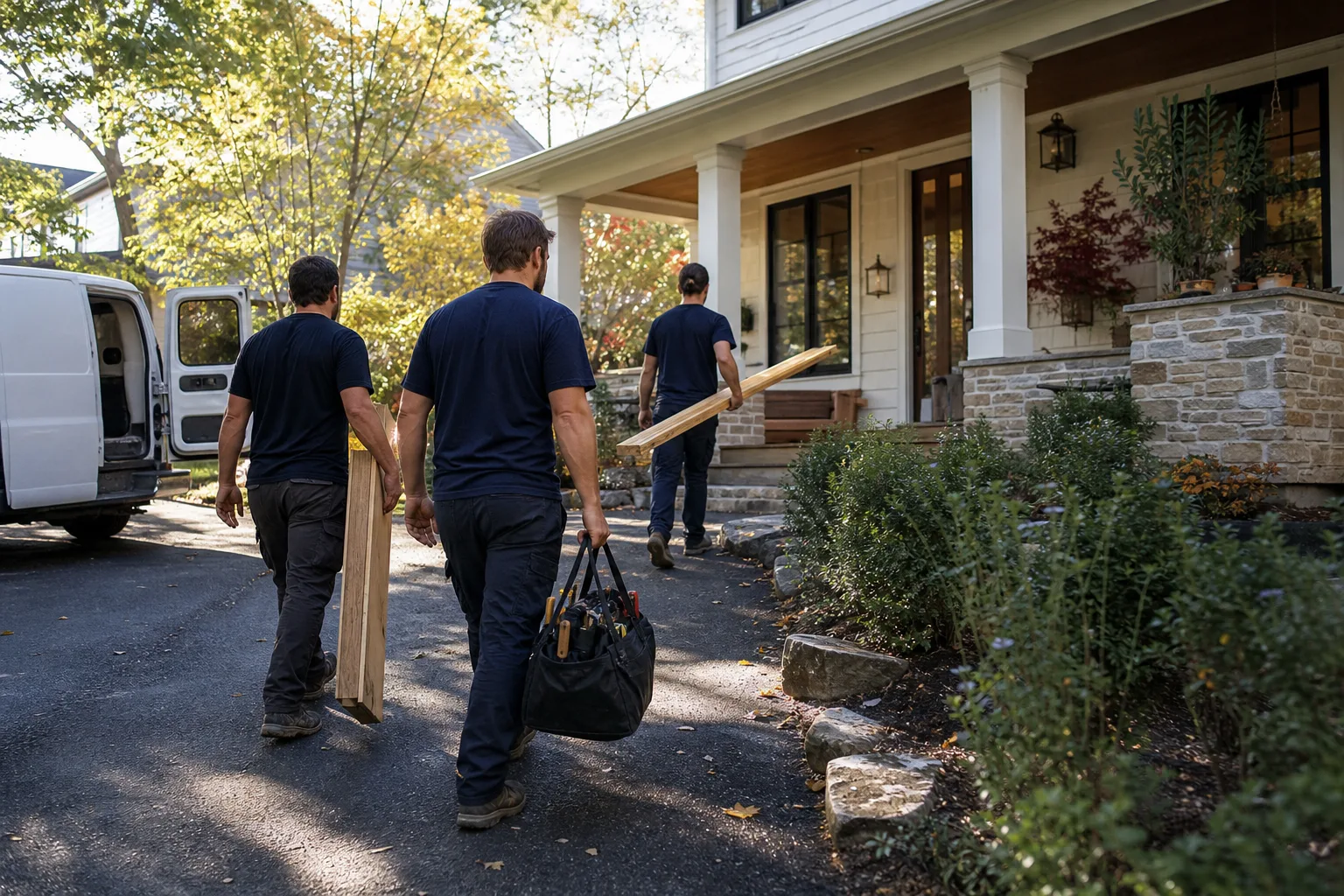
You scheduled a kitchen remodel. The crew that arrives includes someone you have never met, who has not been introduced, and who is about to work inside your home. In Los Angeles, where remodels routinely involve trade specialists for plumbing, electrical, tile, and cabinetry, subcontractors are normal. A stranger showing up unannounced is not.
Here’s the step-by-step for handling this in the moment:
- Ask before they enter. It’s your home. You have the right to ask any person on your property to identify themselves before they come inside.
- Ask for their name, their company name, and their California contractor license number. Any legitimate subcontractor will have this information ready. You can verify the license in real time on the CSLB website using the license lookup tool. Check that the license is active, that it matches the company name, and that workers’ compensation coverage is listed.
- Ask if they are listed on the general contractor’s insurance policy. Your GC should be able to confirm this in writing. If the subcontractor is not insured under the GC’s policy, and they damage your home or get injured on your property, that liability can land on you.
- Ask about the scope of their work. Who hired them, what are they there to do, and who is supervising them that day?
In our experience, families with children and pets feel this most acutely. A crew member walking through the front door without an introduction is not a paperwork issue, it’s a household safety issue. The contractors who get this right introduce every person who will enter the home before the project starts, and they make sure everyone on site is background-checked and uniformed so there’s never a question about who belongs inside the house.
One Los Angeles-specific note: the city requires that all construction work be performed by licensed contractors or by workers under the direct supervision of a licensed contractor. If a person on your property cannot tell you which licensed contractor they work for, that’s not a minor gap. That’s a sign the project may not be structured the way the law requires.
Workmanship Problems: Building a Record Before You Need One
Workmanship disputes are the hardest kind to resolve because they often come down to memory. The homeowner remembers what the tile looked like when it was installed. The contractor remembers what the tile looked like when they left. Without a record, that’s a standoff. With a record, it’s a conversation about facts.
Here’s how to build the record as the work happens, so you never have to rely on memory:
- Take timestamped photos at the end of every workday. Not just wide shots. Close-ups of seams, joints, edges, alignments, and any areas where you have questions.
- Write down questions as they occur to you, with dates. “Tuesday: asked about the grout line near the window. Told it would be fixed Thursday.” Put it in an email to the contractor so there’s a timestamp on both ends.
- Flag concerns the day you notice them, not at the end of the project. A tile issue caught during installation is a one-day fix. A tile issue caught after the project is complete is a bigger conversation.
- Keep every product label, every box, every material receipt. If a workmanship dispute turns into a product failure question, the brand name and lot number on the box is the difference between a warranty claim that happens and one that stalls.
In Los Angeles, where custom tile work, cabinetry, and exterior finishes are often specified down to the brand level, this documentation also protects the material warranty. A cabinet installation problem with KraftMaid cabinets, for example, is handled very differently when you can show exactly which cabinet line was specified and when it was installed. The manufacturer warranty travels with the finished project, but only when you can show what was actually installed.
Schedule Slippage: Diagnosing the Real Cause
A delayed remodel is frustrating, but the response that’s appropriate depends entirely on why the delay is happening. A contractor who’s behind because a Cambria countertop slab is on a truck from Minnesota faces a different situation than a contractor who’s behind because they overbooked three other jobs.
Here’s how to diagnose the source of a schedule delay:
- Permit queue: The city hasn’t approved the work. You can verify this yourself through the LADBS portal. Ask for the permit number and check the status.
- Material lead time: Custom cabinets, specific countertop slabs, and specialty fixtures have real manufacturing and shipping timelines. Ask which specific material is behind and what the supplier’s current lead time is. A contractor who can name the supplier, the order date, and the expected ship date is managing the delay.
- Subcontractor availability: The tile setter or electrician is booked. This is a schedule management issue, but it’s a common and often recoverable one. Ask when the sub is now scheduled and what work can happen in the meantime.
- Contractor mismanagement: The schedule was never realistic, or the GC took on too many projects. This is the hardest to fix because it’s structural, not situational. The warning sign is vagueness: no specific cause given, no revised date committed to in writing, no plan for what happens while you wait.
In Los Angeles, material lead times for custom cabinets and stone countertops have run long for years, and they vary by supplier and material. A contractor who gives you a schedule without accounting for lead times at the start is setting up a delay from day one. A contractor who tracks lead times and communicates them as they shift is doing the job you hired them to do.
CSLB Complaints, Bond Claims, and Small Claims: Knowing Which Path to Take
When a contractor problem can’t be resolved directly, California gives you three main paths. They are different tools for different situations, and using the wrong one wastes months.
CSLB complaint. File this with the Contractors State License Board when the contractor has violated the law: unlicensed work, work that doesn’t meet code, abandonment of a project, or failure to honor a written contract. The CSLB can investigate, issue citations, and in serious cases suspend or revoke a license. This process is free and can be filed online. It doesn’t directly get you your money back, but it creates a record and can pressure a contractor to resolve the dispute. Use this for legal violations, not simple disagreements about taste.
Bond claim. Every licensed contractor in California must carry a contractor’s license bond, currently set at $25,000. If you have a judgment against a contractor or a CSLB finding in your favor, you can file a claim against the bond to recover up to the bond amount. This is a slower process, but it’s a real path to getting paid when a contractor won’t pay a judgment. Note that the bond only covers up to the bond’s value, which on large remodels may be a fraction of your loss.
Small claims court. In California, small claims handles disputes up to $12,500 for individuals (and up to $6,250 for businesses). This is the right path for straightforward contract disputes where you can document the loss. No attorneys are required, filing fees are modest, and cases are heard relatively quickly. The key is documentation: your written contract, your written change orders, your timestamped photos, and your correspondence log.
The realistic threshold by which path to take: if the dispute is about communication or minor workmanship issues, start with direct conversation, then written notice. If it’s about a contractor who has walked off the job or refuses to honor the contract, file the CSLB complaint and explore the bond claim in parallel. If your loss is under the small claims limit and well-documented, small claims is often the fastest route to a resolution.
Common Mistakes to Avoid
- Paying in full before the work is complete. Never release final payment until the work is finished, inspected, and you’ve walked the project with the contractor. In Los Angeles, where remodels often involve high-value finishes and custom work, the final walkthrough is where incomplete or incorrect work gets caught.
- Accepting verbal changes without a written change order. A change order in writing is not a formality. It’s the document that protects you when the invoice arrives. Verbal agreements over a cup of coffee don’t hold up in any dispute process.
- Ignoring a contractor who won’t give you a written estimate. Any contractor who will not put the price in writing before starting work is telling you something about how the rest of the project will go. In California, a written contract is legally required for home improvement work over $500.
- Not checking the contractor’s license and insurance yourself. Don’t rely on what the contractor tells you. The CSLB license lookup is free and takes two minutes. Check that the license is active and that workers’ compensation coverage is in place.
- Letting a permit problem slide. Work done without a required permit in Los Angeles can come back years later when you try to sell the house. Unpermitted work can block a sale or force you to open walls for inspection. If a contractor suggests skipping the permit to save time or money, that’s the time to find a different contractor.
- Skipping documentation because the work looks fine. The time to build a photographic record is while the work is happening, not after a problem appears. Timestamped photos take minutes and resolve disputes that would otherwise take months.
When to Call a Professional
Some problems are better caught before they start. If you’re reading this before you’ve hired a contractor, the single best protection is to choose a contractor whose process removes the quiet problems from the beginning: a written price before any work starts, subcontractors who are introduced before they arrive, permits pulled and visible, and documentation built into the job. Elmstead Remodeling offers free estimates in Los Angeles, with a written price on every project before any work begins. Call (949) 850-9896 to schedule yours.
If you’re mid-project with a contractor you no longer trust, a professional consultation can clarify your options. An experienced contractor can look at the work in progress, review your contract and change orders, and tell you honestly whether the problems are fixable or structural. That kind of clarity is worth the time before you escalate.
Frequently Asked Questions
The most common problems are contract and pricing disputes, permit delays, unexpected subcontractors, workmanship issues, and schedule slippage. Most of these trace back to gaps in documentation: changes that were never put in writing, permits that were never given a number to track, and crews that were never introduced before they arrived. Contractors with clear processes for change orders, permit tracking, and crew introductions avoid most of these problems before they start.
You file a complaint with the Contractors State License Board online through their website. The complaint must describe the specific violation: unlicensed work, code violations, project abandonment, or failure to honor a written contract. The CSLB investigates and can issue citations or discipline against the license. Filing is free. Call (949) 850-9896 if you need guidance on whether your situation is a CSLB matter or something resolved more directly.
General contracting in Los Angeles typically runs from $75 to $150 per hour for smaller scoped work, while kitchen remodels range from $45,000 to $120,000 or more, bathroom remodels from $25,000 to $60,000, and whole-home remodels from $150,000 upward depending on square footage and finish level. Every project should come with a written price before any work starts, which is how you avoid the invoice surprises that cause most disputes. See our Home Remodeling Maintenance Schedule: What to Do and When for keeping your investment in top shape.
No. Los Angeles requires permits for most remodeling work beyond cosmetic changes like painting or flooring. Structural changes, electrical work, plumbing changes, and any work that alters walls, windows, or rooflines require permits through LADBS. Work done without a required permit can create title problems when you sell the home and can force you to open finished walls for inspection. A contractor who suggests skipping the permit is asking you to take on risk they should carry themselves.
Pull your written contract and compare every line item. For anything not in the original contract, ask for the written change order that authorized it. Under California law, changes without a written change order signed by you may not be collectible. Pay the undisputed amount and work through the disputed portion in writing. If the contractor refuses to itemize or produce change orders, that’s a signal to stop work and seek help.
A typical kitchen remodel in Los Angeles runs 8 to 14 weeks from start to finish, depending on whether the layout changes, whether structural work is involved, and how long the cabinet and countertop lead times run. Custom cabinets from brands like KraftMaid or Wellborn and stone slabs from Cambria or Silestone have manufacturing lead times that add weeks. A realistic schedule should account for those lead times up front, and the contractor should update the schedule as supplier dates shift.
The Bottom Line

Contractor problems rarely appear suddenly. They accumulate through missed paperwork, missing introductions, and unexplained delays. The fix is the same in almost every case: take notes, take photos, get everything in writing, and verify every person and every permit yourself. You don’t need to be a contractor to catch the quiet problems. You need a process and the discipline to follow it. In Los Angeles, where remodels represent real family investments, the contractors who succeed are the ones whose process removes the guesswork: a written price before any work starts, named brands whose warranties you can verify, and a crew that treats your home the way you’d treat it yourself. The Elmstead Remodeling home page has more on how we structure that process, or read about our General Contractor in Los Angeles services if you’re planning a project. For the specifics of Bathroom Remodeling in Los Angeles or Kitchen Remodeling in Los Angeles, those pages walk through what’s included, what it costs, and how the written price works.
Written by Graham Stein, Owner at Elmstead Remodeling, serving Los Angeles since 2005.
See the difference
 Before
 After
After Before
 After
After Before
 After
After