
5 Mistakes to Avoid With Bathroom Remodeling
The five mistakes that cost Los Angeles homeowners the most on bathroom remodels are skipping the permit on a shower pan or tub replacement, setting tile before the waterproof membrane is inspected, undersizing the ventilation fan for the duct run, failing to specify grout type in the contract, and skipping a daily dust-containment plan in a home with kids. Each one causes real damage: some financial, some structural, some you won’t see until mold appears 18 months later. If you’d rather skip the research and talk through your specific bathroom, call (949) 850-9896 and Graham or someone from the team will walk you through it.
The most common Los Angeles bathroom remodel complaint filed with CSLB isn’t a leaking shower. It’s unpermitted work that blocked a home sale two years after the project was finished. We hear a version of this story at least once a month: a family moves in, loves the bathroom, then finds out during escrow that the shower pan was replaced without an inspection record, and now the buyer’s lender won’t close until the wall is opened back up. The mistakes you want to avoid aren’t the obvious ones. They’re the ones that surface after the contractor has been paid, the tile looks great, and nobody has any reason to suspect a problem.
Mistake 1: Skipping the Permit on a Shower Pan or Tub Replacement
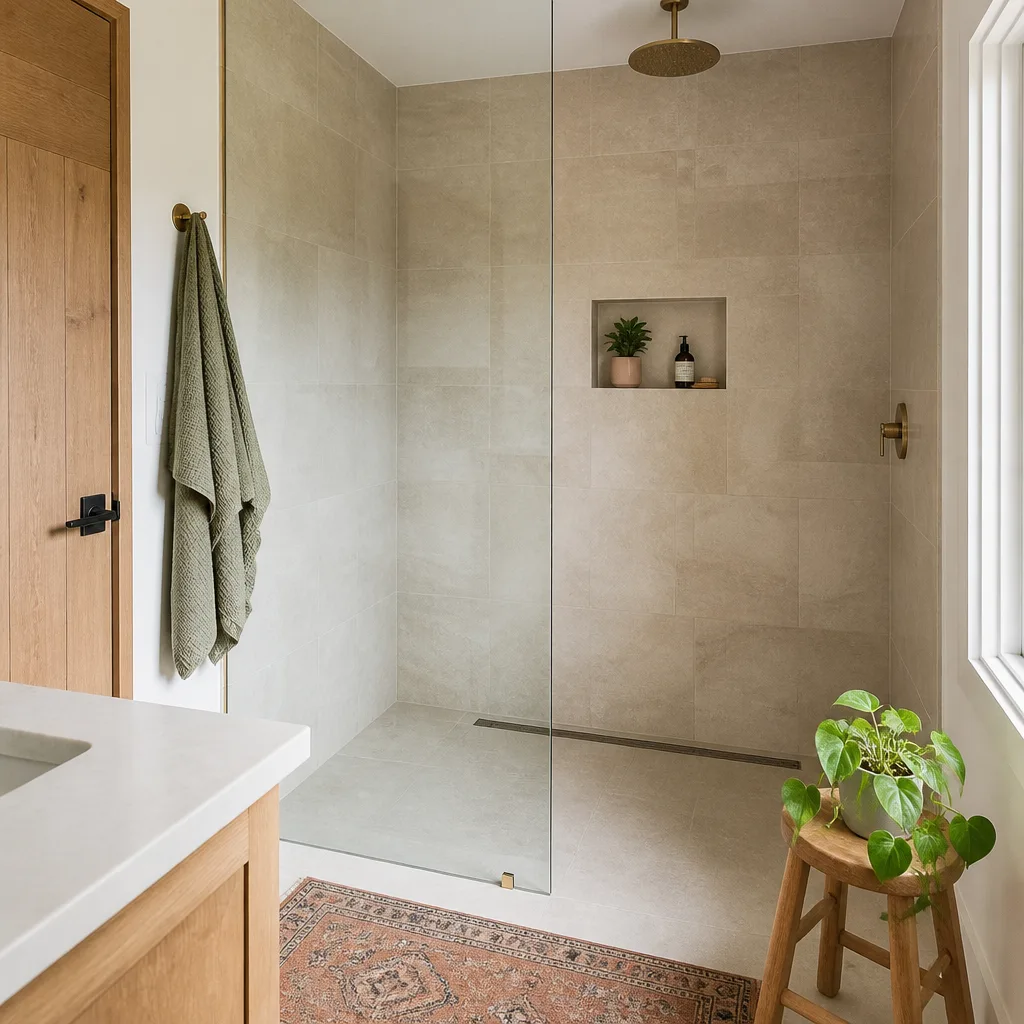
In Los Angeles, a bathroom remodel that touches the shower pan, the tub drain, or any plumbing behind the wall requires a permit from LADBS. It is not optional, and it is not a technicality. When a contractor tells you a small remodel doesn’t need one, what they’re really saying is they’d rather not have the work inspected.
The inspection record is the part nobody talks about until the home sale falls through. A permitted shower pan means an inspector verified the liner was installed correctly before the tile went in, before the wall was closed, before anyone had a chance to hide a shortcut. That record travels with the house. When you sell, the buyer’s lender will ask for it. If it’s not there, the sale stalls while someone rips open the shower to prove the pan holds water. We pulled the permits on a bathroom in Los Angeles’s Sherman Oaks neighborhood for exactly this reason: the homeowners had bought the house with an unpermitted shower from the previous owner, and they were paying for the previous contractor’s shortcut five years later.
Every bathroom remodeling project in Los Angeles we take on includes permit drawings, the LADBS filing, and the inspections, with the cost written into the price before any work starts. You won’t have to ask whether the pan was inspected. You’ll have the record.
Mistake 2: Setting Tile Before the Waterproof Membrane Is Independently Inspected
The sequence matters more than most homeowners realize. A shower is built in layers: framing, shower pan liner, waterproof membrane, tile. Each layer has one job, and each layer gets permanently buried by the next. If the contractor sets tile before the membrane has been inspected, you’re trusting that the waterproofing was done right, and you won’t find out otherwise until water has already found its way through.
Here’s the specific question to ask your contractor before any tile goes up: “Will the waterproof membrane be inspected before you set tile?” A legitimate contractor will tell you yes, and they’ll show you the inspection sign-off. One who hedges, who says it’s “fine,” who says inspections slow things down, is telling you to bet your walls on their word. In a Los Angeles shower, with hard water and steam cycles, a missed seam in the membrane means mold inside the wall cavity within a year. It means the tile looks perfect, and behind it, the studs are quietly rotting.
We use Schluter’s waterproofing system on our bathroom remodels, and we schedule the inspection before the first tile is ever cut. It adds a day to the timeline. Ask the question. The answer will tell you everything you need to know about the contractor.
Mistake 3: Undersizing the Ventilation Fan for the Duct Run

Most bathroom remodeling mistakes are invisible, but this one has a smell. The error is choosing a ventilation fan by its CFM rating on the box without accounting for how far and how many turns the duct runs before it reaches the outside. A fan rated at 100 CFM moves 100 cubic feet of air per minute in a lab with no duct attached. Run that same fan through 15 feet of hose with two right-angle turns, and it may be moving 50 CFM. In a Los Angeles bathroom with coastal humidity, that’s not enough. Mold shows up within 18 months: on the ceiling above the shower, in the grout lines, behind the medicine cabinet.
The calculation is straightforward, but most contractors don’t do it. You need to know the duct run’s total length, including every elbow, because each turn adds resistance. Then size the fan accordingly. A longer run means a higher-rated fan or a rigid duct instead of that slinky foil hose. You also want the fan wired to a timer or a humidity sensor so it keeps pulling air for 20 minutes after the shower is done, not just while someone is standing under the water.
Where we work across Los Angeles, from the marine layer in Santa Monica to the dry heat of the Valley, the humidity and the duct run both change the right answer. This is exactly the kind of decision that should be in the written price and the plan before any drywall goes up. Families with kids take long showers. That moisture is going somewhere. Make sure it’s outside.
Mistake 4: Not Specifying Grout Type in the Contract
Grout is not a detail. It is the difference between a shower that drains and a shower that slowly absorbs water through every seam. The mistake is signing a contract that says “shower tile installation” without specifying sanded, unsanded, or epoxy grout. The contractor will choose whatever is cheapest or whatever they have on hand, and you’ll live with the result for a decade.
Here’s the difference that matters. Sanded grout has sand in the mix, which gives it strength and makes it right for joints wider than 1/8 inch, like floor tile. It is not what you want on a shower floor, because the sand creates tiny voids that hold water. Unsanded grout is smoother, made for joints narrower than 1/8 inch, and it’s the standard choice for wall tile. Epoxy grout doesn’t absorb water at all, resists staining, and is the choice for shower floors and any wet zone where standing water will sit. It costs more and takes longer to work with, which is exactly why a contractor who hasn’t been asked will skip it.
The conversation before work starts should sound like this: “What grout are you using on the shower floor, the shower walls, and the bathroom floor?” If the answers are three different products, you’re in good hands. If the answer is “whatever works,” you’re in trouble. We specify grout type in every bathroom remodeling contract we write in Los Angeles, down to the brand and the color, and the tile work doesn’t start until the homeowner has seen and approved that line item.
Mistake 5: No Daily Dust-Containment Protocol in a Home With Children

Remodeling kicks up dust. In a Los Angeles home with kids, or one built before 1980 with lead paint and asbestos in the mix, that dust is not just inconvenient. It’s a health issue. The mistake is hiring a contractor who treats dust as an unavoidable side effect instead of a controllable one. You’ll know within the first two days. If there’s a fine film on the bookshelf in the living room, the dust containment plan is failing.
Every remodeling job should include a dust-containment protocol before demo starts. For us, that means zippered plastic barriers sealing the bathroom doorway, a HEPA air scrubber running in the work zone, and shoe covers on every technician every time they walk through the house. The Cedarwell Care Promise covers all of it: drop cloths on the floors, quiet tools during nap and school hours where it’s possible, pet-safe product choices where there is a choice. And before the crew leaves each day, the area is cleaned and photographed. That photo is proof the house was left right, not a promise that it will be.
Ask your contractor one question before they swing a hammer: “Show me your dust-containment plan.” If they don’t have one, the dust will end up in your kids’ bedroom. If they do, they’ll be able to name the barrier system, the air scrubber, and the clean-up schedule without pausing. We pulled a vanity out of a Pacific Palisades bathroom last year where the previous contractor had left dust inside the HVAC returns, and the family had been breathing it for six months before anyone checked. That doesn’t happen when the protocol is written into the job.
When to Call a Pro
If you catch any of these five mistakes happening on your current remodel, that’s the moment to bring in someone else before the work gets buried behind tile and drywall. Specifically: if the contractor can’t produce a permit for the shower pan or tub drain, if they plan to set tile before a waterproofing inspection, if they won’t specify grout type in writing, or if there’s dust migrating into your living spaces, stop the job and call someone who will answer those questions directly. The cost of fixing a mistake at framing is a fraction of the cost of fixing it after the walls are closed.
Related services in Los Angeles: if the bathroom remodel is part of a larger renovation, our kitchen remodeling in Los Angeles and general contractor services in Los Angeles cover the full scope under the same written-price and clean-up standards.
The Bottom Line
The bathroom remodel mistakes that follow a family for years aren’t the color of the tile or the shape of the vanity. They’re the permit that was never pulled, the waterproofing that was never inspected, the fan that couldn’t move the air, the grout that wasn’t specified, and the dust that ended up in the HVAC. All five are preventable if you ask the right questions before the work starts, and all five are in the written price on every Elmstead Remodeling project. If you’re planning a bathroom remodel in Los Angeles, call (949) 850-9896 for a free estimate, and we’ll walk you through the permit path, the waterproofing sequence, the fan sizing, the grout spec, and the dust plan, line by line.
Frequently Asked Questions
Yes, if the work touches the shower pan, tub drain, plumbing behind the wall, or any structural changes. Los Angeles requires a permit for these items, and the inspection record protects your resale value. A contractor who says otherwise is asking you to take a risk that won’t show up until you sell. Call (949) 850-9896 and we’ll tell you exactly what your project needs.
A typical bathroom remodel with a shower pan replacement, tile work, and fixture installation runs two to six weeks depending on scope and inspection scheduling. LADBS inspections are scheduled separately, which we factor into the timeline before work starts. We’ll give you a written schedule with the written price.
Yes, if the contractor runs a proper dust-containment protocol. Zippered barriers, HEPA air scrubbers, and daily clean-up keep the rest of the house livable while demo and tile work happen in the bathroom. Our technicians wear shoe covers on every visit, and we photograph the clean-up before the crew leaves each day.
At minimum: the permit number and inspection schedule, the waterproofing sequence, the grout type for each surface, the ventilation fan CFM and duct plan, the dust-containment protocol, and a written price that won’t grow once the crew arrives. We put all of it in writing before any work starts, every time. Call (949) 850-9896 for a free estimate on your Los Angeles bathroom.
Written by the team at Elmstead Remodeling.
Need Construction Help?
Call Elmstead Remodeling - licensed & insured, here with fast after-hours help in Los Angeles.
(949) 850-9896