
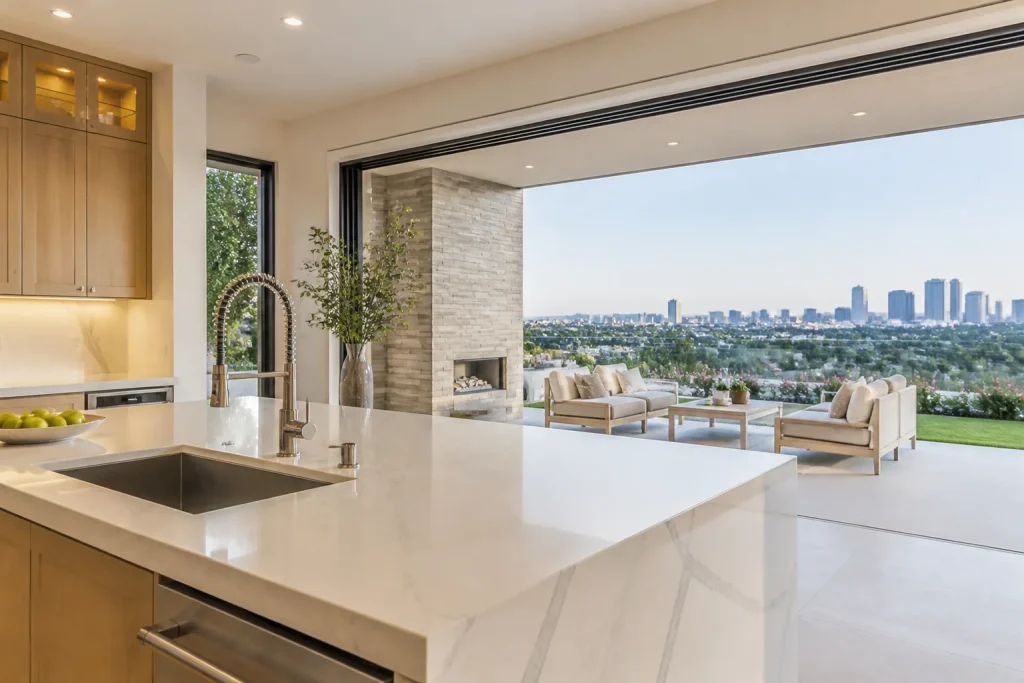
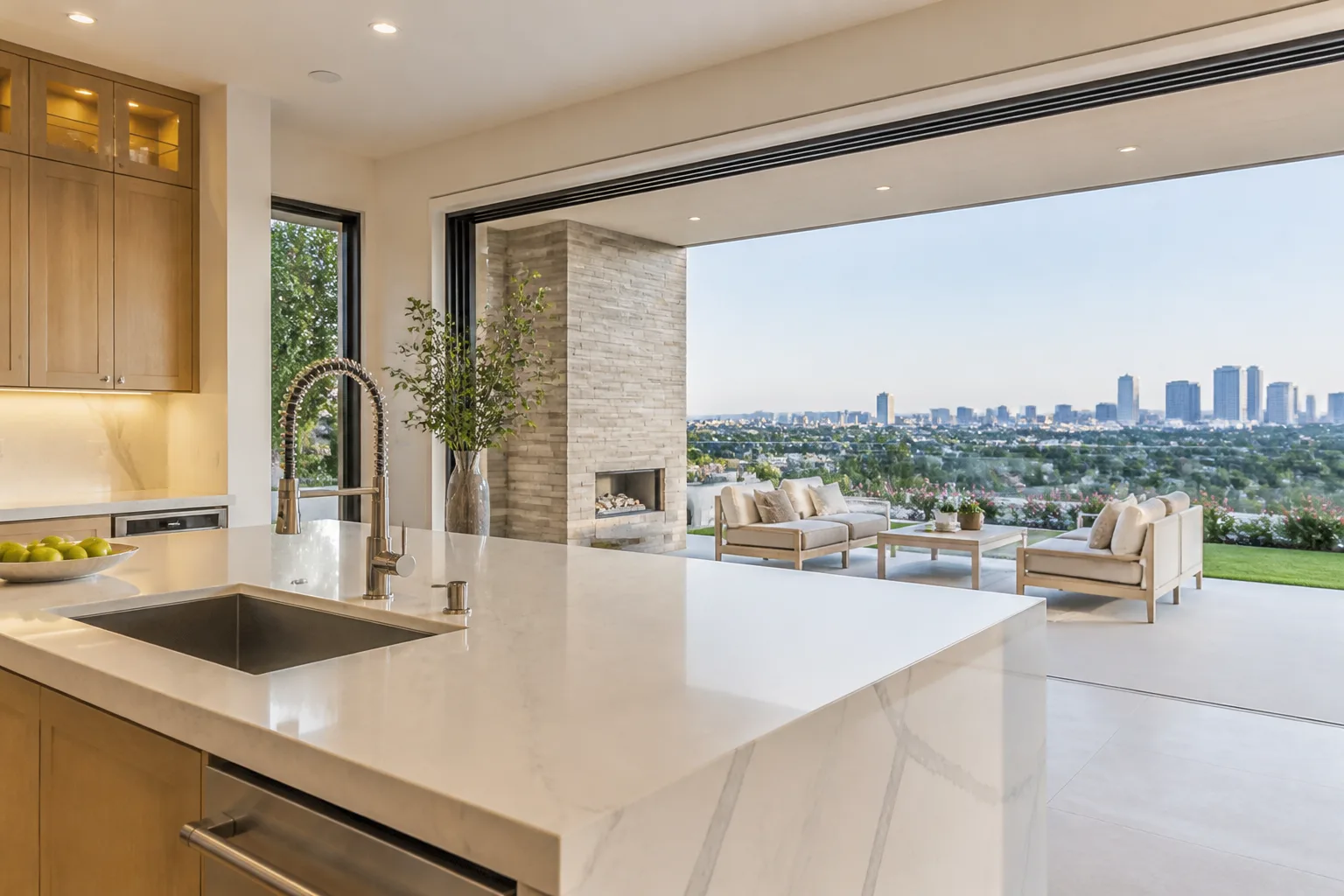
Silestone General Contractor in Los Angeles: A Homeowner’s Guide
Silestone countertops installed by a qualified General Contractor in Los Angeles typically run $75 to $145 per square foot for material and fabrication, with most Los Angeles kitchens landing between $4,200 and $7,800 total. The installation quality matters as much as the slab you choose, because Silestone’s warranty hinges on specific adhesive, substrate, and overhang requirements that only a contractor familiar with the brand will follow. If you’d rather not sort through the details yourself, call (949) 850-9896 and we’ll walk you through it.
We pulled a Silestone slab out of a house in Silver Lake last month where the homeowner had sealed the surface with a granite sealer because a neighbor told her all stone needs sealing. Three weeks later, the countertop had a cloudy film that wouldn’t come off, and Silestone’s warranty wasn’t going to cover the refinish. She had done what seemed like the responsible thing, and it nearly cost her a new countertop.
That’s the kind of detail that separates a countertop that looks good on day one from one that still looks good when the kids are in high school. And in Los Angeles, where kitchens are open, islands are big, and sunlight pours through windows for hours a day, the details add up.
What Silestone’s HybriQ Technology Actually Changes
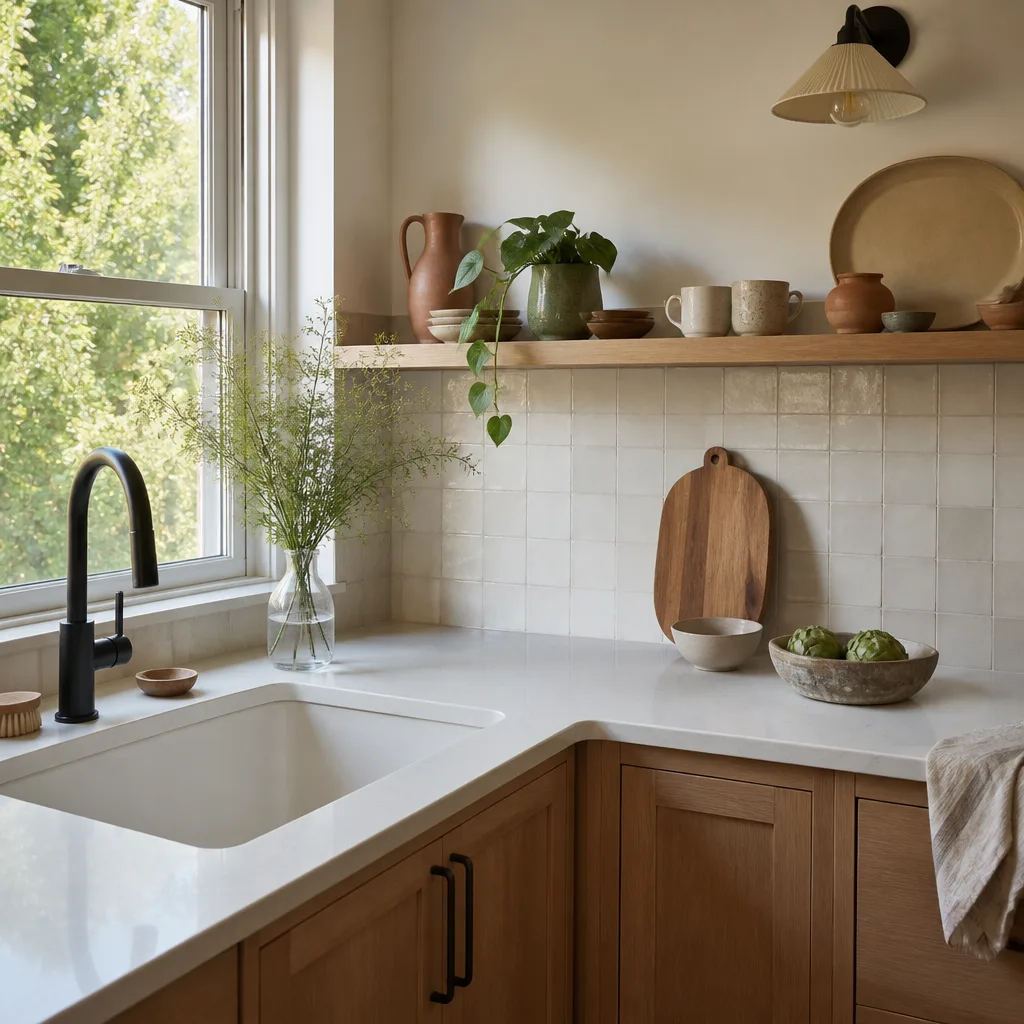
Silestone’s HybriQ formulation replaces much of the traditional polyester resin binder with a hybrid of mineral content and recycled glass. The practical difference is heat tolerance. Older quartz surfaces could scorch or discolor when a hot pan landed directly on them. HybriQ holds up better to momentary contact, which matters in Los Angeles homes where the kitchen flows into the dining space and someone’s always moving a skillet from the range to the island.
But it’s still not a cutting board, and it’s not a trivet. We tell every family we work with the same thing: a hot cast-iron skillet straight from a 450-degree oven can still leave a mark or cause thermal shock if the surface underneath is cold. The improvement is real, and it’s also not an invitation to test the limits.
Here’s what HybriQ means for cleaning products. Because the surface contains less resin than old-school quartz, it’s less likely to react with aggressive cleaners. That said, the safe list is short and specific:
- Daily cleaning: warm water and a few drops of mild dish soap, wiped dry with a microfiber cloth.
- Weekly refresh: a pH-neutral stone cleaner labeled safe for quartz, applied with a soft cloth, never a scrub pad.
- Disinfecting: a diluted solution of white vinegar and water is safe on HybriQ, unlike on natural stone.
- Never use: bleach, oven cleaner, paint stripper, nail polish remover, or any product with trichloroethane or methylene chloride. These void the warranty and dull the surface.
The Los Angeles angle is this: hard water is common in many neighborhoods, and mineral buildup is a gradual process. A weekly wipe-down with a dedicated quartz cleaner prevents the chalky film that eventually makes people reach for something harsher, which is where countertops get ruined.
Why Sealing Silestone Is a Mistake (And What Happens If You Already Did)
Silestone HybriQ does not need sealing. The surface is non-porous, which means liquids sit on top rather than soaking in. That’s the whole point of choosing quartz over marble or granite. When a homeowner applies a penetrating sealer meant for natural stone, the sealer has nothing to penetrate, so it dries on the surface. The result is a hazy, streaky film that makes the countertop look permanently dirty.
If this has already happened in your Los Angeles kitchen, don’t panic. A fabricator or stone restoration specialist can usually remove the film with a specialized quartz cleaner and careful buffing. But it’s not a DIY fix, and the longer the film sits, the more likely it is to become a permanent dullness. Silestone’s warranty won’t cover the refinishing because the damage came from an unapproved product.
It takes thirty seconds and prevents a phone call six months later that starts with, “The countertop looks foggy.”
Silestone Thickness, Finish, and Seam Behavior in Los Angeles Kitchens
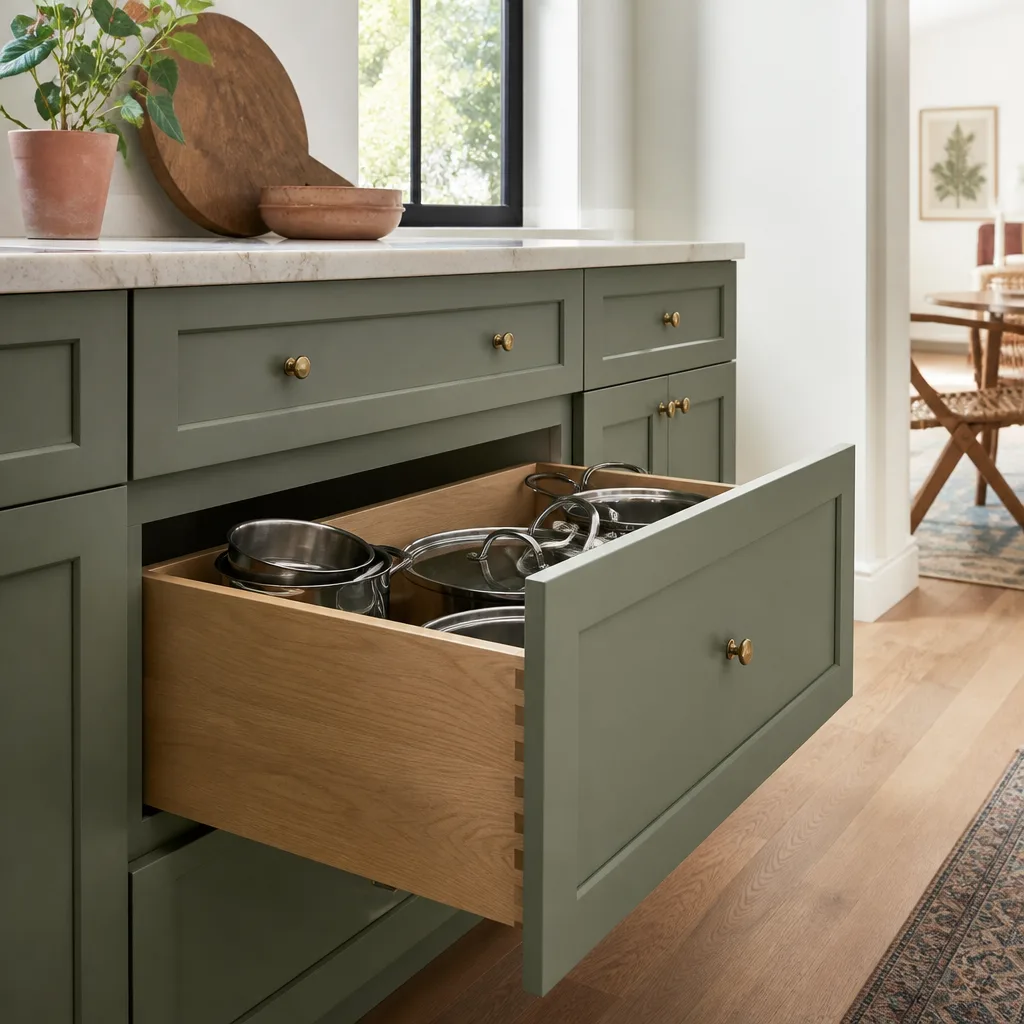
Silestone comes in three thicknesses: 1.2 cm, 2 cm, and 3 cm. The finish options that matter most for Los Angeles kitchens are Polished, Suede, and Volcano. Each has a different relationship with seams, and seams are the single biggest visual complaint in kitchen countertop installation.
Polished is the classic glossy finish. It reflects light, which makes it a strong choice for smaller Los Angeles kitchens that need all the brightness they can get. The tradeoff is that polished surfaces show fingerprints and water spots more readily, and seams are more visible because the reflective surface highlights any slight height difference between slabs.
Suede is a matte, leather-like finish that hides fingerprints and water marks. Seams on Suede finish tend to read as intentional texture lines rather than gaps, which is why it’s popular on large islands where a seam is unavoidable. In a Los Angeles kitchen with a 10-foot island, the slab will almost always need a seam somewhere, and Suede makes that seam much less noticeable.
Volcano is a heavily textured finish with a rough, stone-like feel. It’s dramatic, but it’s not for everyone. Food debris can catch in the texture, and it requires more attentive cleaning. We recommend it most often for statement islands or wet bars, not for the main prep surface in a busy family kitchen.
On the thickness front, 3 cm slabs give you a fuller edge profile, which many Los Angeles homeowners prefer for a more substantial look. 2 cm slabs can work with a built-up or mitered edge, but that adds fabrication cost. The critical number is substrate flatness: Silestone’s warranty requires the supporting cabinetry to be flat within 1/8 inch per 10 feet. If it isn’t, the slab can stress and crack over time. A contractor who doesn’t check for that before setting the slab is creating a future problem.
What the Silestone 25-Year Warranty Requires of Your Installer
Silestone’s warranty sounds strong, and it is, but it’s also conditional. It covers manufacturing defects for 25 years on the condition that the installation meets a specific set of requirements. Here are the ones that actually matter:
- Approved adhesive at all seams: Silestone specifies the type of adhesive that must be used to join slabs. Off-brand adhesives can discolor over time or fail at the seam, and Silestone will not cover the repair if unapproved adhesive was used.
- Substrate flatness: the cabinet tops must be level and flat within 1/8 inch per 10 feet. This requires checking with a long straightedge before the slab goes down. Skipping this step is how slabs develop hairline cracks.
- Overhang support: any overhang beyond 6 inches requires corbels or a support bracket system. For overhangs beyond 12 inches, which are common on Los Angeles kitchen islands with seating, the support must be engineered for the load. A slab that’s unsupported over a long span will eventually crack, and the warranty won’t cover it.
- Proper sink and cooktop cutout clearance: the cutout edges need adequate material on all sides, and sharp inside corners must be rounded, not square. Square corners concentrate stress and are the most common origin point for cracks.
Elmstead documents every one of these checkpoints during installation. We photograph the substrate prep, the adhesive brand, the overhang supports, and the final set. That documentation goes into the project file and travels with the Silestone warranty registration. If the homeowner sells the house, the paperwork transfers with the warranty, which is a real selling point in the Los Angeles market where buyers ask about countertop quality and care history.
How We Install Silestone in Los Angeles Homes
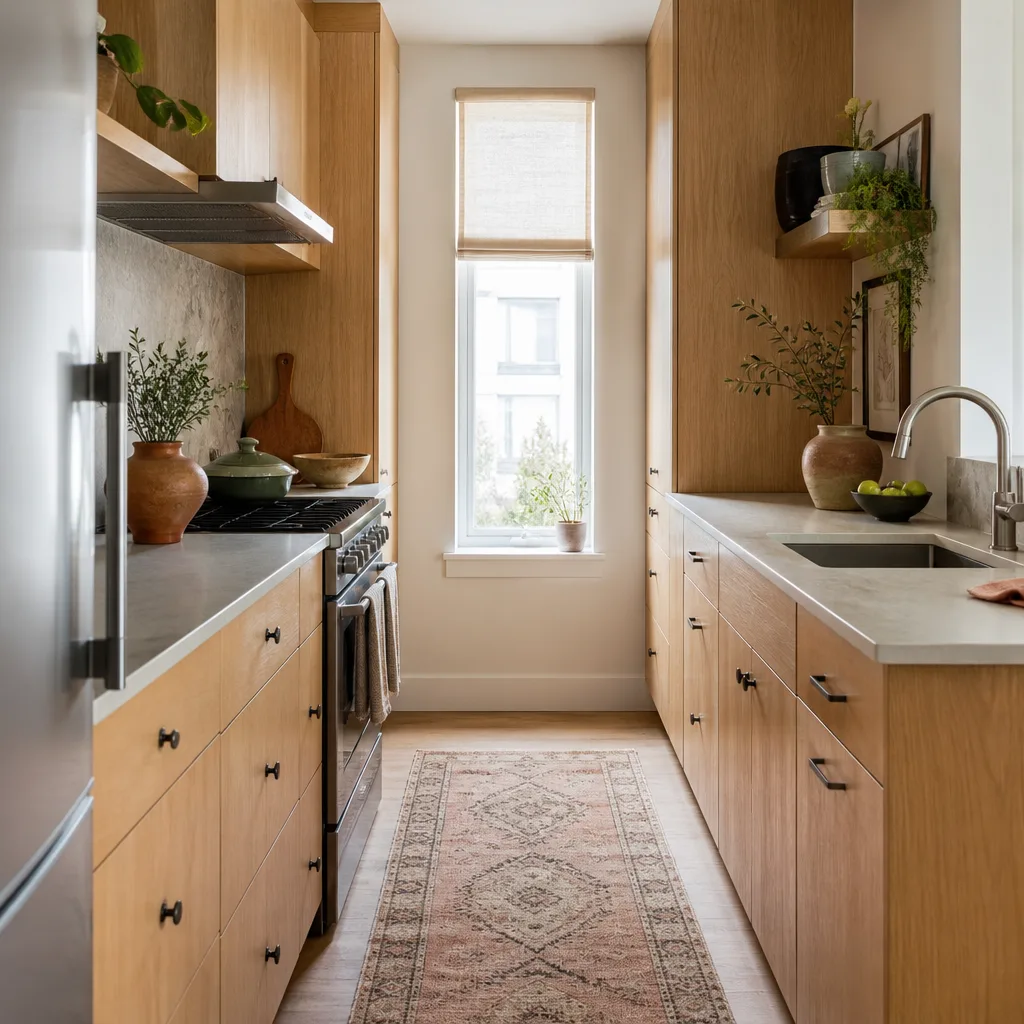
Every Silestone project Elmstead runs follows the same sequence, and we share it because homeowners should know what a careful installation looks like before the crew shows up.
- Template day: a digital template of the existing cabinets is taken, usually after the cabinets are set and level. If the cabinets aren’t level, the template will reveal it, and we fix the cabinets before the slab is fabricated.
- Slab selection: the homeowner picks the specific slab at a local Los Angeles stone yard. This matters because Silestone colors have natural variation across batches, and you want to see the exact slab you’re buying.
- Fabrication: the slab is cut and edge-profiled at a fabrication shop. Cutouts for the sink and cooktop are made at this stage, with rounded inside corners per Silestone’s spec.
- Install day: the crew lays drop cloths on the floors, puts shoe covers on at the door, and sets the slabs. Seams are joined with approved adhesive and color-matched, then cleaned. Overhang supports are verified before the slab is placed. The whole install for a typical Los Angeles kitchen takes one full day.
- Clean-up and documentation: before the crew leaves, we take photos of the finished countertops and the clean-up. That photo is included in the project file, and it’s the same standard we hold on every job.
During the install, we ask before moving anything in the kitchen. If a family has a child napping or a pet in another room, we work around it. Quiet tools are part of the routine. These are small things, but they’re the reason families in Los Angeles recommend us to their neighbors.
Products That Pair Well with Silestone in a Los Angeles Kitchen
Silestone works with nearly any sink and faucet, but in our experience, a few pairings do the job better than others. A Blanco Silgranit sink in a matte finish sits naturally next to a Suede Silestone countertop, and the two surfaces share a similar visual weight. For faucets, Moen’s spot-resist stainless finishes hold up well against the daily wear of a family kitchen, and they’re easy to find parts for when a cartridge eventually needs replacement years down the line. If the project scope includes a Kitchen Remodeling in Los Angeles, the countertop, sink, and faucet choices all get made together, which avoids mismatched heights and awkward reveal lines.
For the cabinet side, the countertop matters less than the structure underneath, but the countertop choice influences the cabinet finish. A high-gloss Silestone Polished slab will mirror the lighting in the room, so cabinet finishes with a subtle sheen tend to balance it. A Suede finish pairs well with matte cabinet fronts. The point is that the countertop is part of a system, and the systems-minded thinking is what keeps a remodel from looking like a collection of parts.
When to Call a Pro (and What to Expect)
If the countertop has cracked at a seam, developed a chip along the front edge, or the overhang feels springy when you lean on it, those are installer problems, not slab problems, and they deserve a pro’s eyes. A crack at a seam usually means the substrate wasn’t flat or the adhesive failed. A springy overhang means the supports are wrong. These are fixable, but not with a DIY kit.
A professional Silestone installer will look at the substrate, the seam, the edge profile, and the support structure before ever proposing a fix. If the contractor gives you a price over the phone without seeing the countertop, that’s a flag. The price should come after the inspection, in writing, before any work starts.
For Los Angeles homeowners who want a full remodel rather than a countertop alone, our Elmstead Remodeling home page covers the range of what we do, and the Bathroom Remodeling in Los Angeles page goes into the same level of detail for vanities and tub decks where Silestone also works well.
The Bottom Line
Silestone HybriQ is a genuinely different material from first-generation quartz, and the differences show up in heat tolerance, cleaning chemistry, and warranty language. Los Angeles homeowners who understand those differences make better choices about finish, thickness, and installer. A Polished slab in a bright west-facing kitchen is a different animal than a Suede slab on a shaded north side, and the seams will tell the story either way.
The installer choice is the variable that determines whether the warranty is worth the paper it’s printed on. Substrate flatness, adhesive spec, and overhang support are checkpoints, not suggestions. If you’re in Los Angeles and need help with Silestone, Elmstead Remodeling offers free estimates and a written price before any work starts. Call (949) 850-9896.
Frequently Asked Questions
Silestone countertop installation in Los Angeles typically costs $75 to $145 per square foot for material and fabrication, with most kitchens totaling $4,200 to $7,800. The final price depends on slab thickness, finish, edge profile, and the number of cutouts. Call (949) 850-9896 for an exact quote on your kitchen, estimates are free.
No, Silestone does not need to be sealed. The HybriQ surface is non-porous, and applying a stone sealer will leave a cloudy film that requires professional removal. Clean it with warm water, mild soap, or a pH-neutral quartz cleaner instead.
Silestone HybriQ is more heat-tolerant than older quartz, but it is not heat-proof. A hot pan straight from the oven can still cause thermal shock or discoloration. Use a trivet or hot pad every time.
The Silestone warranty is voided by unapproved adhesives at seams, substrate flatness beyond 1/8 inch per 10 feet, and unsupported overhangs beyond the manufacturer’s limits. Harsh chemicals like bleach and oven cleaner also void the surface warranty. Your installer’s documentation of these details is what protects the warranty and keeps it transferable when you sell the home.
Written by the team at Elmstead Remodeling.
Need Construction Help?
Call Elmstead Remodeling - licensed & insured, here with fast after-hours help in Los Angeles.
(949) 850-9896