
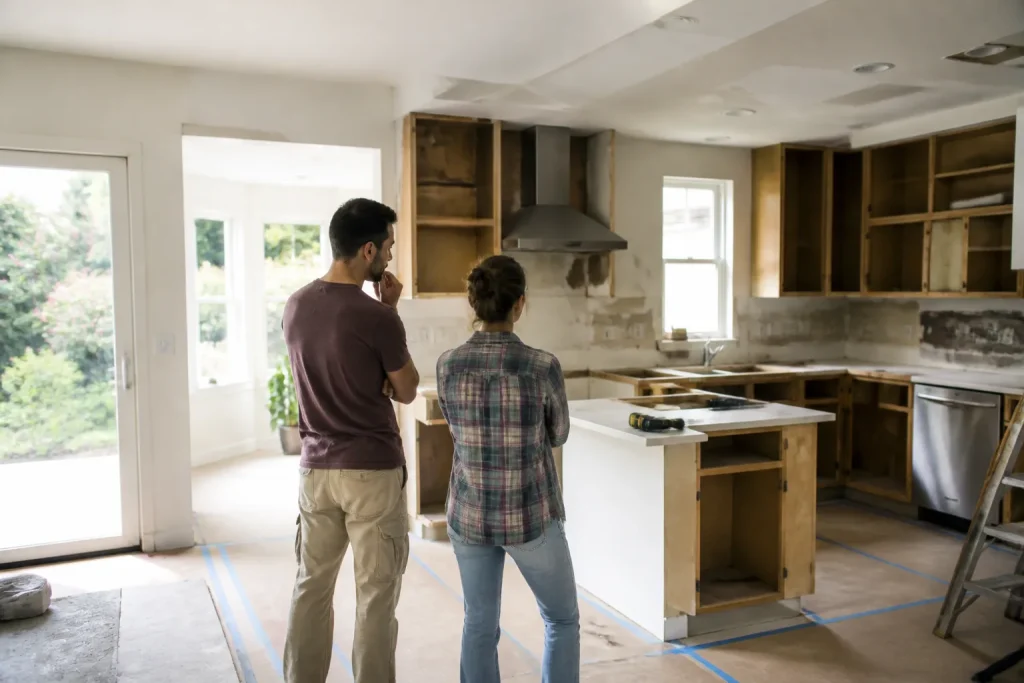
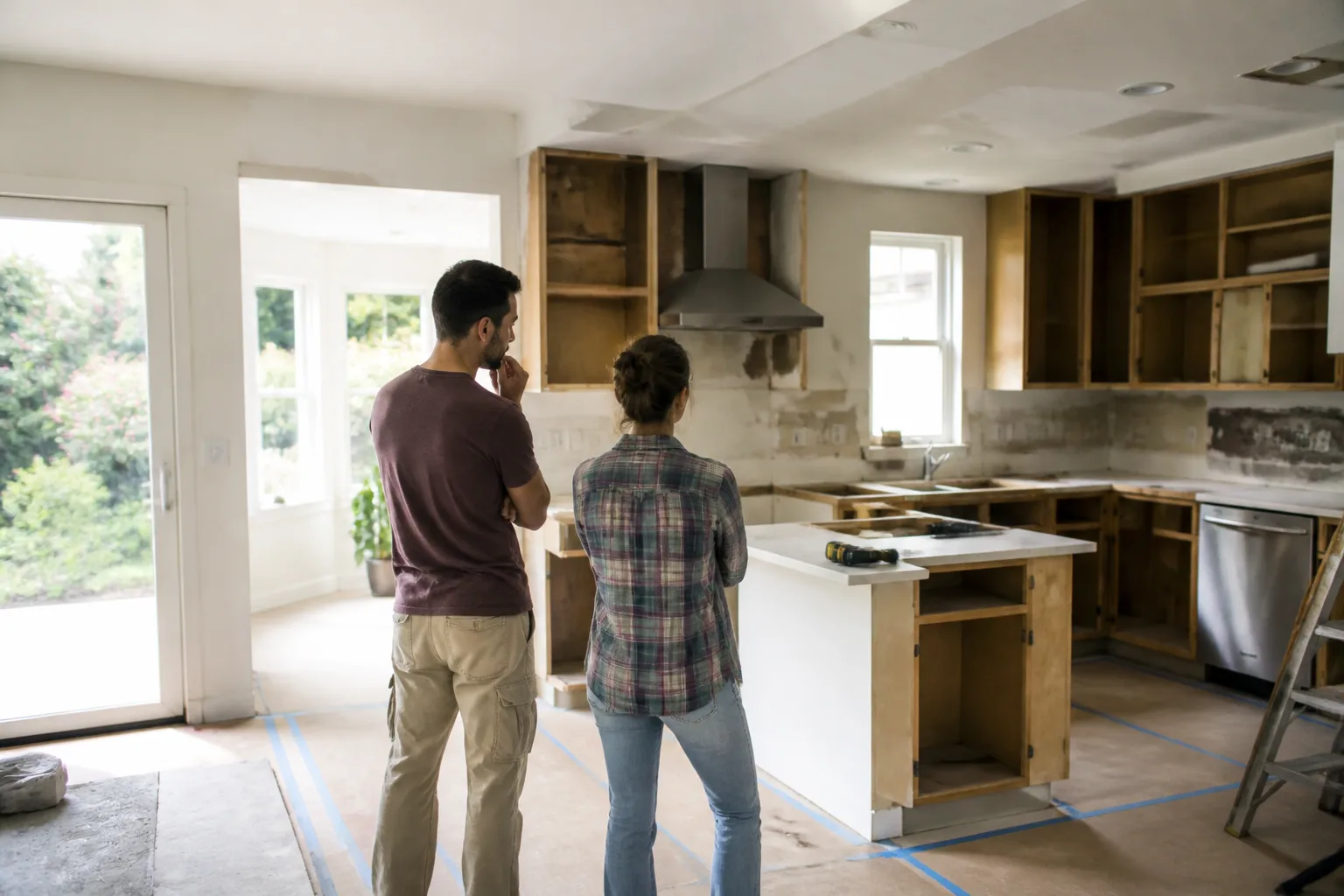
Kitchen Remodeling: Repair or Replace? How Los Angeles Homeowners Decide
Most Los Angeles homeowners ask the wrong question. They ask, “What can we afford to fix?” when they should ask, “Which systems are actually failing, and which will fail next?” A repair-only kitchen might look fine for two years, then the drawers start sticking, the countertop seam opens up, and the sink base begins to sag under the weight of new quartz. A full replacement done too early wastes tens of thousands. The right answer starts with evaluating four systems separately, not the kitchen as one object. If you’d rather not sort through this yourself, call (949) 850-9896 and we’ll walk the kitchen with you.
Here’s the framework we use when a family calls us in Los Angeles and says, “We don’t know whether to patch this kitchen or gut it.” We’ve been doing this, and the systems lens is the only thing that reliably produces a decision homeowners don’t regret three years later.
The Four Systems That Decide Repair or Replace
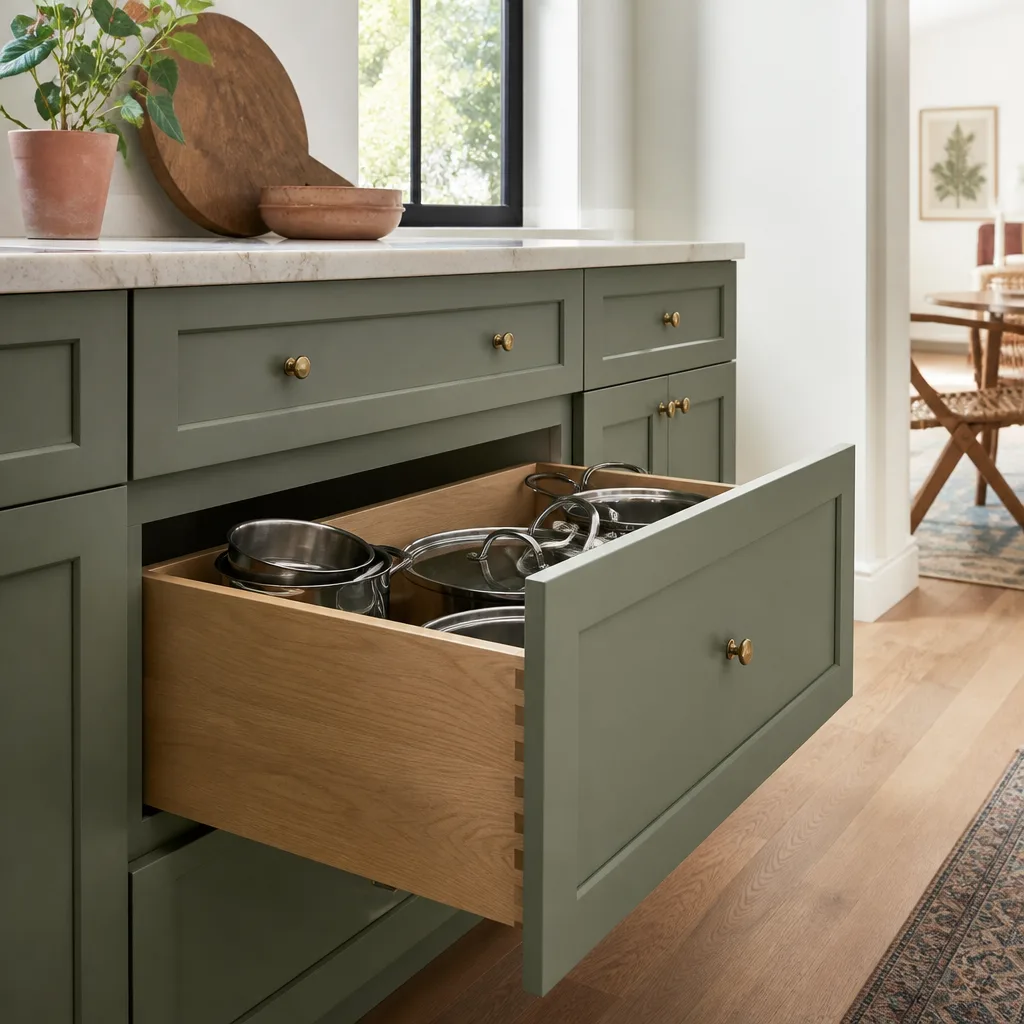
In Los Angeles, a kitchen is not one thing. It’s four systems aging at completely different speeds. Cabinets might have twenty years left while the countertop substrate is crumbling. The drain under the sink might be original cast iron while the faucet is a five-year-old Moen. Evaluating each system independently is what separates a smart repair timeline from a scoping mistake that shows up within five years.
System One: Cabinet Box Integrity
This is the load-bearing skeleton. The doors and drawer fronts are just skin. What matters is whether the boxes themselves are structurally sound. We look at three things without any tools:
- The sag test on adjustable shelves: pull the shelf out, look at the pin holes. If the holes are wallowed out or the shelf flexes downward with a hand in the middle, the cabinet structure is losing its grip.
- Drawer-face alignment: when drawers are closed, are the gaps even? If one drawer sits an eighth of an inch low, the slide is worn or the box has racked out of square.
- Hinge-plate pull test: open a door halfway and lift straight up on the door bottom. If the hinge plate moves or the door dips, the plate screw threads are stripped.
In neighborhoods like Mid-City and West Adams, we see original 1960s cabinets made of genuine plywood that still pass all three tests. That’s a repair candidate. But when a “wood” cabinet is actually particleboard with a thermofoil wrap, and the wrap is peeling at the corners, the box life is already over. No hinge replacement fixes a cabinet losing its structural integrity.
System Two: Countertop Substrate Soundness
The countertop is only as stable as what’s underneath it. A homeowner who replaces the laminate counters in a 1975 Los Angeles kitchen with new Silestone often discovers, within three years, that the cabinets underneath were never built to carry that weight. Particleboard cabinet tops compress. The seam on the stone opens. The countertop industry calls this a substrate failure, but the homeowners call it “we just spent eight grand and it’s already cracked.” We call it a scoping failure.
Before any countertop replacement in Los Angeles, the question is whether the cabinet tops are plywood (sound) or particleboard (questionable under stone). If it’s particleboard, the repair is possible but it means adding a structural plywood layer between cabinets and stone. That’s a line item that should be in the written scope, not discovered on demo day. This is exactly why we put every line item in writing before any work starts, because that plywood layer is not optional when the substrate is soft.
System Three: Supply and Drain Condition Under the Sink
Los Angeles water is hard, and the pipes under the sink have been eating that water for decades. The moment to evaluate supply and drain condition is before new counters go in, not after. A new Kohler faucet installed on a corroded angle stop is a future leak. A disposal that works today but is plumbed into a 50-year-old galvanized drain will clog more often once a heavy stone counter is bearing down on the cabinet around it.
Here’s what we look for during a repair-or-replace evaluation:
- Angle stops that don’t fully close (meaning the shutoff is failing behind the wall)
- Flexible supply lines with visible cracking or green corrosion at the connection
- Drain trap material: if it’s still metal and flaking, it’s original to a 1960s – 1970s kitchen
- Water pressure at the existing faucet (low pressure can indicate mineral buildup in the supply lines)
We’ve worked in kitchens across Los Angeles where the sink cabinet could be saved, but the plumbing behind it could not. The repair-replace decision is never just about what you can see.
System Four: Ventilation Capacity
This is the system most Los Angeles homeowners never think about until they smell last night’s dinner in the living room. A 1970s kitchen was built for a 300 CFM range hood, and it might not even have an external vent, just a recirculating fan. New ranges, especially gas, need real ventilation capacity. But in Los Angeles, many older kitchens were installed with ductless hoods or none at all.
The ventilation question matters because it drags other systems with it. Installing proper ventilation means cutting a duct through a wall or ceiling, which can involve permits, which can involve code upgrades. If the wall in question was already opened for a seismic retrofit, the scope changes. This is where Los Angeles’ retrofit history gets interesting.
How LA’s Seismic Retrofit History Changes the Cabinet-Hanging Scope
Los Angeles has been through multiple retrofit waves since the 1994 Northridge earthquake. That means many of the walls in older kitchens are not what they look like. A wall might look cosmetically fine on the surface, but behind the drywall it has been reinforced with plywood shear panels, steel straps, and hold-downs bolted to the foundation. From a structural standpoint, that’s a blessing. From a kitchen remodeling standpoint, it changes everything about how new cabinets hang.
We’ve opened walls in homes from Echo Park to Sherman Oaks and found that the studs are no longer where the original cabinets were anchored. The retrofit added framing members that were never meant to carry cabinet weight. A contractor who doesn’t know how to work with a shear wall will either drill into a hold-down and compromise the retrofit, or hang cabinets only on drywall anchors, which will fail.
This is a scoping reality unique to Los Angeles. Cabinets in a shear wall need specific anchoring methods: using approved penetration points, adding blocking between the shear panel and the cabinet, and in some cases, engineering sign-off. That kind of work is not a “cabinet installation.” It’s a structural attachment in a seismic zone. If you’re considering a kitchen replacement in Los Angeles and your home was retrofitted, this has to be on the table before a single screw goes in.
Three Scenarios Where Targeted Repair Adds 10+ Years
Repair is not a consolation prize. In the right kitchen, a targeted repair genuinely extends the life of the whole room by a decade or more, and the money saved stays in the bank. Here are the three scenarios where we tell Los Angeles homeowners to repair, not replace:
- The cabinets are plywood boxes with minor hinge wear. If the box is structurally sound and the only issue is that doors have drifted or hinges are loose, replacing hinges and adding soft-close retrofit kits is a several-hundred-dollar fix, not a several-thousand-dollar cabinet job. We see this constantly in older Los Angeles homes where the original cabinets were better built than anything sold today at mid-price.
- The countertop is chipped or dated but the substrate is sound. If the cabinets underneath are plywood and the existing counter is a post-form laminate, a new Cambria or Silestone top can be installed over a proper substrate without touching the cabinet boxes. This is a real repair path in Los Angeles kitchens where the layout works and only the surface is tired.
- The layout functions but the fixtures and finishes are exhausted. A new Kohler faucet, new Moen pulls, and a fresh coat of cabinet paint or refinish can transform the look of a kitchen without changing the floor plan. This is the cheapest way to buy ten more years, and it’s the scenario where the written scope is simplest: no structural work, no plumbing re-route, no permit needed.
Three Scenarios Where Repair Just Delays the Inevitable by Fewer Than Five Years
Then there are the kitchens where “repair” is a polite word for kicking the problem down the road. We’d rather tell a homeowner the truth before they spend money, which is why we write the scope so that cosmetic refresh line items are separate from structural and systems line items. You should be able to see exactly what you’re buying.
- The particleboard cabinets have already failed the sag test. When the box is going, no amount of new doors, new counters, or new hardware will bring it back. The structure is done. In Los Angeles, we see this most often in kitchens from the 1980s and 1990s where particleboard was the cheap default. Repairing around a dying box usually means the shelves sag, the seams open, and the whole thing needs to be done again within three to five years.
- The sink base has been wet more than once. If the cabinet floor under the sink has been soaked, even once, the particleboard has already started to swell and lose strength. Add a new heavy countertop on top, and the sink base is the first thing to go. This is one of the most common full-replacement drivers in Los Angeles kitchens.
- The layout itself fights the family’s daily life. This is the one that’s hard to hear, because the materials might be fine. But if the kitchen only has one work triangle, no landing space, and the refrigerator door hits the island, no repair fixes it. A full layout change is the only answer, and it’s better to do it once, correctly, than to patch and re-patch for five years and then gut it anyway.
Why We Separate Cosmetic from Structural in the Written Scope
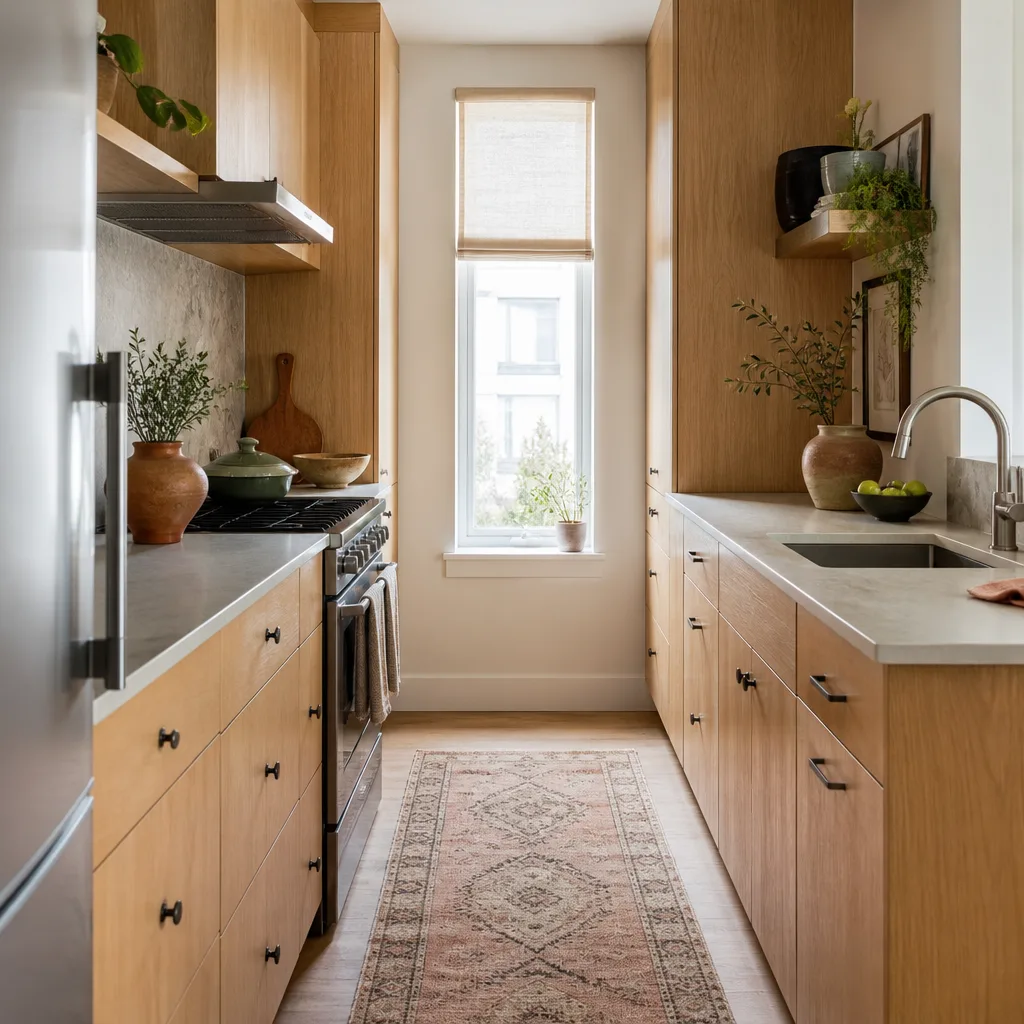
This is where the repair-or-replace decision becomes something a homeowner can actually act on. In our experience, most Los Angeles families don’t need a contractor to tell them which category every item falls into. They need a written price, before any work starts, that separates the cosmetic line items from the structural and systems line items. That way, the choice isn’t “repair the whole kitchen or replace the whole kitchen.” It’s “replace the sink base now, put new cabinet doors on later, or do both at once.”
We write our scope that way because the decision should be made by category, not all at once. When the plumbing under the sink needs work but the cabinets don’t, you shouldn’t be forced into a cabinet purchase to fix the plumbing. When the counters need a substrate upgrade but the cabinets are fine, that’s a separate line item. The Cedarwell Care Promise is built on exactly this: explain the price before the work, ask before we touch anything, and clean up like it’s our own home. That means shoe covers and drop cloths inside the house on every visit, and a photo of the clean-up before the crew leaves. Not as add-ons. Included.
When to call a pro: If any of the four systems evaluation points to structural work, if you can’t do the sag test because the shelves are too cluttered to move safely, or if your home is in a shear wall from a past retrofit, call a contractor before you buy anything. The parts are the cheap part. The scoping is where the mistakes get expensive. We answer the phone live, 24/7, at (949) 850-9896.
Related services in Los Angeles: Kitchen Remodeling in Los Angeles and Bathroom Remodeling in Los Angeles are two of the most common projects where repair versus replace comes up, and the systems framework works for both.
What Los Angeles Homeowners Can Expect to Spend
We don’t publish pricing without a specific scope, but we do believe a family should never be left guessing. Here are representative ranges for typical repair and replacement paths in Los Angeles, as of early 2026:
- Cabinet hinge and soft-close retrofit: $400 – $1,200 depending on door count
- Cabinet refinishing or repainting (full kitchen): $3,500 – $8,000
- Countertop replacement with substrate reinforcement: $4,000 – $12,000 depending on material and linear feet
- Sink base repair or replacement (single cabinet): $1,500 – $4,000
- Full kitchen replacement (cabinets, counters, plumbing, ventilation): $45,000 – $110,000 depending on the size of the kitchen and the level of structural work required
- Permits and engineering for shear wall or seismic work: $2,000 – $8,000 depending on the scope of the retrofit
These ranges exist so you can compare a $6,000 repair path against a $70,000 replacement path and understand what’s actually in each. The written estimate you receive from Elmstead Remodeling will be itemized, so you’ll see exactly what’s cosmetic, what’s systems, and what’s structural. No change orders from the crew on demo day, no “we didn’t know the wall was a shear wall” up-charge. Before the work starts, the price is on paper.
The Bottom Line
The repair-or-replace decision in Los Angeles is not a budget question. It’s a systems question. Cabinets, countertops, plumbing, and ventilation all age at different speeds. Replacing one without evaluating the others creates a mismatch that will surface within five years, sometimes sooner. The way to decide is to test each system independently: the sag test, the hinge pull test, the substrate check, the angle stop test. If the boxes are plywood and the structure is sound, targeted repair can buy you a real decade. If the boxes are particleboard and the sink base has seen water, a full replacement is the honest answer.
In Los Angeles, the seismic retrofit history adds one more variable: the walls themselves. A shear wall is not a normal hanging surface, and a contractor who doesn’t know the difference will cost you more in the long run. We’ve been doing this. If you’re in Los Angeles and you want a written, itemized scope that separates cosmetic work from structural work, Elmstead Remodeling offers free estimates. Call (949) 850-9896, or learn more from our Elmstead Remodeling home page or our General Contractor in Los Angeles page.
Frequently Asked Questions
Targeted repairs in Los Angeles typically run $400 to $8,000 depending on scope, while a full kitchen replacement ranges from $45,000 to $110,000. The final number depends entirely on which systems are failing; we write every estimate so cosmetic line items are separate from structural line items, which means you can choose repair on one system and replacement on another.
Do the sag test. Pull a shelf out and look at the pin holes. If they’re wallowed out, or the shelf flexes when you press the middle, the cabinet structure is losing integrity. If the boxes are plywood and only the hinges are worn, you’re likely a repair candidate. If the boxes are particleboard and the sink base has been wet, the cabinets have reached the end of their useful life. Call (949) 850-9896 for an in-home evaluation.
Only if the cabinet tops are plywood and structurally sound. If the substrate is particleboard, the stone will eventually compress it and the seams will open. In that case, a structural plywood layer must be added between the cabinets and the stone. That line item should be in the written scope before any work begins, not discovered on demo day.
Yes. Post-retrofit walls in Los Angeles contain shear panels, hold-downs, and added framing that were never designed to carry cabinet weight. Cabinets hung on a shear wall need specific anchoring methods and sometimes engineering sign-off. If your home was retrofitted, the cabinet-hanging scope is different, and the contractor needs to know how to work with the wall without compromising the retrofit.
Written by the team at Elmstead Remodeling.
Need Construction Help?
Call Elmstead Remodeling - licensed & insured, here with fast after-hours help in Los Angeles.
(949) 850-9896