
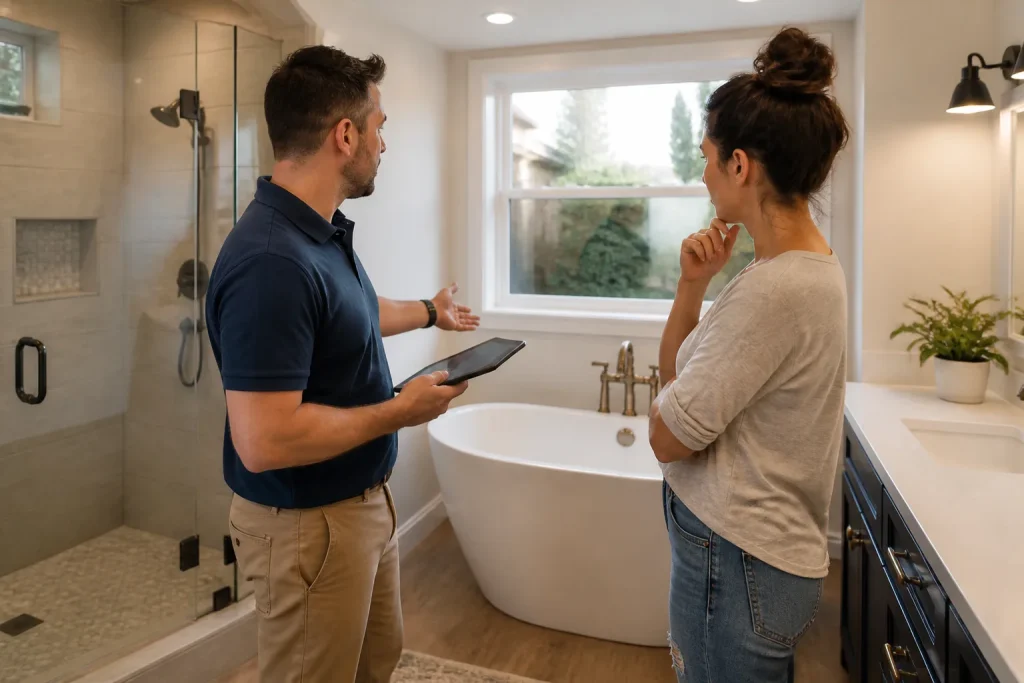
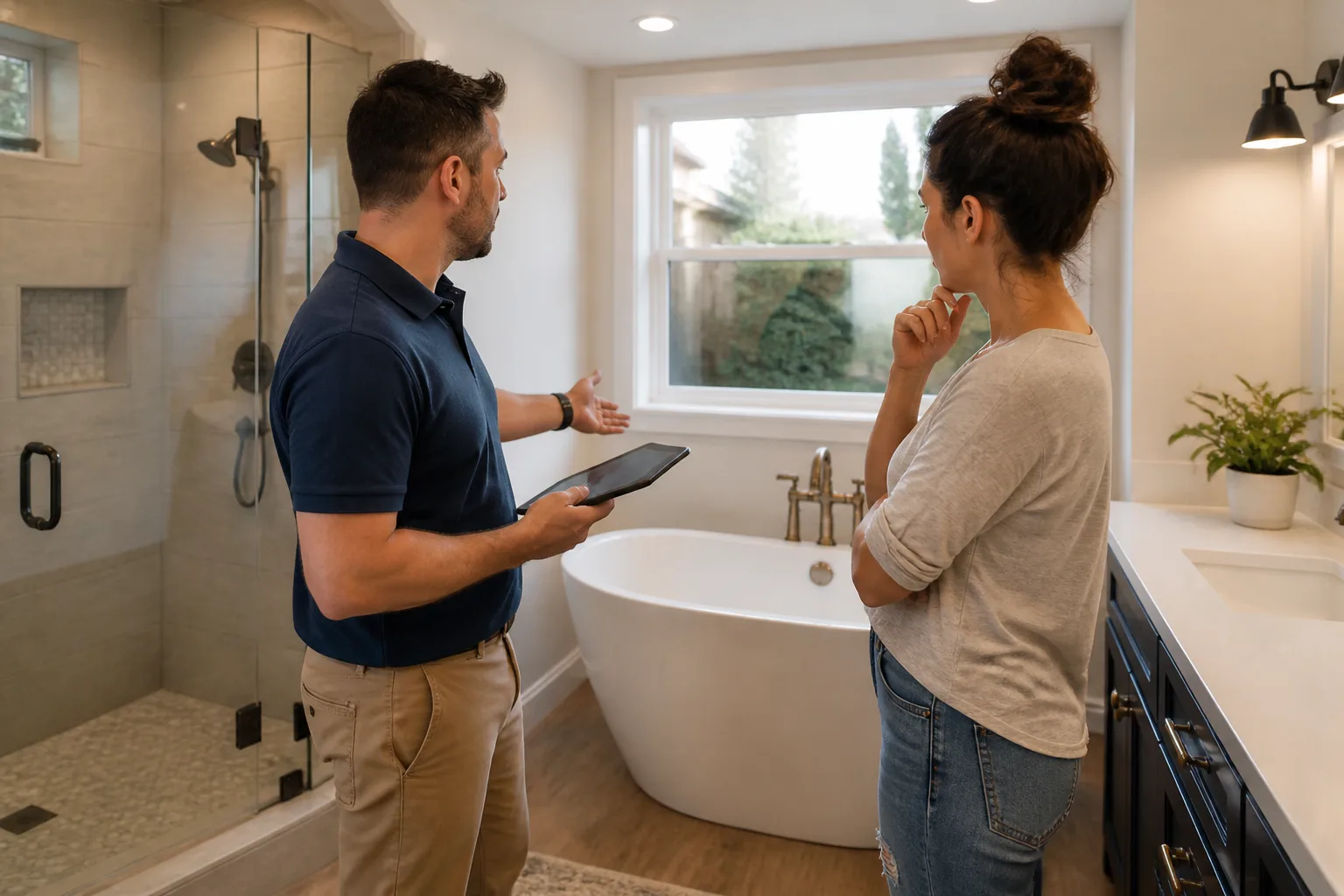
Bathroom Remodeling: Repair or Replace? How Los Angeles Homeowners Decide
In most Los Angeles bathrooms, the repair-or-replace decision comes down to one thing: what’s behind the tile. If the substrate is sound, a targeted repair makes sense. If moisture has reached the subfloor or wall framing, replacement is the only fix that won’t fail again in two years. The signs are visible long before the wall comes open, if you know where to look. If you’d rather not diagnose it yourself, call (949) 850-9896 and we’ll take a look for free.
The Hidden Variable: What Lives Behind Your Tile
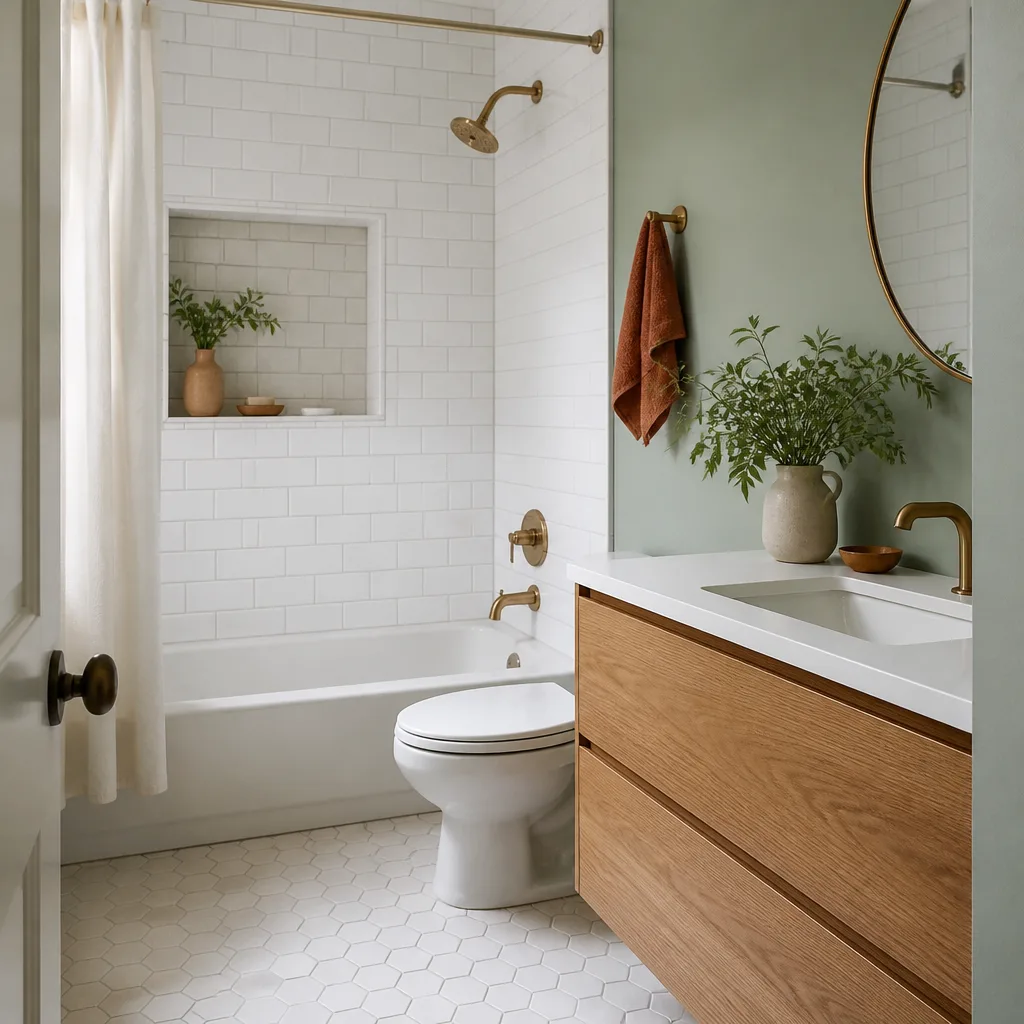
Los Angeles homes built between 1940 and 1970 make up a large portion of the city’s bathroom stock. These houses were built well, but they carry two hidden variables that newer construction doesn’t: galvanized supply lines and green board behind the tile. Galvanized pipe corrodes from the inside out, and by year sixty, the interior diameter has often narrowed to less than half its original size. The result is low water pressure that no faucet replacement will fix. Green board, the drywall used behind tile before cement board became standard, swells and crumbles when water reaches it. If your home is in this age range and the bathroom has never been opened up, the repair-or-replace question often answers itself once you know what’s behind the wall.
We’ve pulled tile off bathroom walls in neighborhoods like Westchester and Mar Vista where the green board behind it was damp to the touch, years after the last visible leak. The grout looked fine from the front. The tile was still tight. The problem only showed itself as a faint musty smell in the summer and paint bubbling at the baseboard. That’s the pattern we look for now on every Los Angeles bathroom inspection: not the tile itself, but what the tile is hiding.
If you’re weighing repair versus replacement, the first question isn’t “how old is the tile.” It’s “what’s behind the tile, and has it ever been wet?” A Bathroom Remodeling in Los Angeles project that starts with that question tends to end with a written price that doesn’t change when the wall comes open.
Five Visible Signs That Point to Hidden Moisture Damage
You don’t need to open a wall to know whether moisture has reached the substrate. Five signs show up at the surface, and each one points to a specific type of hidden damage. In Los Angeles, where the dry season is long and the wet season is short, these signs often appear gradually and get ignored until a floor tile loosens or a door sticks.
- Soft spots in the floor. If a tile flexes under foot, the subfloor beneath it has already absorbed enough water to soften. This is rarely a single-tile fix. The affected area usually extends several feet beyond the visible crack.
- Grout cracking at field centers. Cracks along the edge of a tile are normal wear. Cracks running through the middle of a large floor area mean the substrate is moving, and in a bathroom, movement usually traces back to moisture-weakened wood.
- Efflorescence at the baseboard. That white, chalky deposit along the bottom of the wall is minerals left behind by evaporating water. It means water is moving through the wall assembly, not just sitting on the surface during showers.
- Paint bubbling near the tub deck. Paint doesn’t bubble on its own. If the paint is lifting near the tub, water has been getting behind it, and the drywall or plaster underneath is wet.
- Door-frame swelling. A bathroom door that suddenly sticks in the summer months, especially after years of fitting fine, indicates elevated moisture in the room’s air and often in the walls flanking the door.
Each of these signs alone might mean a small repair. Together, they mean the bathroom is telling you something, and it’s usually not “re-grout me and move on.”
When Re-Grouting and Sealing Is Genuinely Enough
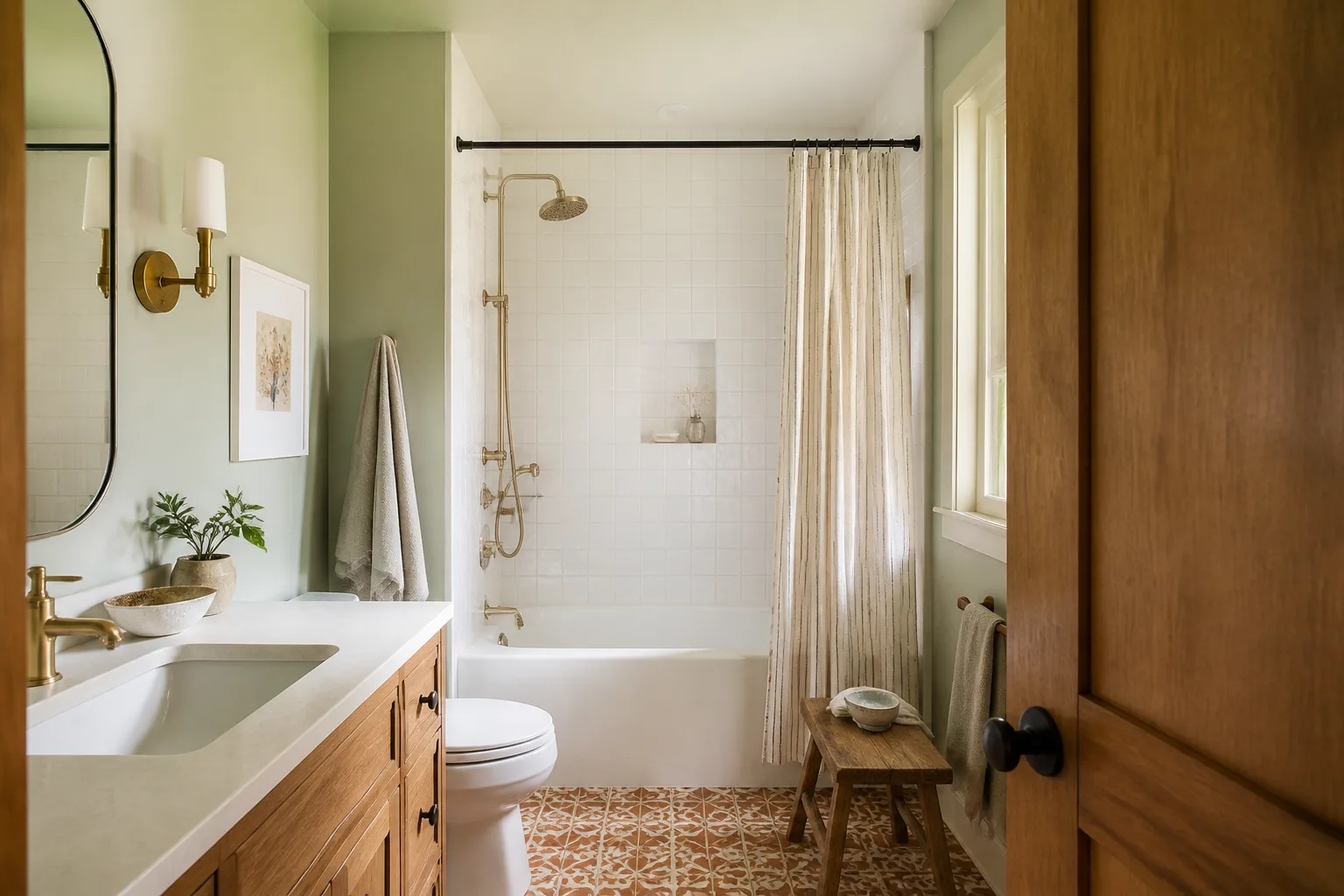
There are bathrooms in Los Angeles where a repair is the right call. We’ve seen plenty, and we’ll tell a homeowner when that’s the case. The conditions that make re-grouting and sealing sufficient are specific, and they’re all surface-level.
If the grout is cracked but the tile is still fully bonded, if there’s no softness in the floor, no efflorescence at the baseboard, no paint bubbling, and no door swelling, then the substrate is probably sound. In that case, removing the old grout, re-grouting with a polymer-modified product, and applying a penetrating sealer can buy real time. The key word is “if.” A surface repair only works when the surface is the only thing that’s failed.
We also look at the caulk line where the tub or shower pan meets the tile. That joint fails long before grout does, and it’s the most common entry point for water in a Los Angeles bathroom. Replacing that caulk line with a high-quality silicone product and keeping up with it every few years is one of the cheapest, most effective repairs a homeowner can make. But if water has been getting through that joint for years, re-caulking now is like painting over rust. It looks fine until it doesn’t.
The honest way to tell the difference is to test, not guess. Before any repair or replacement quote, we run a moisture scan on the walls and floor around the tub, shower, and vanity. A non-invasive meter tells us whether the substrate is dry enough to repair or wet enough to replace. That scan is part of our pre-project walkthrough, and it’s one of the reasons our written prices stay what they are after the wall comes open.
What Los Angeles Housing Age Does to the Repair-or-Replace Math
The age of your home changes the math in ways that most online guides miss. A 1950s bathroom in Los Angeles isn’t just old. It was built to a different code, with different materials, and it’s been through sixty to seventy years of Southern California’s specific climate cycles.
Three things in particular matter when you’re deciding between repair and replacement in an older LA home:
- Cast iron drain condition. Cast iron drains last a long time, but not forever. By the fifty-year mark, the interior walls have often thinned and begun to scale. The drain under the floor may look fine from above while being paper-thin below. Replacing tile without checking the drain below it is a gamble, and in Los Angeles, where many homes sit on slab foundations, accessing that drain later means cutting concrete.
- Galvanized supply lines. These lines corrode internally and restrict water flow over time. If your shower pressure has dropped over the years, a new showerhead won’t fix it. The fix is replacing the supply lines, which means opening the wall, which means a bigger job than anyone planned.
- Green board versus cement board. If the existing tile was installed over green board, any water that’s ever reached it has likely compromised it. Cement board, by contrast, doesn’t break down when wet. Knowing which one is behind your tile tells you a lot about whether a repair is safe.
These are the behind-the-wall variables that turn a $2,500 repair into a $18,000 replacement. The good news is that they’re knowable before the work starts. A careful inspection, not a quick look from the doorway, surfaces them. That’s why our General Contractor in Los Angeles walkthroughs take longer than most and why the written scope we provide afterward actually holds.
When Permit-Required Scope Changes the Equation
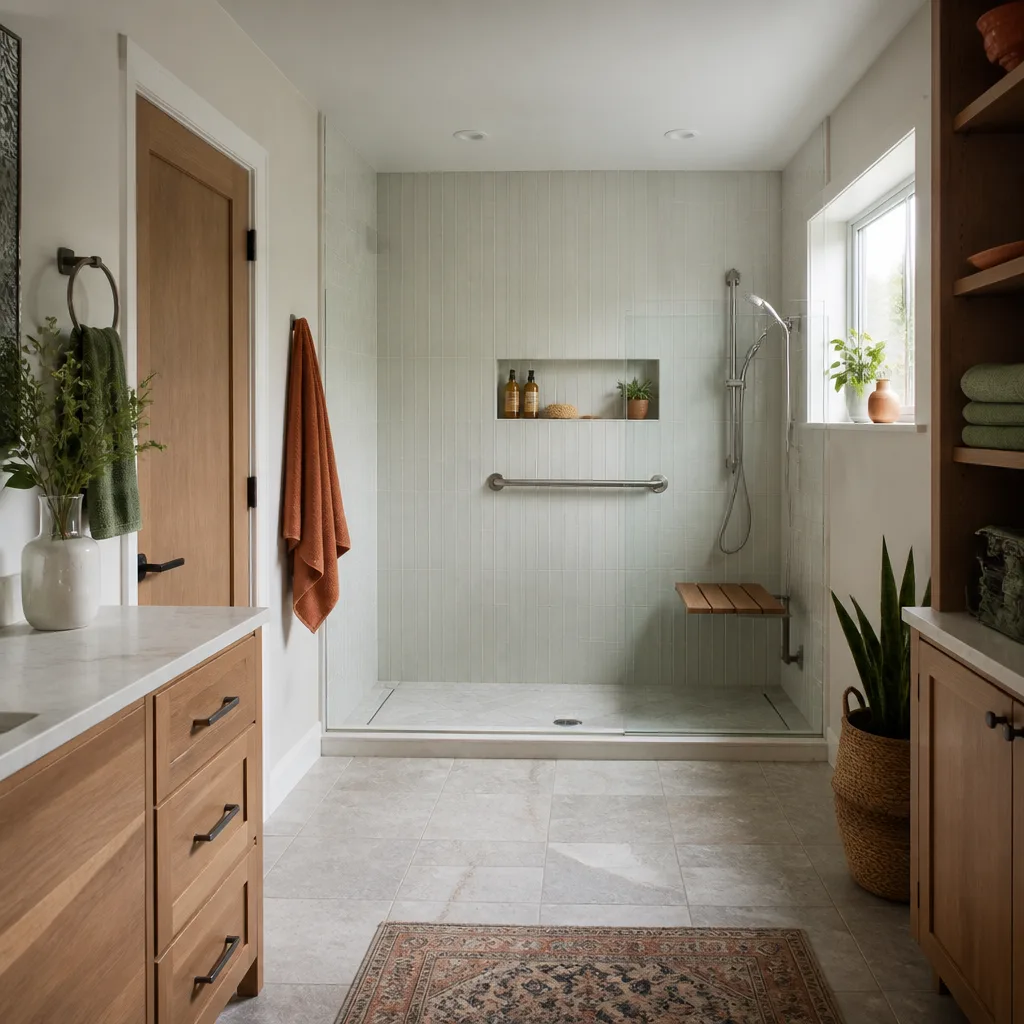
There’s a threshold in bathroom work that many homeowners don’t know to ask about: moving a drain or replacing supply lines. In Los Angeles, both require a permit. Once a permit is pulled, the work has to meet current code, and current code often requires upgrades that go beyond the original scope. A homeowner who planned to move a vanity six inches sometimes discovers that moving the drain means bringing the entire bathroom’s plumbing up to code, which means opening more wall, which means a repair quietly became a replacement.
This isn’t a bad thing. It’s actually the point at which full replacement often pencils out over targeted repair. Here’s the logic: if you’re already opening the wall for supply lines, and you’re already pulling a permit, and the tile is old, and the subfloor has seen moisture, the incremental cost of doing the full job now is often lower than doing a repair now and a replacement in four years.
We’d rather present that math honestly before the work starts than discover it mid-job and present it as a surprise change order. The Kitchen Remodeling in Los Angeles side of our business runs on the same principle: a written price before any work starts, based on a real inspection, not a guess. When we include permit-required scope in that written price, it stays included. If the inspector requires something additional, we tell you the cost before we proceed.
How a Written Scope Eliminates the “We Found Something” Conversation
If there’s one sentence that inflates bathroom budgets more than any other, it’s this: “We found something once we opened it up.” That sentence is where a $12,000 project becomes a $22,000 project, and it’s almost always the result of an estimate that was written before anyone actually looked at what was behind the tile.
Elmstead Remodeling does something different. Before any quote, we run a moisture scan. We check the drain condition where accessible. We look at the supply lines. We identify the substrate material. Then, and only then, we write the price. The result is a scope that already accounts for what’s behind the tile, because we looked before we wrote it. When the wall comes open and conditions match our scan, the price doesn’t move. If conditions somehow differ from what the scan showed, we stop, show you what we found, and agree on any adjustment before proceeding.
That’s the difference between an estimate and a plan. An estimate is a number. A plan is a number attached to a set of named conditions. In Los Angeles, where older homes hide surprises behind even the best-looking tile, the plan is worth more than the estimate. It’s the difference between knowing what your bathroom will cost and hoping it costs what you were told.
When to Call a Pro
If you’re reading this and thinking through your bathroom, the moment to call is not after the floor starts to sag. It’s the moment you notice any of the five signs above. Even one of them, checked early, can mean the difference between a $300 re-caulk and a $19,000 gut job. A moisture scan takes minutes. A re-caulk takes hours. A subfloor replacement takes weeks. The earlier you look, the less you spend.
And if you have kids or pets who will be home during the work, mention that on the call. We schedule quiet tools during nap hours, we use drop cloths and shoe covers on every visit, and we take a photo of the clean-up before the crew leaves, every time. Your Elmstead Remodeling bathroom project should leave the house better than we found it, not just with a better bathroom.
The Bottom Line
Here’s the short version, for Los Angeles homeowners deciding between bathroom repair and replacement:
- Look behind the tile, not at it. The substrate, the drain, and the supply lines matter more than the tile itself, especially in homes built between 1940 and 1970.
- Watch for the five moisture signs. Soft floors, field-center grout cracks, efflorescence, paint bubbling near the tub, and door swelling are surface signs of hidden damage.
- Surface repairs work when the surface is the only problem. If the substrate is dry and the tile is bonded, re-grouting and re-caulking are legitimate.
- Permit-required scope changes the math. Once you open a wall for supply lines or move a drain, full replacement often costs less over a decade than repair-now-replace-later.
- A written price, based on a real inspection, is the difference between a plan and a guess. It’s also the difference between your project costing what you were told and costing what someone finds.
If you’re in Los Angeles and need help deciding, Elmstead Remodeling offers free estimates with a moisture scan and a written price before any work starts. Call (949) 850-9896 and we’ll walk you through it, whether you repair or replace.
Frequently Asked Questions
A targeted repair, like re-grouting a shower or replacing a caulk line, typically runs $300 to $2,500 in Los Angeles, depending on scope. Once the work involves opening a wall, replacing substrate, or moving plumbing, costs climb quickly, which is why a moisture scan before quoting matters. Call (949) 850-9896 for an exact quote. Estimates are free.
Not at Elmstead Remodeling, provided the conditions behind the tile match what our pre-project moisture scan showed. If something unexpected appears, we stop, show you, and agree on any change before proceeding. The written price you get before work starts is based on a real inspection, not a guess.
Replacing tile over a sound substrate generally doesn’t require a permit. However, moving a drain, replacing supply lines, or any change to the plumbing does. We’ll tell you during the walkthrough whether your project crosses that line and include any permit costs in your written quote.
A full bathroom replacement in Los Angeles typically takes three to five weeks from demo to final inspection, depending on the scope and whether plumbing or framing work is required. We’ll give you a schedule with the written quote, and we’ll protect your floors, keep clean-up photos, and work quietly during nap and school hours where possible. Call (949) 850-9896 to talk through your project’s timeline.
Written by the team at Elmstead Remodeling.
Need Construction Help?
Call Elmstead Remodeling - licensed & insured, here with fast after-hours help in Los Angeles.
(949) 850-9896