Last updated October 8, 2026







Free written scope consultation - allowances, timeline, and change-order rules on paper before a single trade is scheduled
General Contractor Maintenance Checklist for Los Angeles Homeowners
The average stucco crack in a Los Angeles home is cosmetic, but roughly one in eight conceals a compromised weather-resistive barrier behind it, and the difference between the two isn’t visible without knowing exactly where to press and what to listen for. Most LA homeowners skip maintenance until something breaks. What most people don’t realize is that the items causing the largest repair bills in this region are the ones that fail silently: seismic straps, stucco weep screeds, and roof-to-wall flashings. This checklist organizes those quiet failure points by location in the house, not by season, so you can walk your property once a year with purpose. You’ll learn what to photograph yourself, what requires a licensed eye, and when a maintenance finding crosses into permit-required repair territory under the Los Angeles Department of Building and Safety.
Quick Answer
A General Contractor Maintenance Schedule: What to Do and When for Los Angeles homeowners should be organized by failure consequence rather than season, prioritizing water intrusion points (stucco weep screeds, roof-to-wall flashings, window pan flashings), structural safety items (water heater seismic straps, gas line flexible connectors, hillside retaining wall drainage), and silent failures that become five-figure repairs. Homeowners can photograph visible indicators themselves weekly, but an annual walkthrough with a licensed Los Angeles contractor who understands both LADBS code triggers and regional climate stress points catches what photos miss. The highest-ROI items on any LA maintenance checklist are the ones with zero visible symptoms until failure: seismic strapping corrosion, weep screed blockage, and flashing separation at stucco transitions.
Styles & brands we work with







Table of Contents
- Water Intrusion: The Silent Los Angeles Budget Killer
- Structural and Seismic: What Fails Quietly in LA Homes
- Hillside and Retaining Wall Drainage: The Overlooked Liability
- Interior Systems: Valves, Connectors, and Fixtures
- What to Photograph Yourself vs. What Requires a Licensed Eye
- When a Maintenance Finding Crosses into Permit Territory
- How to Use a Maintenance Visit to Update Your Written Scope
- Common Mistakes to Avoid
Water Intrusion: The Silent Los Angeles Budget Killer
In Los Angeles, water is the most expensive intruder most homeowners never see. The region’s dry summers and mild winters create a false sense of security; we go months without rain, then a single atmospheric river overwhelms drainage that hasn’t been checked in years. The three water intrusion points that generate the largest repair bills in LA are stucco weep screeds, roof-to-wall flashings, and window pan flashings. Each fails quietly, and each is cheap to fix early and expensive to fix late.
Weep screeds are the metal strips at the base of stucco walls that let moisture escape from behind the stucco. In Los Angeles, where most homes built before 1990 have traditional three-coat stucco, weep screeds get blocked by soil, mulch, or concrete that’s been poured too high against the foundation. When a weep screed is buried or painted over, moisture trapped behind the stucco has nowhere to go, and rot begins inside the wall cavity. The fix is simple: keep soil and mulch at least four inches below the weep screed and check that the perforations are visible along the entire bottom edge of every stucco wall.
Roof-to-wall flashings are the metal transitions where a roof meets a stucco or siding wall. In LA’s hillside neighborhoods, from Silver Lake to Mount Washington, these flashings take a beating from morning marine layer moisture and afternoon sun. The metal expands and contracts daily, and the sealant eventually cracks and separates. What makes this particularly sneaky is that the separation is usually on the upper edge of the flashing, where you can’t see it from the ground. A contractor on a ladder with a moisture meter can find these in minutes.
Window pan flashings, especially on wood-framed windows in older Los Angeles homes, fail at the corners first. Water travels behind the stucco or siding and shows up as peeling paint or a soft spot on the interior drywall months later, often far from the actual entry point. If you see interior paint bubbling near a window, don’t repaint. Get a moisture reading behind the wall first.
What to Check Monthly (5 Minutes)
- Walk the exterior perimeter of your home and look for soil, mulch, or concrete within four inches of any stucco weep screed.
- Check that all downspout extensions carry water at least three feet from the foundation, not just to the edge of a planter bed.
- Look at the caulking around the top edge of every window and door frame for hairline gaps.
- Check for white mineral staining (efflorescence) on stucco or foundation walls; it indicates water moving through masonry.
- After any significant rain, walk the interior perimeter and check baseboards for swelling, even in rooms with no exterior-facing walls.
Structural and Seismic: What Fails Quietly in LA Homes
Seismic safety in Los Angeles is not a one-time retrofit; it’s an ongoing inspection commitment. The components that matter most after a retrofit are the ones that corrode or loosen over years of small earth movements and coastal air. Water heater seismic straps, gas line flexible connectors, and foundation anchor bolts all degrade in ways that are invisible without a deliberate inspection.
Water heater seismic straps are required in Los Angeles under current code and are designed to keep a 40-gallon tank from toppling during an earthquake. What hides in plain sight: the straps must be installed in the upper third and lower third of the tank, and the screws connecting the straps to the wall must be driven into studs, not drywall. In LA’s older homes, especially in Highland Park and Eagle Rock where water heaters are often in exterior closets or garages, we regularly see straps that are loose, rusted, or attached to drywall with anchors that would pull out in a moderate quake. The check is visual: no rust on the strap, no slack in the connection, and the strap lying flat against the tank, not bowing away from it.
Gas line flexible connectors are the short corrugated pipes connecting a rigid gas line to an appliance, usually a water heater, dryer, or range. Older brass connectors, common in LA homes built before 1985, can crack under stress. The current standard is a stainless steel connector, and the check is a simple visual one: brass, especially with green corrosion at the fittings, should be replaced. This is a safety item, not a cosmetic one; natural gas leaks in enclosed garages don’t announce themselves until they’re dangerous. If you smell gas anywhere near an appliance, leave the house immediately and call your utility company from outside.
Foundation anchor bolts and cripple wall bracing are the backbone of seismic retrofits, but they sit in crawl spaces and garages where nobody looks. Bolts can loosen over decades of micro-movements. In LA homes with raised foundations, a contractor should verify that anchor bolts are tight and that any cripple wall bracing straps remain secure against the framing. This is not a DIY inspection for most homeowners; it requires getting into a crawl space and knowing exactly what tension and position each component should be in.
Hillside and Retaining Wall Drainage: The Overlooked Liability
If your Los Angeles home sits on a hillside or against a retaining wall, the most important maintenance item on your checklist is one you cannot see performing its job. Hillside retaining wall drainage is designed to move water out from behind the wall, relieving hydrostatic pressure that would otherwise push the wall forward over years. When that drainage fails, the first sign is often a slight inward bow in the wall, a set of hairline cracks at the base, or soil staining on the wall face. All three are late signals.
Weep holes at the base of retaining walls must remain clear. In Los Angeles neighborhoods like Baldwin Hills, Echo Park, and the Santa Monica Mountains foothills, these weep holes clog with silt, leaf litter, and even insect nests between rains. A wall that is over four feet tall and retaining soil on one side should be inspected annually by someone who understands what “normal” drainage looks like for that specific wall design. Some walls use weep holes; some use a French drain behind the wall that daylights elsewhere. If you don’t know which system your wall uses, find out before the rainy season.
Surface drainage above the wall matters equally. If the slope above your retaining wall concentrates water, a heavy rain will overwhelm any behind-wall drainage system. Look for areas where water sheets across the slope rather than soaking in, and check that any swales or berms directing water away from the wall are still functioning after every significant rain event.
One other hillside-specific item that most checklists miss: check the landscape irrigation lines that run near or above retaining walls. A slow leak from a drip line or a sprinkler coupling can saturate the soil behind a wall over months and create the same failure conditions as a storm, with no visible weather event to blame it on.
Interior Systems: Valves, Connectors, and Fixtures
Interior plumbing and mechanical systems in Los Angeles homes fail in patterns shaped by water chemistry and age more than by weather. The city’s water is moderately hard, which accelerates scale buildup in supply lines and around valve seats. What that means in practice is that shutoff valves that haven’t been exercised in years often won’t turn when you need them to, and supply lines connected to toilets, sinks, and washing machines are the most common source of slow, damage-causing leaks in LA homes.
Every homeowner should know where the main water shutoff is and confirm it operates once a year. In older Los Angeles homes, the main shutoff is often at the street in a meter box, and the gate valve inside the house may be frozen from years of disuse. A frozen shutoff turns a burst pipe from a $500 plumbing call into a $50,000 water damage event. Exercise the valve twice a year by turning it fully closed and back open, and if it doesn’t move, call a plumber before you have an active leak.
Beneath sinks, check the supply line connections for mineral crust developing at the compression nuts. That crust indicates a micro-leak that is slowly degrading both the fitting and the cabinet floor. On washing machines, replace rubber supply hoses with braided stainless steel lines; rubber hoses are the single most common cause of washing-machine-related water damage in Southern California homes, and braided stainless hoses cost under $30 per pair.
Exhaust fans in bathrooms and kitchens are easy to overlook because they usually still make noise. A fan that runs but doesn’t exhaust properly is silently pumping moisture into the attic, where it condenses on framing and creates mold conditions you’ll never see from the living space. In Los Angeles, where summer attic temperatures already stress roof sheathing, adding trapped moisture is a recipe for premature roof deck replacement. Check bathroom exhaust fans by holding a square of two-ply tissue against the grille while the fan runs; it should hold firmly against the grille, not flutter or fall.
What to Photograph Yourself vs. What Requires a Licensed Eye
The distinction between what a homeowner can document and what requires a licensed contractor isn’t about effort; it’s about the difference between recording symptoms and diagnosing causes. Both have value, especially for insurance documentation, but they serve different purposes.
Photograph yourself. Cracks in stucco, interior drywall, concrete, tile, or grout, photographed with a quarter or a ruler for scale and dated in the image metadata, create a timeline that helps a contractor determine whether movement is active or dormant. Water staining on ceilings or walls, photographed at the widest angle possible to show location within the room. Any evidence of termite or pest activity: mud tubes, frass, hollow-sounding wood, discarded wings. Foundation vents that are blocked by soil or debris. Weep screed sections that appear buried. Downspout discharge points. These photos are valuable documentation for insurance claims, contractor consultations, and for tracking whether a condition is changing over time.
Requires a licensed General Contractor. Any crack in stucco wider than 1/16 inch at the widest point, or any crack that continues around a corner onto a different wall plane. A licensed contractor checks these with a moisture meter and knows how to probe for a compromised weather-resistive barrier without causing additional damage. Roof-to-wall flashing conditions require a ladder and often a roofing-specific eye; the failure mode is at the top edge of the flashing, invisible from the ground. Retaining wall movement requires understanding of whether the wall is load-bearing or decorative, what drainage system exists behind it, and what “normal” cracking looks like for that wall’s material and age. Gas connector and seismic strap inspections involve components where a wrong conclusion has safety consequences, and these should always be done by someone who carries liability insurance for the inspection.
When a Maintenance Finding Crosses into Permit Territory
Under the Los Angeles Department of Building and Safety, the dividing line between maintenance and permit-required repair is determined by what the repair affects, not by how small the visible damage is. Understanding this line matters because unpermitted work discovered during a later sale or insurance claim can create liability that far exceeds the cost of doing the repair properly in the first place.
Here are the indicators that a maintenance finding has crossed into permit territory in Los Angeles:
- Structural framing repair. If water intrusion has rotted wall studs, floor joists, or roof rafters, the repair requires a permit. Replacing drywall over sound framing is maintenance; replacing any framing member is a building permit.
- Replacement of more than 50% of a roof assembly. Patching a roof or replacing a few shingles is maintenance. Replacing the roof decking or more than half the roof covering crosses into re-roofing permit territory.
- Any alteration to electrical wiring behind a wall. Replacing a fixture or a switch is maintenance. Moving a circuit, adding an outlet, or rewiring any part of a circuit requires an electrical permit.
- Movement of any plumbing drain or supply line inside a wall or slab. Replacing a faucet or a supply line under a sink is maintenance. Relocating a drain, moving a water supply, or installing new plumbing in a wall requires a plumbing permit.
- Any exterior wall assembly work that opens the weather-resistive barrier. Replacing stucco over a cracked section where the paper or wrap is intact is maintenance. Once the weather-resistive barrier behind the stucco is compromised and needs replacement, you’re in permit territory, because the work affects the building envelope.
- Seismic retrofit work. Adding or replacing foundation anchor bolts, cripple wall bracing, or shear wall panels requires a permit. Seismic strapping of a water heater is a specific code compliance item that does not typically require a separate permit when done as part of water heater replacement, but the water heater replacement itself requires one.
- Retaining wall reconstruction. Repointing or sealing a retaining wall is maintenance. Rebuilding any portion of a wall that retains soil over four feet in height requires a permit and a structural calculation from a licensed engineer.
When in doubt, call LADBS or ask a licensed general contractor. A contractor who immediately knows whether a finding crosses the permit line is worth more on a maintenance visit than one who needs to “look into it” because the permit determination often changes the entire scope and cost of the correction.
How to Use a Maintenance Visit to Update Your Written Scope
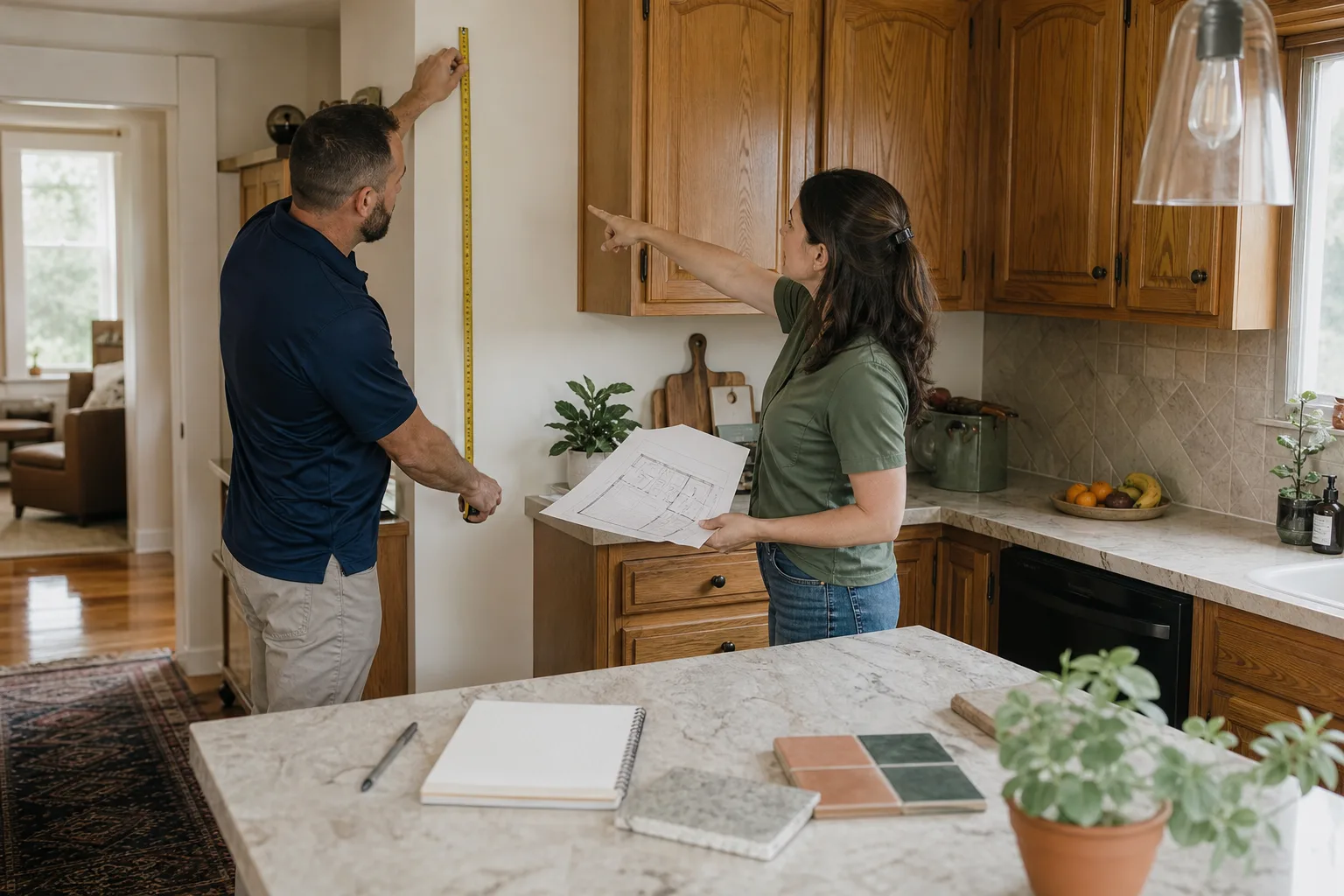
A general contractor’s maintenance visit in Los Angeles is not just a chance to find problems; it’s a chance to update your written scope before a small issue becomes a permitted repair. This is where the written price promise matters most. Here’s how to use the visit strategically.
Before the contractor arrives, walk your home and photograph everything that has changed since the last visit: new cracks, new stains, doors that stick in humid weather, windows that are harder to open, grout that is crumbling, caulk that has separated. These photos give the contractor a starting point that saves time and makes sure nothing gets skipped.
During the walkthrough, have the contractor organize findings into three tiers. Tier one: items that need attention now to prevent worsening damage. Tier two: items that should be budgeted and scheduled within the next twelve months. Tier three: items to monitor and photograph at regular intervals. This tiering forces clarity about what is urgent and what can wait, and it gives you a written document to refer back to.
At the end of the visit, ask for a written list of findings with each item flagged as maintenance (no permit required) or repair (permit likely required). Ask for a written price on any Tier one items. This is where the written-price-before-work-starts standard matters; a contractor who gives you a clear price on a small stucco repair or a flashing replacement during a maintenance visit is giving you the information you need to decide before the problem worsens. You’re not committing to the work by getting the price; you’re getting information that lets you plan.
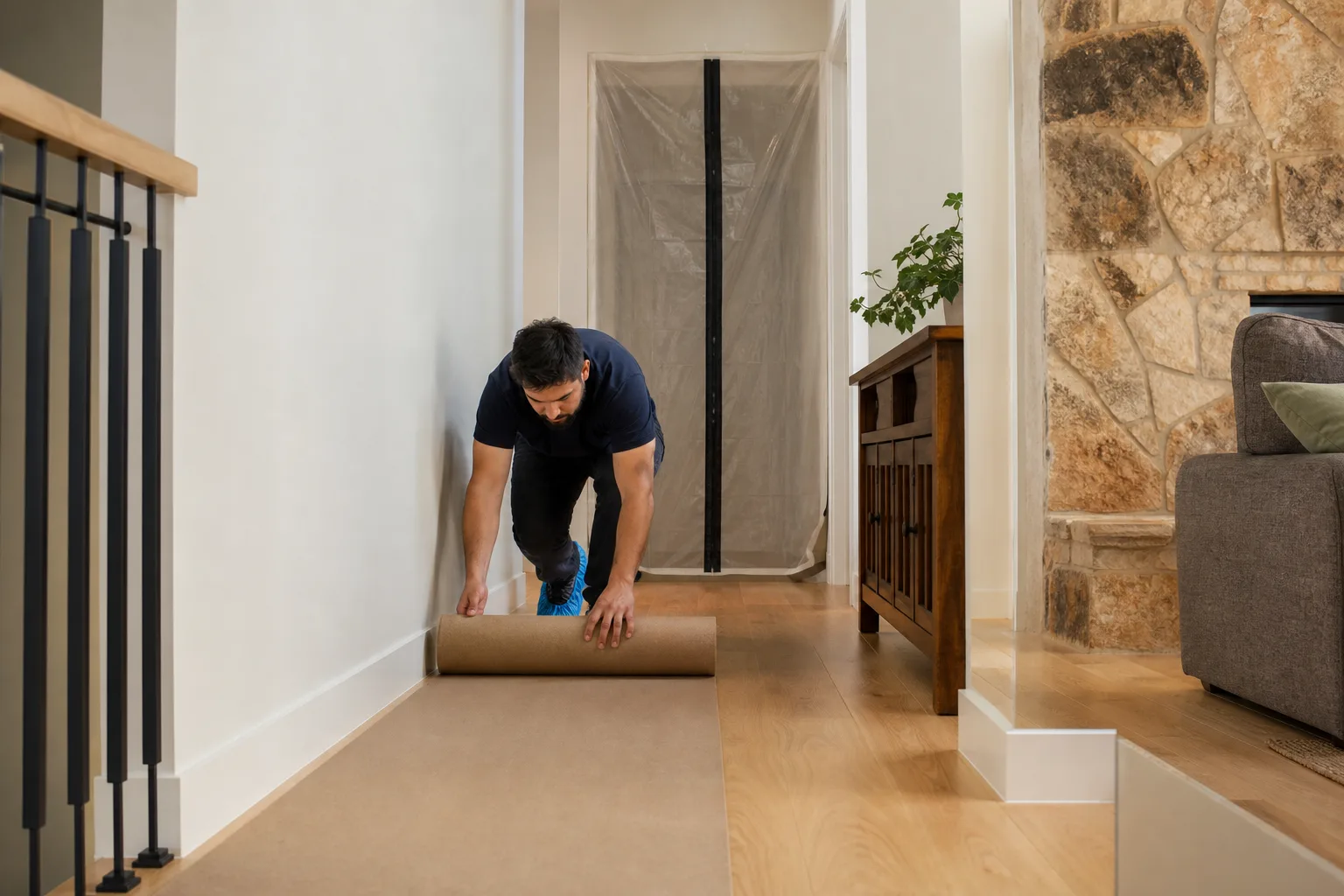
At Elmstead Remodeling, our maintenance visits are priced as a flat fee and include exactly this output: a written findings list organized by tier, a permit determination on each finding, and a written price on anything that needs correction. We cover the floors with drop cloths and wear shoe covers inside the house on every visit, and we send a photo of the clean-up before the crew leaves. It’s a small thing that matters when you’re juggling kids and pets and a busy week.
Common Mistakes to Avoid
- Repainting over water damage. Paint seals the surface but doesn’t remove the moisture in the wall cavity; masking the problem gives rot more time to spread behind the drywall before it’s discovered. A moisture meter reading is ten minutes and tells you whether repainting is cosmetic or premature.
- Ignoring hairline stucco cracks because they’re small. Width isn’t the only variable; a hairline crack that runs diagonally from a window corner is more significant than a wider crack that runs vertically along a control joint. Context matters more than width.
- Replacing windows before checking the flashing. Many Los Angeles homeowners replace windows thinking the window is the source of a leak when the real problem is the pan flashing behind the stucco. A new window over a failed flashing leaks just like the old one.
- Caulking the bottom of weep screeds. Homeowners sometimes seal the bottom edge of stucco walls to keep out pests, not realizing they’ve blocked the moisture drainage path. Weep screeds must stay open along the entire bottom edge.
- Skipping the crawl space because nothing is wrong. Foundation bolts, cripple wall straps, and plumbing supply lines live in the crawl space, and all of them fail silently. An annual crawl space inspection is the cheapest insurance against the most expensive repairs.
- Using expanding foam to seal exterior gaps. Foam is not a water-resistive barrier and holds moisture against framing; exterior gaps around windows and doors should be sealed with a proper exterior-rated sealant, not foam.
- Assuming a maintenance visit and an estimate are the same thing. An estimate for a specific project is not the same as a comprehensive maintenance walkthrough. The maintenance visit finds problems; the estimate prices a specific correction. Skipping the former means you only learn about problems after they’ve already caused damage.
See the difference
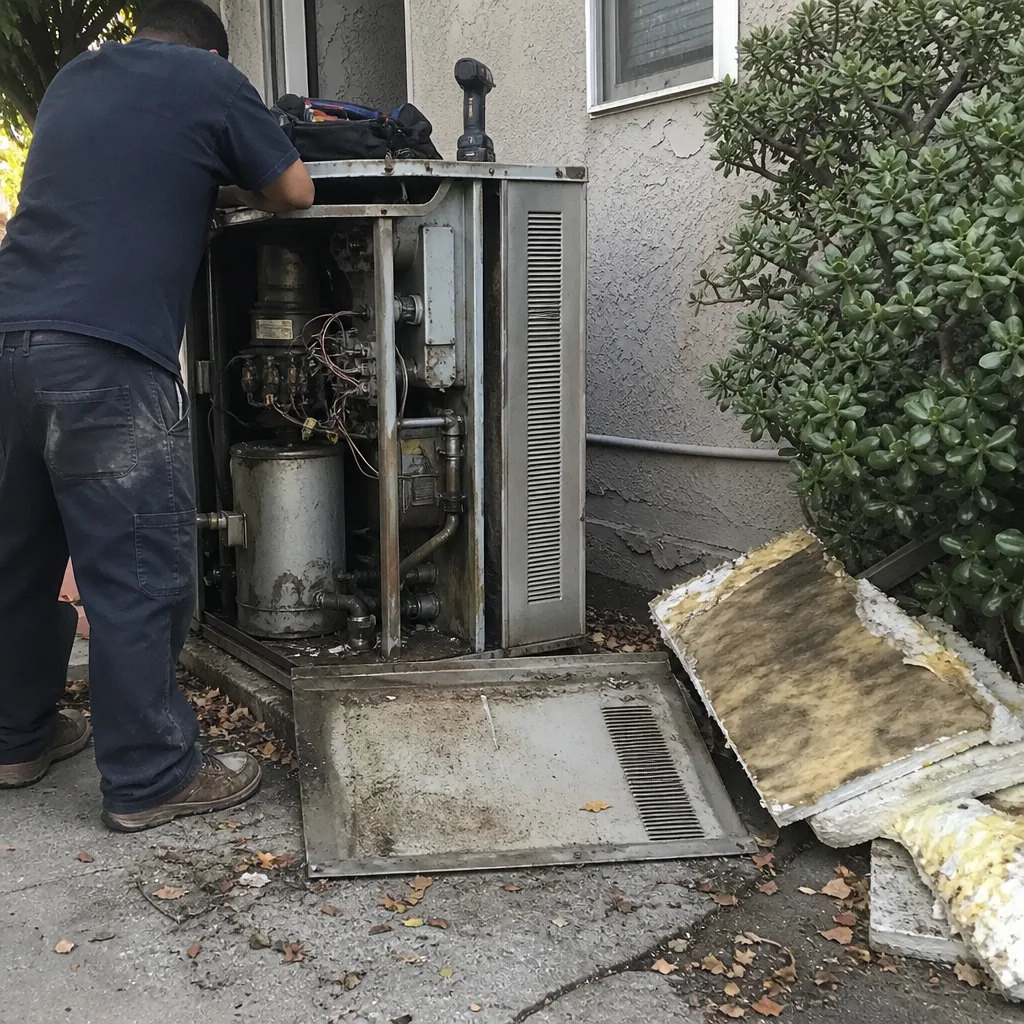 Before
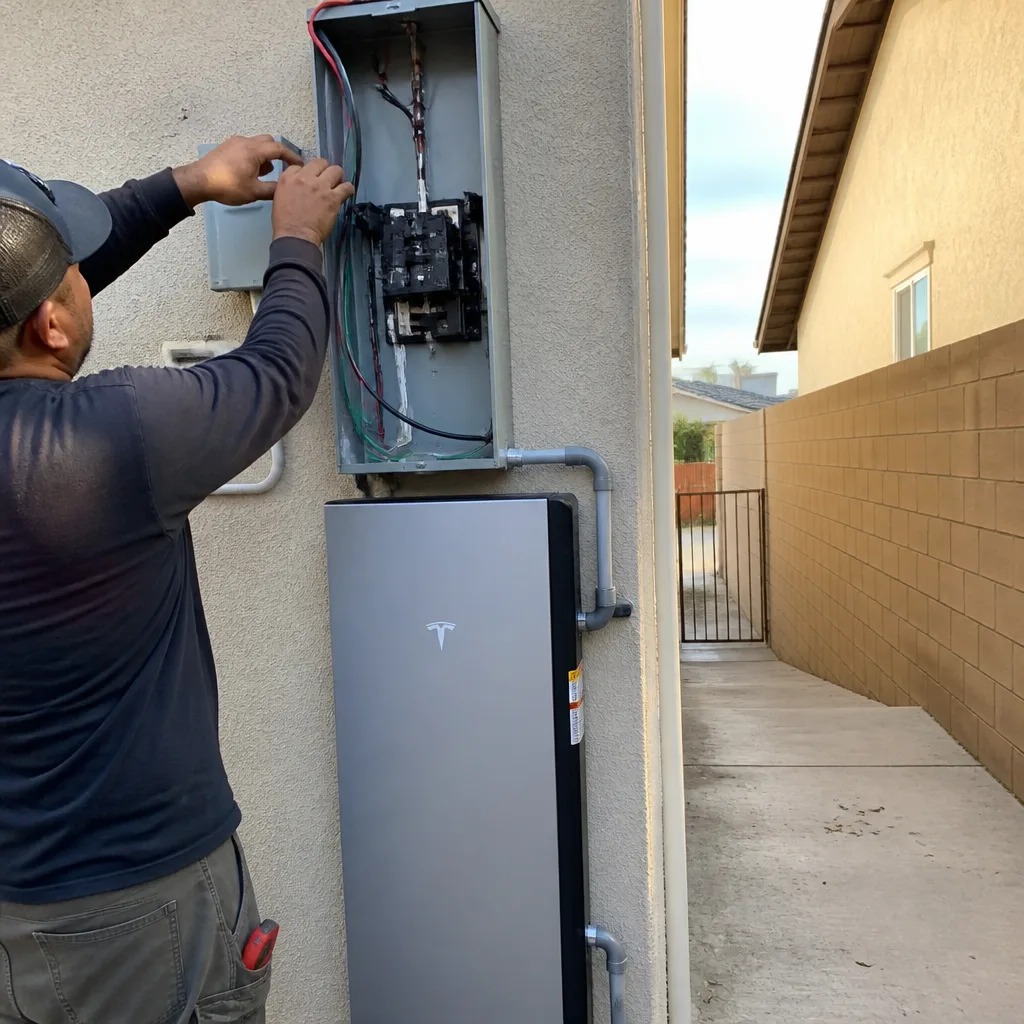 After
After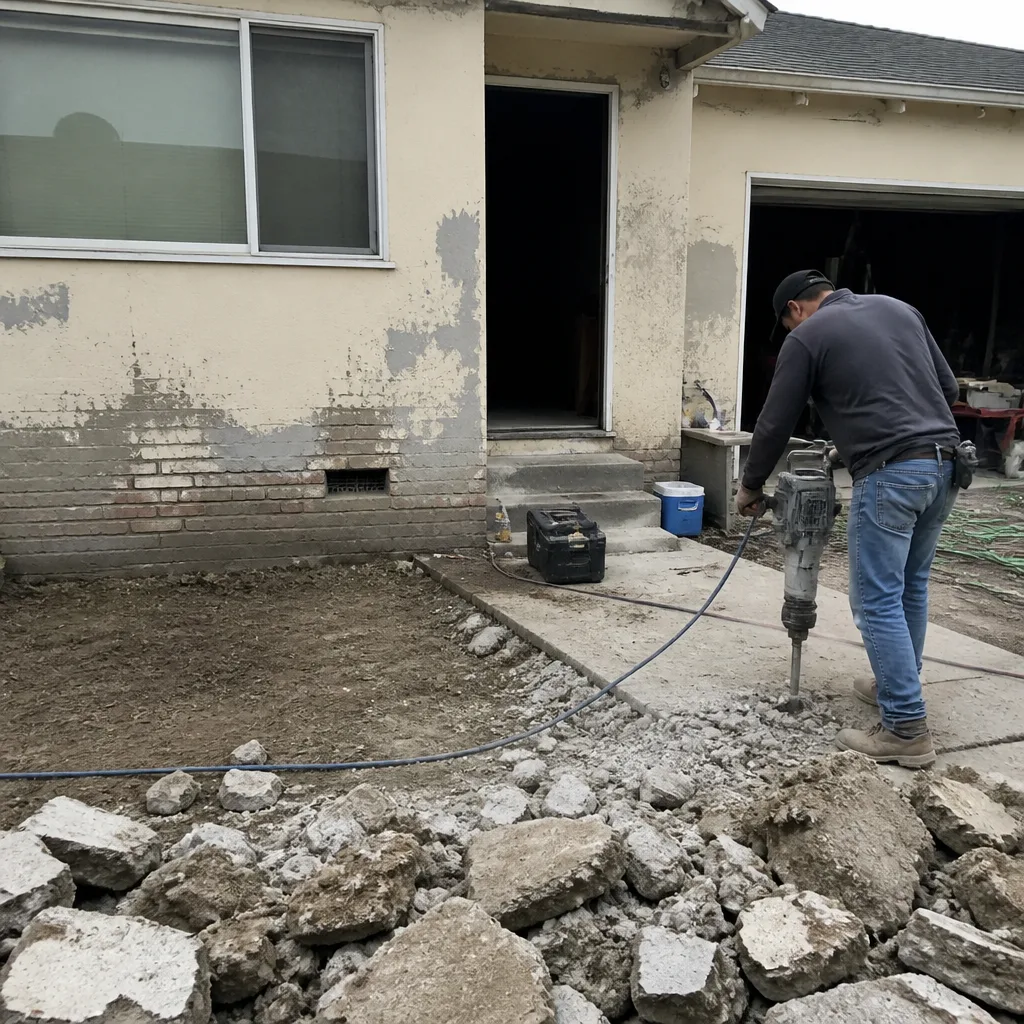 Before
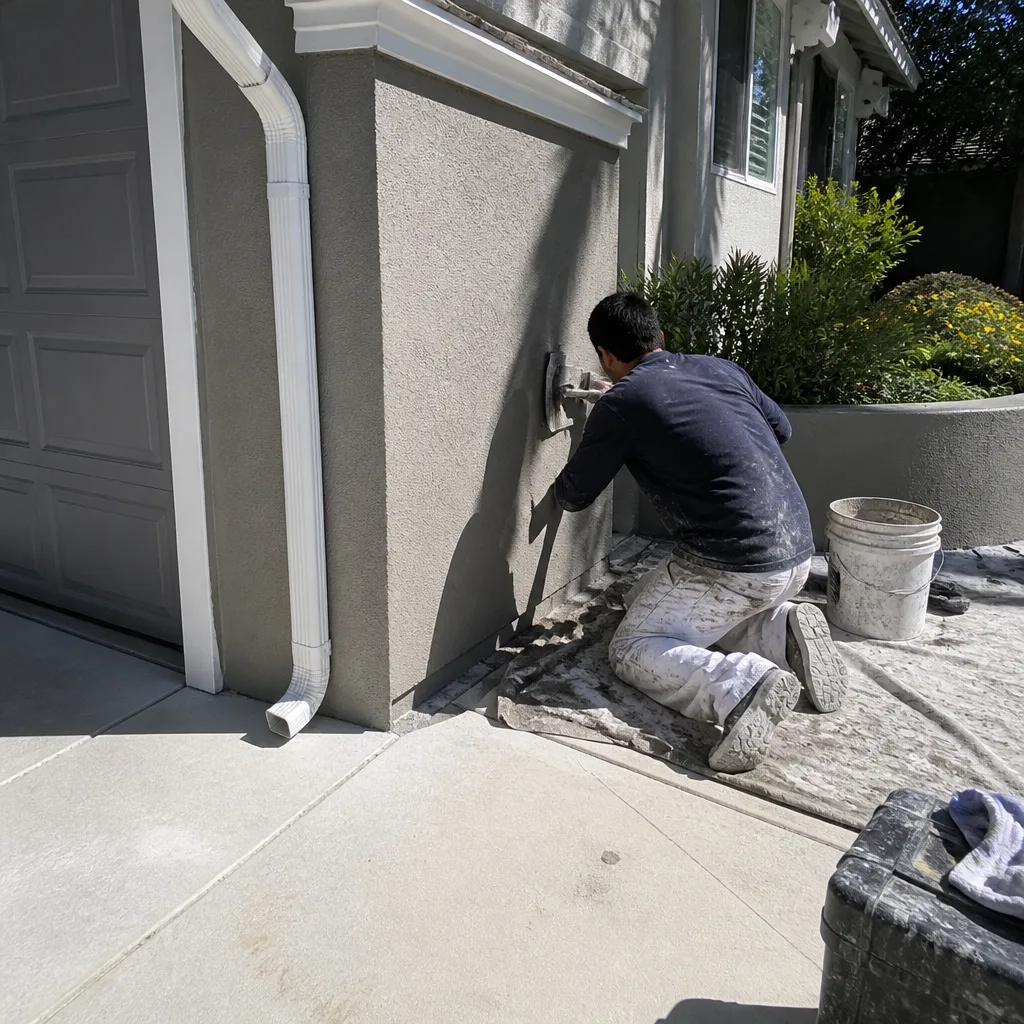 After
After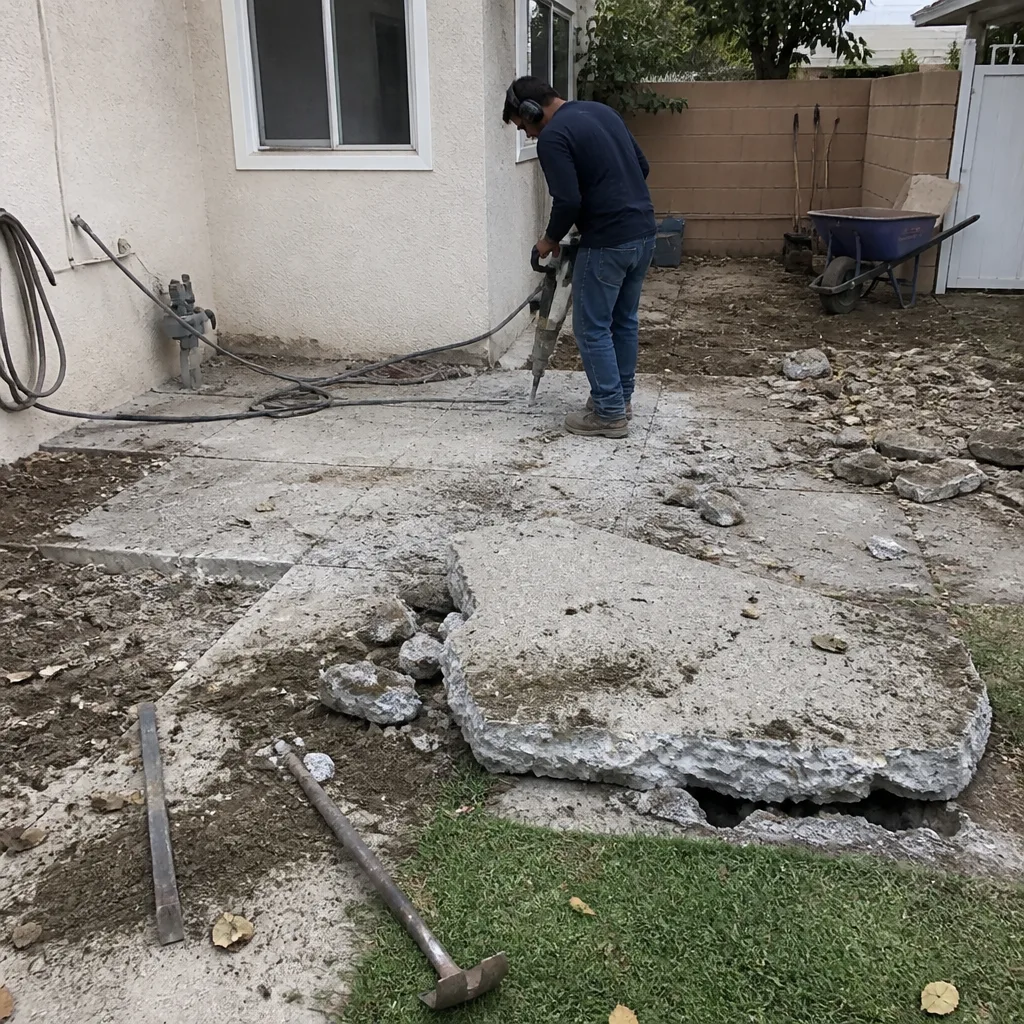 Before
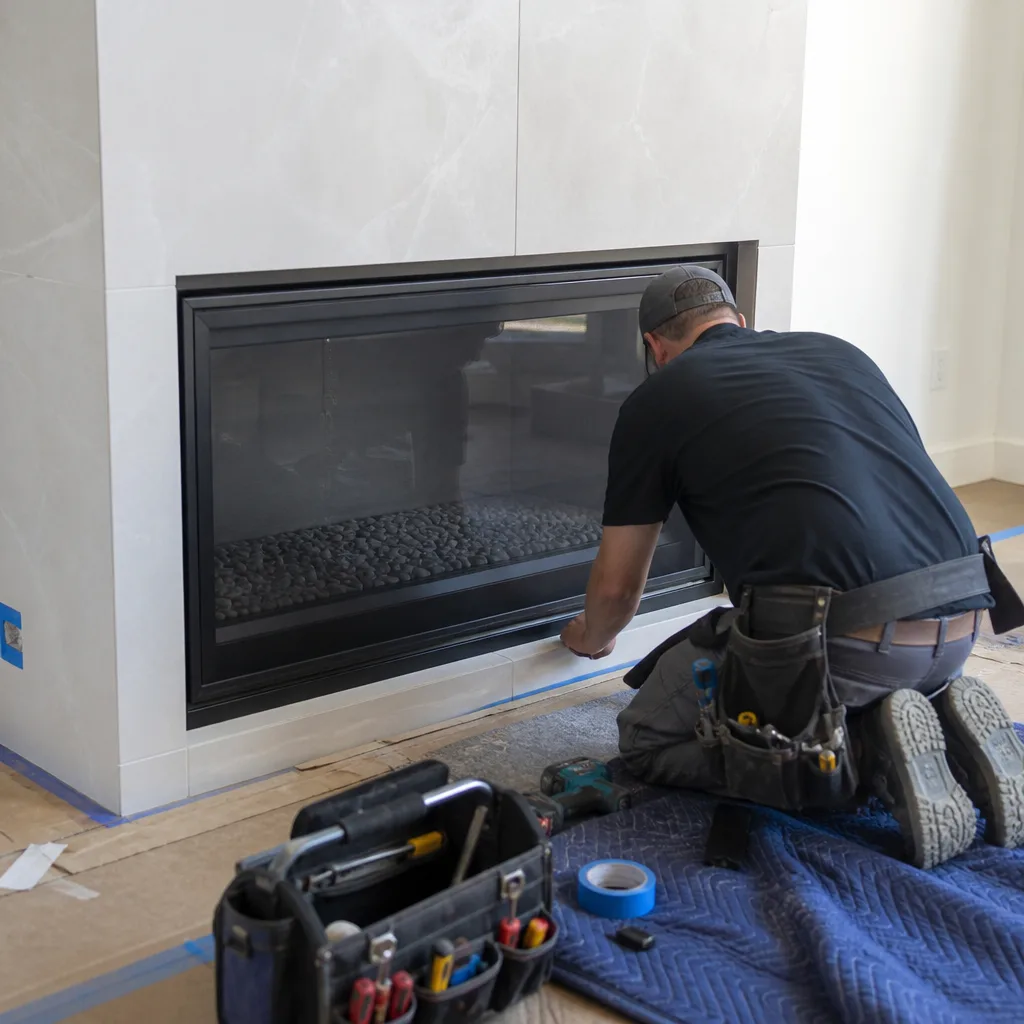 After
AfterWhen to Call a Professional
Call a licensed general contractor in Los Angeles when any of these conditions are present: a stucco crack that runs diagonally from a corner or opening, a retaining wall showing any inward bow or base cracking, a water stain that reappears after repainting, a gas appliance connector that shows green corrosion, or any shutoff valve that won’t turn. These are not homeowner-level items. The cost of a professional maintenance visit is measured in hundreds of dollars; the cost of getting these wrong is measured in tens of thousands. Elmstead Remodeling offers free estimates in Los Angeles and our maintenance visits include a written findings list organized by urgency. Call (949) 850-9896 to schedule.
Frequently Asked Questions
A general contractor maintenance checklist for Los Angeles should include water intrusion points (stucco weep screeds, roof-to-wall flashings, window pan flashings), seismic safety components (water heater straps, gas line flexible connectors, foundation anchor bolts), hillside drainage if applicable (retaining wall weep holes, surface drainage patterns, irrigation leak checks), and interior systems (water shutoff valves, supply line connections, exhaust fan function). Each item should be checked for specific failure modes that are common in LA’s climate and housing stock, not just generic wear and tear.
For most Los Angeles homes, an annual walkthrough with a licensed general contractor is sufficient, with monthly homeowner-level checks of the specific high-risk items (weep screeds, downspout discharge, water heater straps) in between. Homes on hillsides or with retaining walls over four feet should have a drainage-specific inspection before the rainy season each year, typically in October or November. Homes with original 1970s-1980s plumbing, electrical, or windows may benefit from a second interior-focused check each spring.
In the Los Angeles market, a comprehensive maintenance walkthrough with a written findings report typically runs between $300 and $800 depending on the size of the home, whether it includes a crawl space or attic inspection, and whether the contractor provides a written permit determination on each finding. Some contractors apply the maintenance visit fee toward any repair work that follows. Elmstead Remodeling prices maintenance visits as a flat fee and includes a photo of the clean-up before the crew leaves. Call (949) 850-9896 for a current price and to schedule.
You can and should do the monthly and seasonal homeowner-level checks: weep screed clearance, downspout discharge, shutoff valve operation, visible stucco cracking, and caulk separation around windows. What you cannot do is diagnose whether a crack is cosmetic or structural, whether flashing has separated on its upper edge, whether a retaining wall is moving, or whether a gas connector is safe to leave in place. Those determinations require trained eyes, a moisture meter, and familiarity with LA’s specific failure modes. The homeowner’s role is documentation and early detection; the diagnosis is the contractor’s job.
Maintenance findings cross into permit-required territory when the repair affects structural framing, opens the weather-resistive barrier, alters plumbing or electrical systems inside walls, replaces more than half of a roof assembly, or involves any seismic retrofit work. The Los Angeles Department of Building and Safety determines permit requirements based on what the repair affects, not on the size of the visible damage. A licensed contractor who works in LA regularly should be able to make this determination during the maintenance visit, in writing, so you know before you budget whether any correction is maintenance or a permitted repair.
The most expensive skipped item in Los Angeles is roof-to-wall flashing maintenance. The failure is invisible from the ground, happens gradually over years of thermal cycling between cool marine-layer mornings and hot afternoons, and the water travels along framing and sheathing before showing up as interior damage far from the leak. By the time the homeowner sees a ceiling stain, the repair often includes framing, insulation, drywall, and paint in addition to the flashing, and the total bill can exceed $15,000. The annual check costs a small fraction of that. Call (949) 850-9896 to schedule a maintenance visit and get a written findings report.
The Bottom Line

Los Angeles homes fail in predictable ways, and the failures that cost the most are the ones that happen quietly: weep screeds that get buried, flashings that separate where no one looks, seismic straps that loosen over years of small movements, and retaining walls that are slowly losing their drainage. Walking your property with this checklist annually, photographing what you can see, and hiring a licensed contractor for what you can’t, turns those quiet failures into early catches. For more guides & resources on protecting your home, explore our blog. The maintenance visit is the cheapest insurance you’ll ever buy in Los Angeles. We’ve seen it save homeowners from five-figure repairs more times than we can count.
Written by Graham Stein, Owner at Elmstead Remodeling, serving Los Angeles since 2005.