
Home Remodeling: Repair or Replace? How Los Angeles Homeowners Decide
Repair or replace? In Los Angeles, the honest answer depends less on the cost of the fix and more on the age of everything around it. A cracked tile or a dripping faucet is rarely the whole story in a home built before 1980. If you’d rather not spend your weekend diagnosing subfloors, call us at (949) 850-9896 and we’ll walk through it with you.
Why the Age of Your Los Angeles Home Changes the Math

Most repair-or-replace advice assumes a house is just a collection of parts. That works fine in a 2015 build. It falls apart in a 1955 ranch in the Valley or a 1920s bungalow in Echo Park, where the plumbing, wiring, and framing all aged together and none of them owe you anything.
Here’s what we look at before recommending anything:
- Galvanized steel supply pipes. Common in Los Angeles homes built before 1970. They corrode from the inside, and by year 50 or 60, they’re typically down to a pencil-width of water flow. If your bathroom repair involves opening a wall and the supply lines are galvanized, patching the drywall without replacing the accessible pipe often means reopening the same wall in a year or two.
- Aluminum branch wiring. Installed heavily between 1965 and 1973. Aluminum expands and contracts with heat, loosening connections over time. If a kitchen repair touches a circuit with aluminum wiring, Los Angeles code may require remediation at the connection points before the work can pass inspection.
- Original 1950s-1970s subfloors. Plywood and particle board from this era absorb moisture differently than modern OSB. In a bathroom repair, a soft spot near the tub is often a 3-foot problem hiding a 12-foot problem. The question is not whether the subfloor should be replaced. The question is whether the floor system underneath is still doing its job.
We pulled a “simple” toilet flange repair out of a home in Westchester last spring where the subfloor had been quietly soaking for years. The homeowner called expecting a $400 fix. The honest answer was a $4,200 repair because the rot had reached the joists. Not one dollar of that was upsell. The house simply hadn’t told anyone until the toilet started rocking.
Los Angeles Permit Triggers: When a Repair Becomes a Replacement by Code
Los Angeles has specific thresholds where a repair legally becomes a permitted replacement. Homeowners often discover this after work has started, which is the wrong time. Here are the triggers we see most often in LA:
- Flooring thresholds. In Los Angeles, replacing flooring beyond a certain square footage in a wet area can trigger a permit and a requirement to bring the subfloor or underlayment up to current code. A “tile repair” that turns into a full floor replacement often crosses from no-permit into permit territory.
- Electrical scope. Touching more than a certain number of outlets or any circuit work in a kitchen or bathroom often requires bringing the affected circuit up to current AFCI or GFCI standards. That’s not the contractor being difficult. That’s the Los Angeles Department of Building and Safety enforcing what the code now requires.
- Plumbing work beyond the fixture. Replacing a vanity faucet is one thing. Moving a drain line or touching the vent stack is another. Once the wall is open and the inspector is involved, the adjacent galvanized or cast iron may need to be replaced if it’s in unsafe condition.
- Water heater and fixture movement. Moving a water heater or shifting a gas line is a permitted change in Los Angeles, and the inspector will look at the surrounding clearances and strapping.
The practical takeaway: a repair that stays small is often truly small. A repair that grows, either because of rot or because the homeowner wants to change the layout, becomes a replacement in the eyes of the city. Getting a written price that outlines what a permit will and won’t trigger is the difference between a smooth project and a surprise.
The Cost of Deferring: What Waiting 2-3 Years Does in LA’s Climate

Los Angeles gets about 15 inches of rain a year. That sounds forgiving, and most of the year it is. But when it rains, it often comes in a few concentrated events, and older homes with original flashing and stucco don’t shed water the way they did in 1962. That means moisture gets behind tile, behind stucco, behind caulk, and it sits there in the mild, dry air long enough to do slow damage.
Here’s what deferral actually costs in an LA home:
- Moisture behind tile. A hairline grout crack in a shower in a home in Sherman Oaks or Long Beach may allow a teaspoon of water through per shower. Over two or three years, that’s hundreds of gallons entering the wall cavity. The repair goes from regrouting to replacing the backer board and possibly the studs. Cost multiplies by five to ten.
- HVAC inefficiency in older ducts. Many Los Angeles homes built before 1980 have ductwork in the attic with original insulation. Deferred duct replacement means paying higher cooling bills every summer while the system conditions the attic instead of the house. The repair cost doesn’t change much. The operating cost does.
- Termite and dry rot progression. Los Angeles is termite country. Soft wood that would be a $600 localized repair this year is a $3,000 structural repair in three years. Termites do not take years off.
The question to ask is not “what does this repair cost right now?” It’s “what does this repair cost in three years if the underlying issue keeps doing what it’s been doing?” In our experience writing these numbers down for Los Angeles homeowners, the answer often makes the decision obvious.
The Disruption Variable: What a Replacement Costs a Family That a Repair Doesn’t
Money is only one currency in this decision. The other is disruption, and for families with children and pets, disruption is measured in dust, noise, access restriction, and the number of times a stranger needs to be in the house.
A repair done twice over three years is not less disruptive than a replacement done once. It’s more. Here’s the honest accounting:
- Dust and VOCs. Every time a surface is opened, sanded, painted, or sealed, the house gets a fresh round of exposure. For a family with a crawling baby or a pet that licks the floor, that matters. A replacement done once, with containment and cleanup, is often a lower total exposure than two or three smaller jobs.
- Access restriction. A bathroom repair that takes three days means three days of showering elsewhere. Two repairs over three years means six days. A ten-day replacement done once means ten days, but then it’s done for fifteen or twenty years. The per-year disruption of the replacement is lower.
- Unknowns behind the wall. A repair that opens a wall and finds a problem becomes an emergency decision made under pressure. A replacement planned in advance includes the investigation as part of the project. The family makes one decision, calmly, with prices in writing, instead of three decisions made at the worst possible moment.
This is where the written price matters most. When the replacement price is known up front, the family can compare it honestly to the repair price plus the cost of likely follow-up work. When the repair price is fuzzy and the replacement price is unknown, the repair usually wins by default, not by merit.
The Question We Ask Before Recommending Repair or Replace
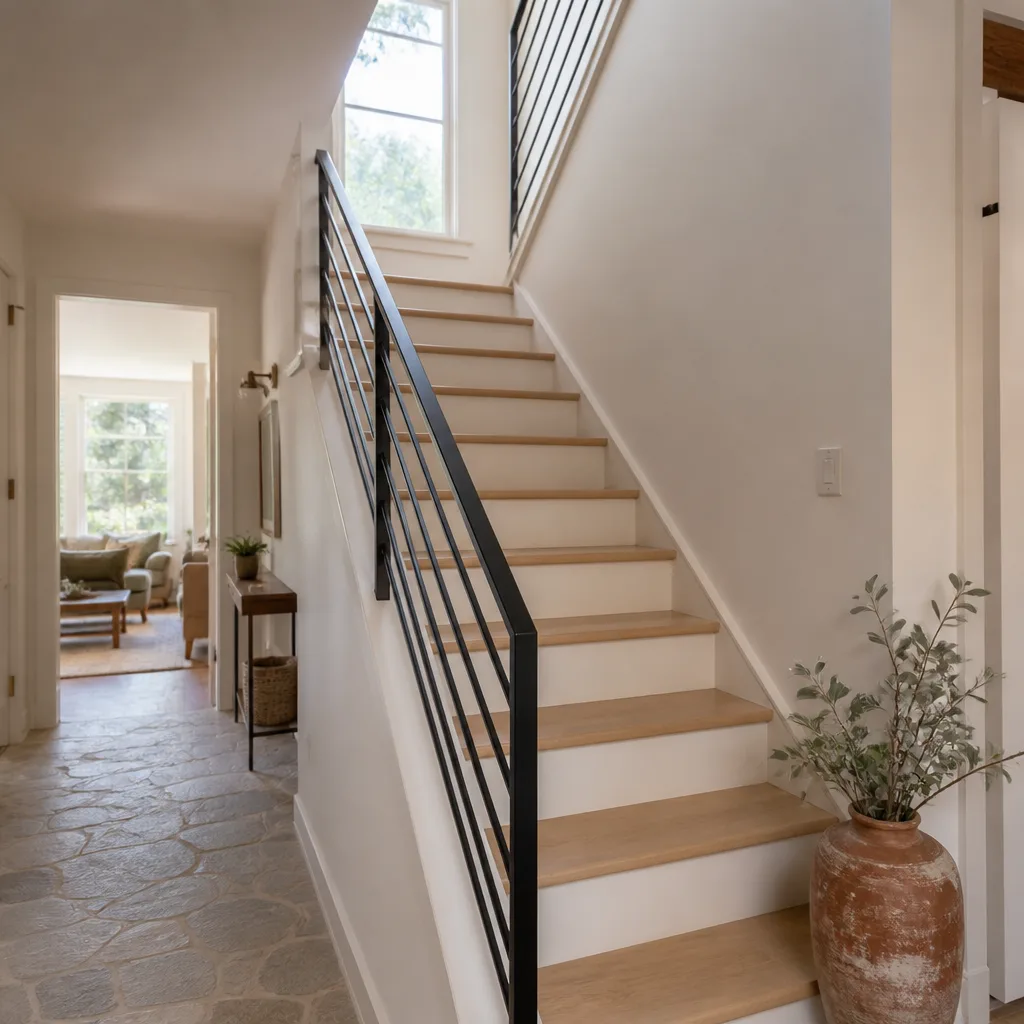
There’s one thing we always want to know before we give our recommendation: what is the condition of everything touching the thing that’s broken? Here’s the framework we use, and you can use it too:
- What is the age of the surrounding systems? If the plumbing, electrical, or subfloor is at or past its expected life, the repair is patching a sinking ship. The honest recommendation is replacement.
- Will the repair require opening a wall, floor, or ceiling? If yes, the investigation will reveal what’s behind it. A written price for the repair should include a line item for what happens if the investigation finds rot, asbestos, or code violations.
- Does the repair carry a real promise? A repair that comes with a Done Right Promise means the contractor is standing behind the work. A repair without a promise means the homeowner owns the risk of the patch failing.
- How long does the family plan to stay in the house? Five years or more? Replace it once and stop thinking about it. Two years or less and planning to sell? Repair may be the right call, but only if the repair won’t be flagged in a home inspection.
For families in Los Angeles, this framework usually produces a clear answer. The homes tell us what they need. Someone just has to ask the right questions and write the answers down.
One more thing worth naming: product choice. When we replace a surface in a home with kids and pets, we default to products with low-VOC and pet-safe profiles where there is a choice. We specify countertops from Cambria, Silestone, or Caesarstone, fixtures from Kohler, Moen, or Grohe, and exterior materials from James Hardie or GAF. These are brands with manufacturer warranties you can verify independently. The warranty travels with the product, not with the contractor. That matters in a city where homes change hands every seven years on average.
When to Call a Pro
If you’re unsure whether the soft spot behind the shower tile is a $400 problem or a $4,000 problem, that’s the moment to call someone who writes prices down for a living. A good contractor in Los Angeles will tell you what they know, what they suspect, and what it costs to find out. You should never be guessing at structural condition when a family is living in the house.
Related services in Los Angeles: Bathroom Remodeling in Los Angeles, Kitchen Remodeling in Los Angeles, and General Contractor in Los Angeles.
The Bottom Line
Repair or replace in Los Angeles comes down to three things: the age of the systems around the problem, the permit triggers that turn a small job into a mandated replacement, and how many times the family is willing to live through the disruption. The goal is not to sell a bigger job. The goal is to make one honest decision, in writing, that the family doesn’t have to revisit.
Our recommendation: get a written price for both paths. A real contractor in Los Angeles will give you the repair price, the replacement price, and the reasons for each. Then the decision is yours, made with information instead of pressure.
If you’re in Los Angeles and want a written price on a repair or replacement decision, Elmstead Remodeling home is the place to start. We offer free estimates and we answer the phone when you call. Reach us at (949) 850-9896.
Frequently Asked Questions
A targeted bathroom repair in Los Angeles typically runs $800 to $3,500 depending on what’s behind the wall. A full bathroom replacement in an older LA home often lands between $18,000 and $45,000, driven by plumbing, electrical, waterproofing, and permit requirements. The spread is wide because the condition of the surrounding systems is the real variable. Call (949) 850-9896 for a written price on your specific situation.
It depends on the scope. Small repairs like replacing a faucet or regrouting tile generally do not require a permit. Work that touches structural framing, moves plumbing, alters electrical circuits, or replaces large areas of flooring in a wet zone often does. A reputable contractor will tell you before work starts, and the permit should be included in the written price. Elmstead Remodeling pulls permits and passes inspections on every project that requires them.
A soft spot, a spongy feel, or tile that flexes underfoot usually means the subfloor has absorbed moisture. In Los Angeles homes from the 1950s through 1970s, original subfloor materials were often less moisture-resistant than what’s used today. The only way to know the extent is to inspect from underneath or open the surface. If the rot is localized, a patch may work. If it reaches the joists, the section needs replacement. A written quote should cover both scenarios before work begins.
Over a five-year horizon, the math usually favors replacing once. Two or three repairs to the same area, each with its own dust, VOCs, access disruption, and risk of finding something new, often cost more in total than a planned replacement. The exception is when the surrounding systems are in good shape and the repair genuinely addresses the root cause. In our experience with Los Angeles homes built before 1980, root causes are rarely as small as they first appear. Call (949) 850-9896 for an honest assessment and a written price on both paths.
Written by the team at Elmstead Remodeling.
Need Construction Help?
Call Elmstead Remodeling - licensed & insured, here with fast after-hours help in Los Angeles.
(949) 850-9896