Free written scope consultation - allowances, timeline, and change-order rules on paper before a single trade is scheduled
Dvele Roofing: The Los Angeles Owner’s Guide
Dvele roof repair in Los Angeles typically runs $470 – $2,125 for targeted fixes, and a full Dvele-compatible roof replacement on one of these high-performance homes generally lands between $9,440 and $23,600 depending on scope, finish, and access. We work on Dvele homes across Los Angeles and stock the fasteners, underlayment, and flashing details these builds call for, which means most jobs don’t stall waiting on parts. What usually brings an owner to us first is water staining on a ceiling, loose metal flashing after a Santa Ana wind event, or a leak that shows up the February after the original install started settling.
These homes are built tighter than what most Los Angeles roofers see on a daily basis. The roofing assembly on a Dvele sits over a ventilated, well-insulated envelope designed for energy performance, and when a penetration fails, water travels differently than it would on a stick-built 1960s ranch in the Valley. We know what to look for because we’ve been on enough of them now to recognize the pattern. If you have a Dvele and a ceiling stain you can’t explain, call (949) 850-9896. We’ll tell you over the phone what we think you’re dealing with and whether someone should come look.
Elmstead Remodeling is an independent Los Angeles contractor, not affiliated with Dvele. We work on their homes because they’re well built and worth fixing correctly.
Key Takeaways
- Dvele roof repair in Los Angeles: $470 – $2,125 for most targeted fixes
- Full Dvele-compatible replacement: $9,440 – $23,600
- We stock Dvele-compatible flashing, underlayment, and fasteners so jobs don’t wait on parts
- Written price before any work starts, every time
- Live person answers the phone 24/7 at (949) 850-9896
Which Dvele Models This Applies To
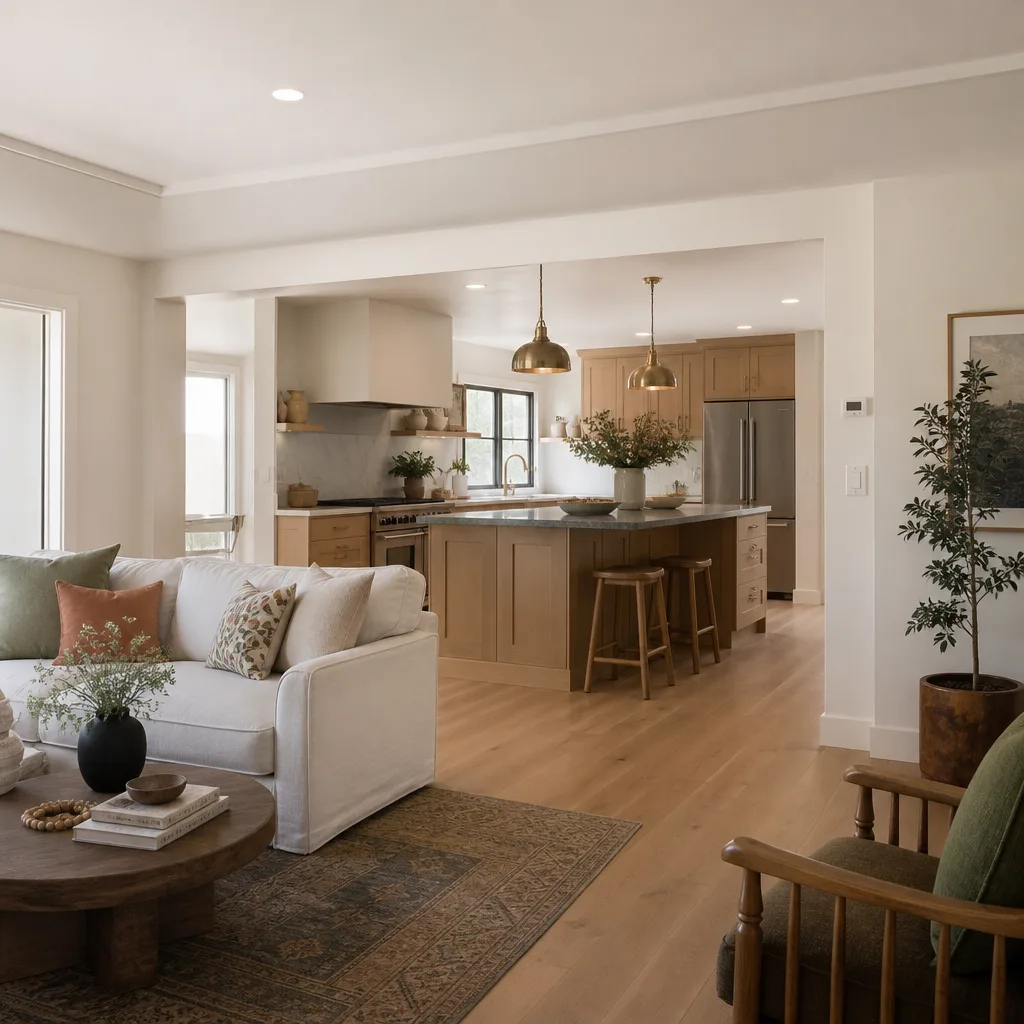
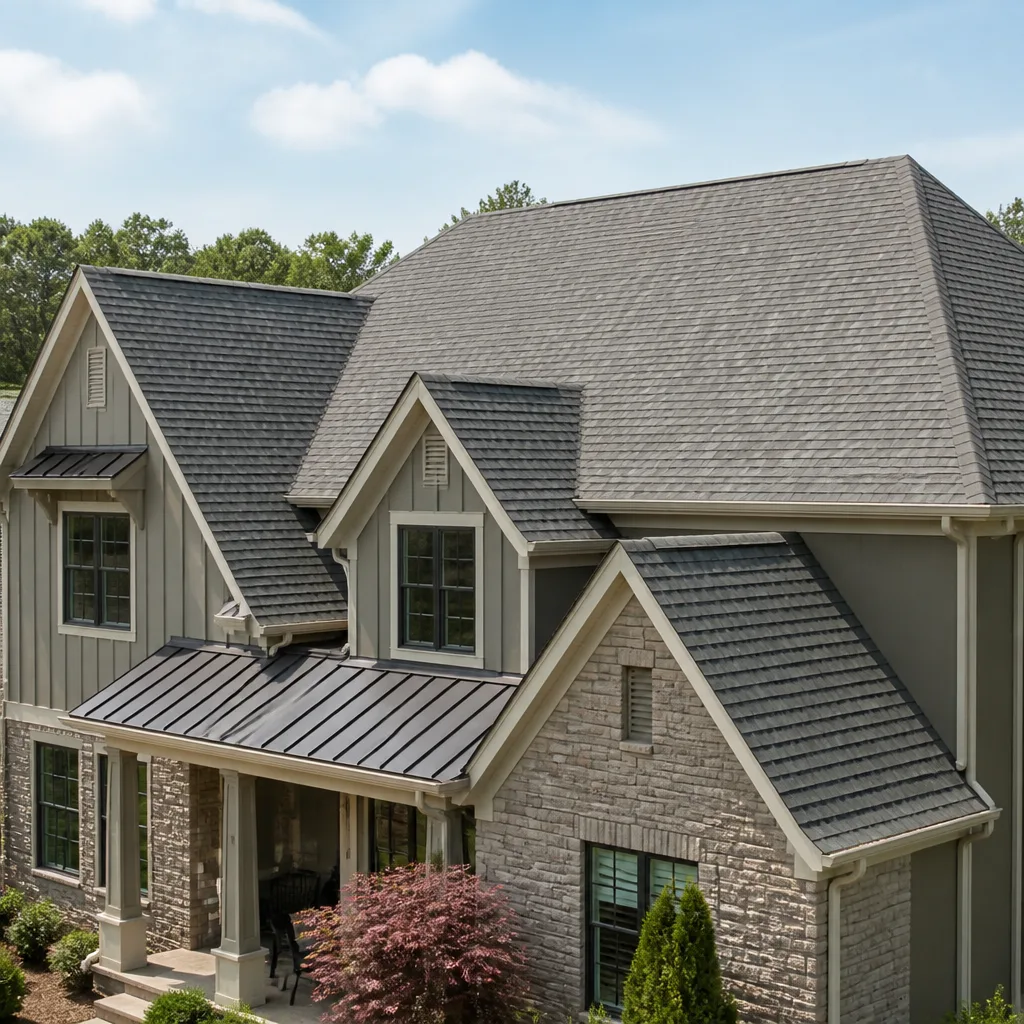
Dvele’s Los Angeles builds, from the earlier prototypes to the current units going up in neighborhoods like Silver Lake, Echo Park, and the Westside, share a common roof philosophy: a standing-seam metal profile or high-performance membrane over a tight, well-detailed substrate. The model name matters less than the roofing system spec, and that spec is almost always written on a label inside the mechanical closet or on the as-built documentation the original owner received at handoff. If you can find that spec sheet, it tells us the exact membrane manufacturer, the seam profile, and the fastener pattern the original installer was required to follow. If you can’t find it, we pull a section of flashing and identify the system from the profile and the sealant chemistry.
The compatibility gotcha on Dvele roofs in Los Angeles is the sealant. Dvele specified polyether-based sealants on many builds, which bond differently than the silicone most roofers reach for. Put the wrong sealant over the old one and it peels within two rainy seasons. We carry the polyether and the matching primer the spec calls for. The second getcha is the clip-and-seam spacing on the metal profiles, which is tighter than standard because these roofs are built to sit over a continuous insulation layer that moves differently under Los Angeles heat cycling. If a repair crew used off-the-shelf clips on a Dvele, you’d see oil-canning and stress cracks in the seam within a few years. We see exactly that on homes where a previous owner hired a general roofer who didn’t read the original spec.
Styles & brands we work with
Signs Your Dvele Roofing Is Failing
These are the five issues we find most on Dvele roofs across Los Angeles. Each one is specific enough to check from a ladder or an upstairs window, and each one points to a known failure mode we can usually name before the first fastener comes out.
- Water staining at the interior corners of rooms under the roof deck. This is usually a failed tape or membrane lap at a penetration, not a roof-wide failure. Water follows the insulation joints and shows up twenty feet from the actual breach. We find it most often after the first heavy February rains in Los Angeles.
- Loose or lifting seam cap at the ridge or the roof-to-wall transition. The metal expands and contracts through Los Angeles heat cycles, and the movement is concentrated at the transitions. If a seam cap lifts, the whole run is compromised, even if the visible damage looks small.
- Bubbles or soft spots in the membrane near the parapet drains. Dvele roofs move a lot of water to the drainage edge, and if the membrane wasn’t fully adhered at the parapet turn-up, standing water works its way under the lap. You’ll feel the give, or you’ll see a dark edge forming where the membrane meets the parapet metal.
- Granule loss or exposed fastener heads on any visible metal flashing. We find this on Dvele homes where a previous owner had a non-Dvele-spec repair done. The UV exposure in Los Angeles eats the wrong sealant and grommet quickly, and the fastener heads start showing rust before the third summer.
- Musty smell in the top floor with no visible leak. A failing roof assembly on a Dvele often smells before it drips. The envelope is so tight that moisture infiltrates the building materials but never presents as a visible drip. If you smell it, get someone to inspect the roof side before mold sets in.
See the difference
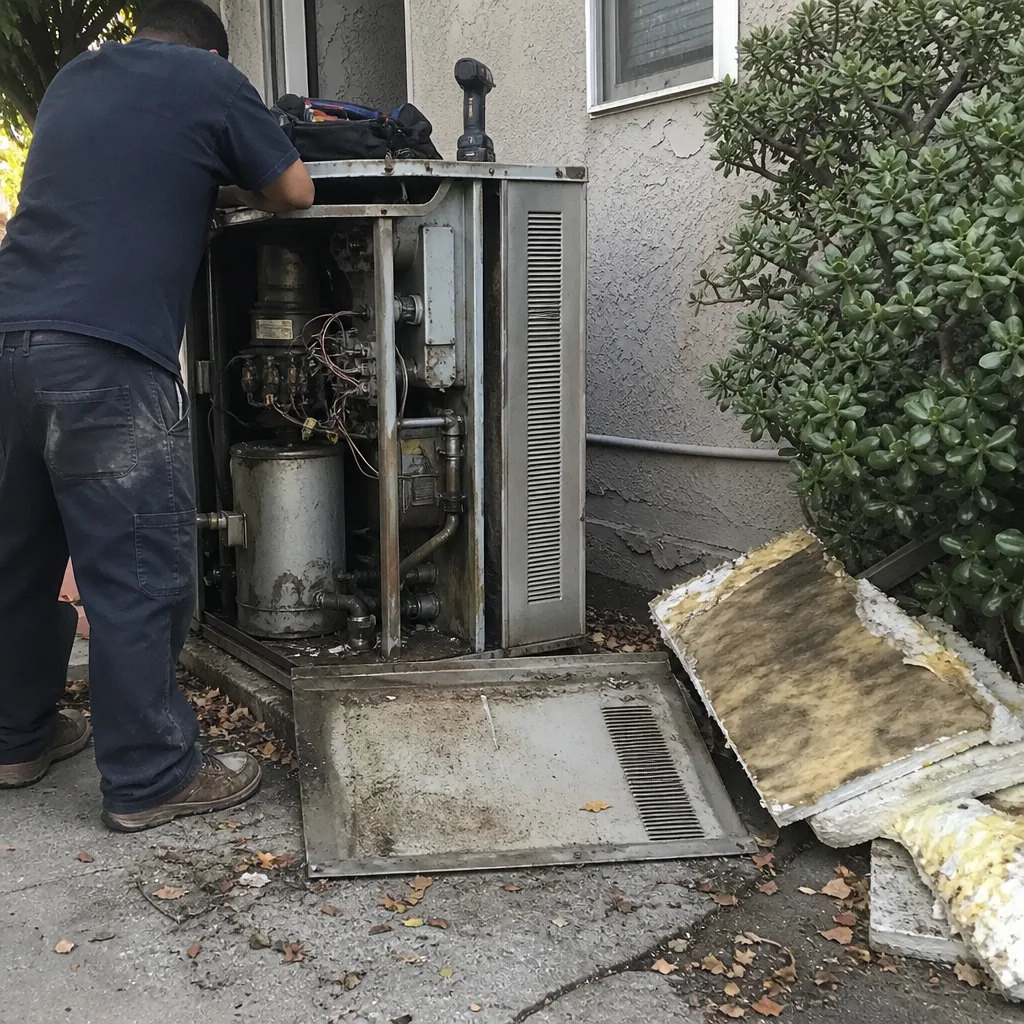 Before
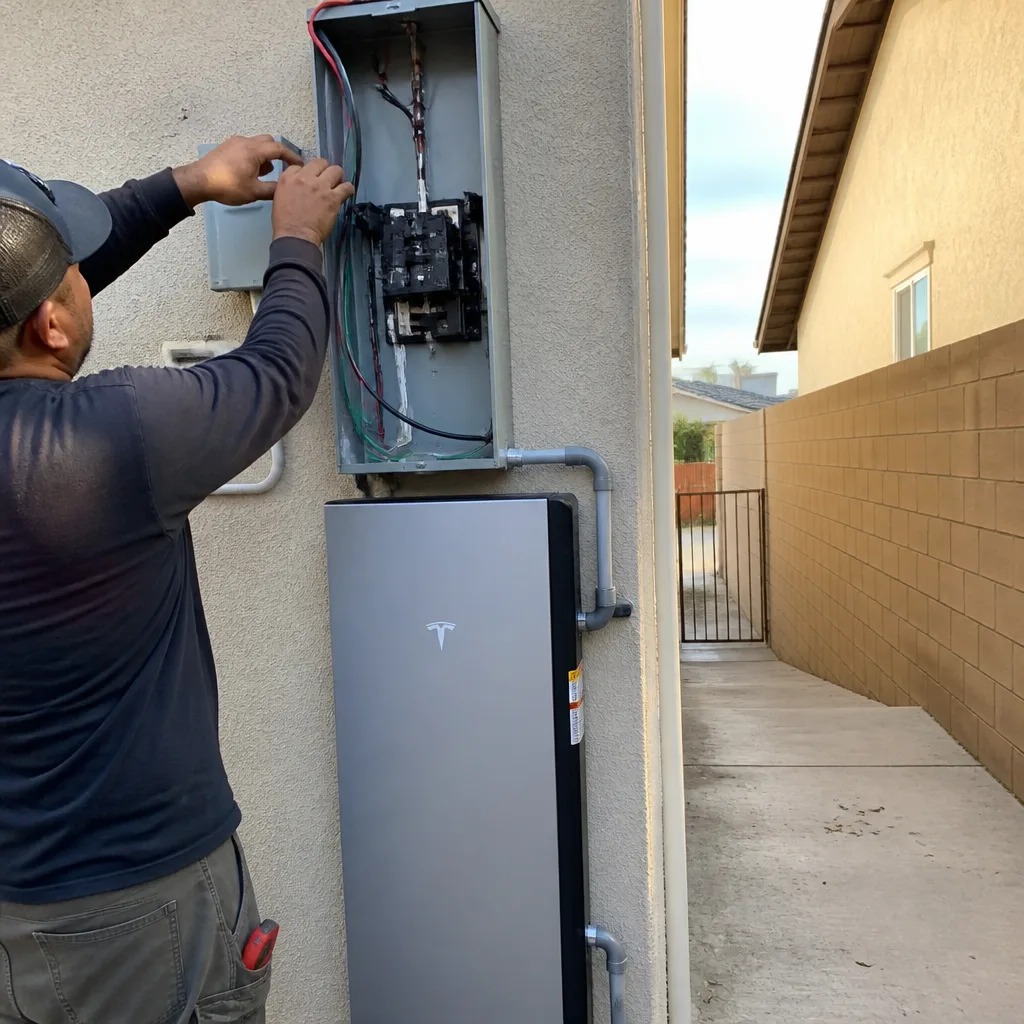 After
After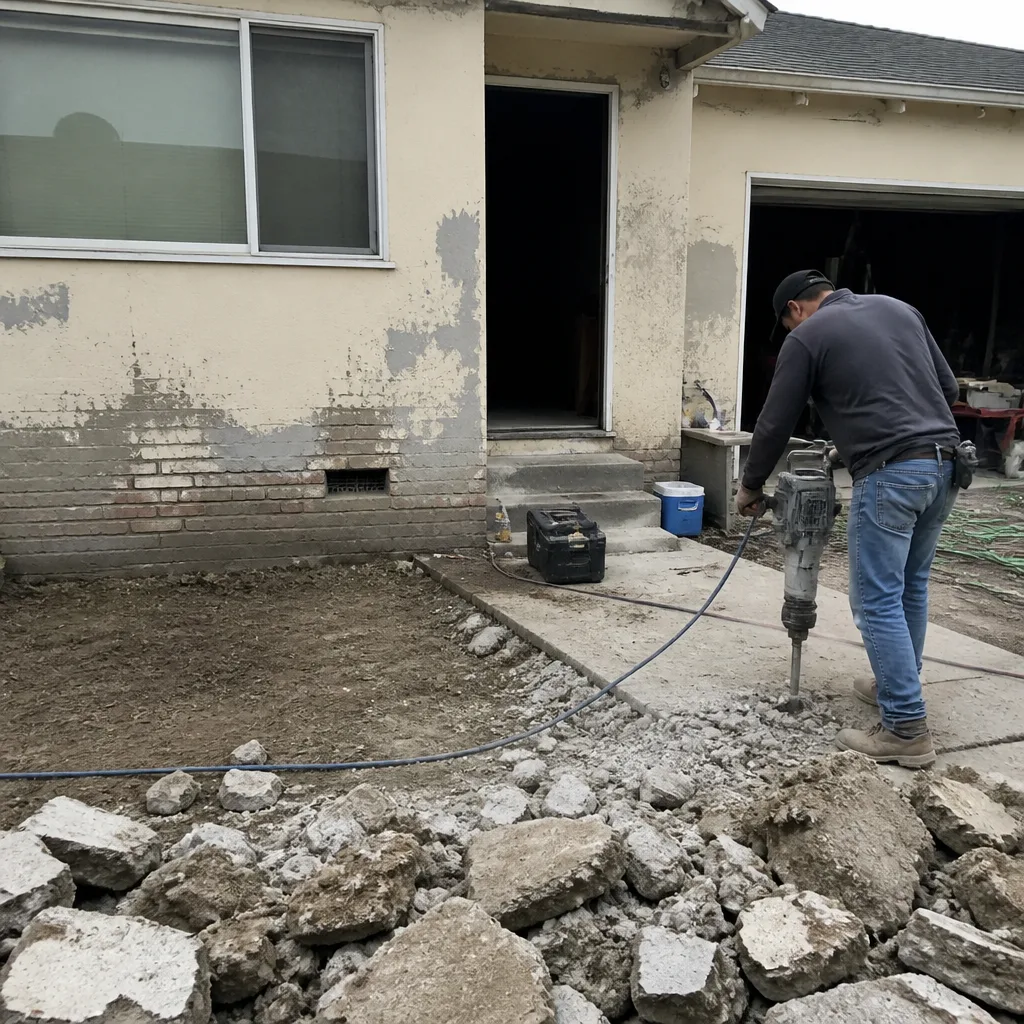 Before
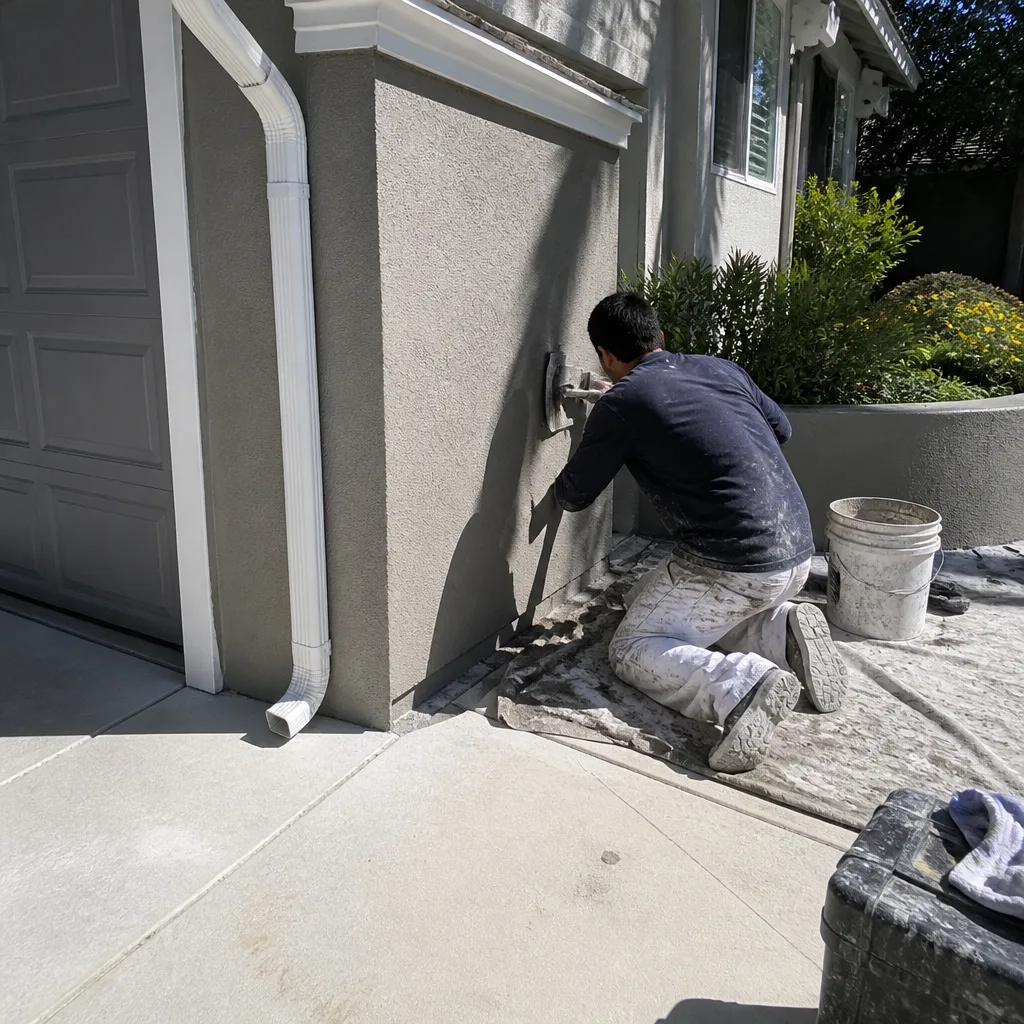 After
After Before
 After
AfterReplacement Cost & What’s Included
In Los Angeles, a Dvele-compatible roof replacement runs $9,440 – $23,600. The low end covers a smaller roof area with a like-for-like membrane replacement and the original flashing re-used where it’s still sound. The high end covers a full standing-seam metal replacement, new underlayment, new transitions at every penetration, and the Dvele-spec sealants and fasteners that the home was originally built with. Most Dvele roofs in Los Angeles fall in the middle of that range, because the homes tend to be flat or low-slope, which is faster and cheaper per square foot than a steep-pitch tile roof in the hills.
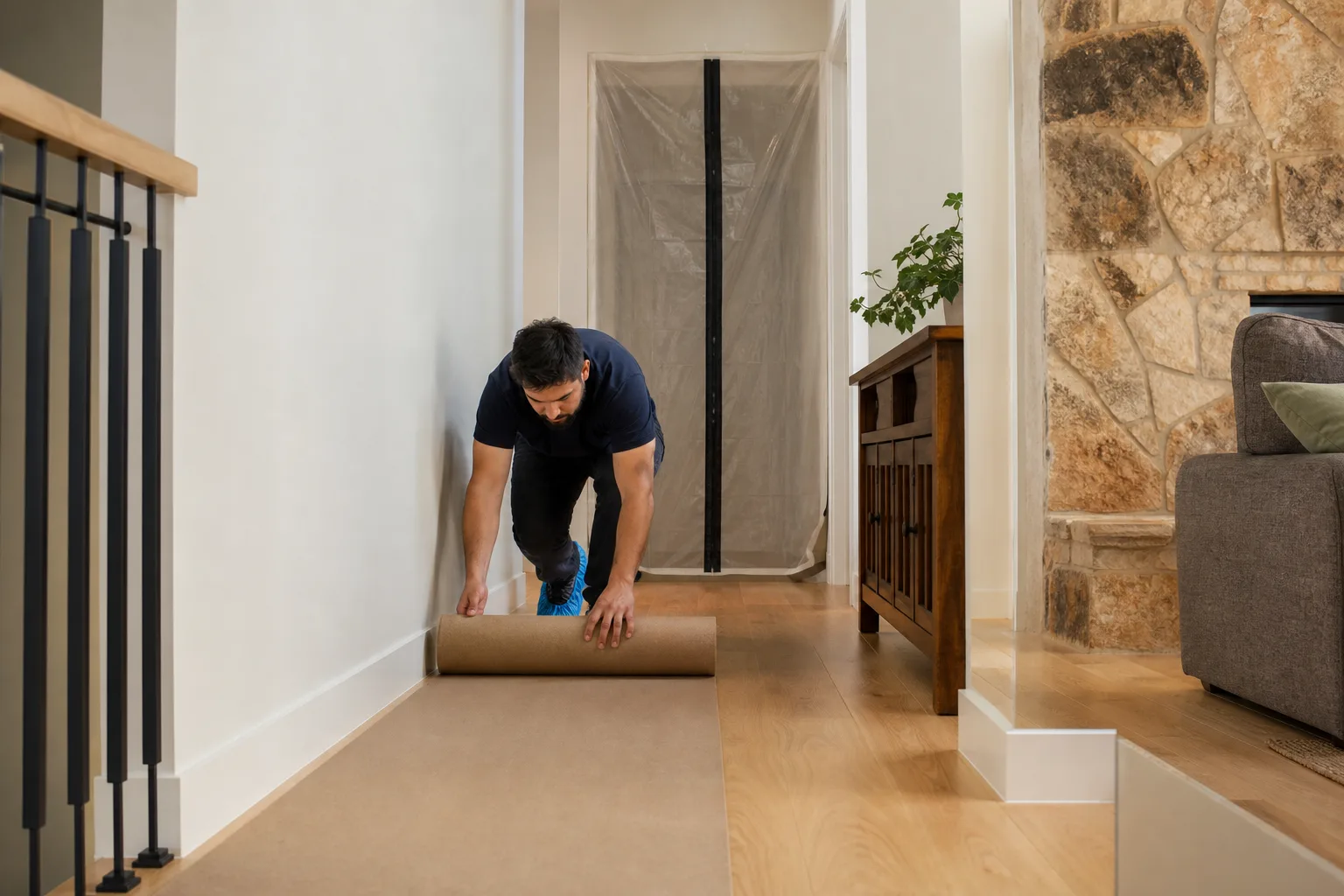
What you get from us, regardless of the number: a written price before any work starts (the written scope is the promise – if it is not on the paper, we have not agreed to it yet), a line item for every material and every hour of labor, and our 365-Day Done Right Promise on the finished roof. If a seam opens in year one, we make it right. That is stamped on the estimate, not buried in fine print. The crew wears shoe covers inside, drop cloths go down in any interior access path, and we send a photo of the clean-up before we leave. If a nail drops into a planting bed, someone picks it up. We have had dogs on jobs more times than I can count, and a magnet sweep before the gate opens is just part of the routine.
DIY or Call Us?
You can safely check the visible edges yourself: the parapet transition, the seam caps, the drain strainers after a leaf drop, any exposed fastener heads from an upstairs window. What you should not attempt is a repair. Roofing work at height in Los Angeles, on a Dvele spec, with the wrong sealant in your hand, is how a $200 fix becomes a $9,000 replacement. If the issue is a high seam or a metal transition, the fall risk and the tension involved in re-fastening a seam correctly are real. We have seen owners ladder their way into a worse problem than the one they started with, and the fix usually costs more because we have to undo the good-intentioned patch before we can find the original failure.
If you see something that looks wrong, take a photo and call (949) 850-9896. We’ll tell you over the phone whether it’s a wait-and-watch or a get-someone-up-there-now. Estimates are free, and you’ll have the written price before anyone climbs a ladder.
FAQs
A Dvele roof in Los Angeles is designed to last 25 to 50 years with correct installation and the right sealants and fasteners, but the first failure point on most of these homes is the transition flashing at the 10-year mark, not the main roof surface. A proactive fastener and seam check every two years catches most problems before they leak. If you haven’t had one done since you bought the home, call (949) 850-9896 and we’ll take a look.
Yes, and most of the Dvele roofs we touch in Los Angeles need repair, not replacement. A failed lap at a penetration or a loose seam cap is a $470 – $2,125 fix when caught early, and the original roof stays intact. If the failure has spread under the membrane or the original install didn’t follow the Dvele sealant spec, a full replacement at $9,440 – $23,600 is the better money. We’ll tell you which one you actually have after the inspection, and you’ll see the reasoning on the paper, not just a number. Call (949) 850-9896 for an exact quote.
Most targeted Dvele roof repairs in Los Angeles are done in one day, including the clean-up and the photo we send before the crew leaves. A repair that requires the membrane to cure might need a second short visit the next morning. A full replacement is typically a three to five day job depending on the roof area, the weather, and how much of the existing flashing can be saved. We’ll give you the schedule in writing before work starts.
We stock Dvele-compatible polyether sealant, primer, seam tape, underlayment, and the high-performance fasteners these roofs call for, so most repair jobs don’t wait on a supplier. We do not stock every profile of standing seam metal, because that is cut to order per roof. We also stock parts for KraftMaid, Cambria, and Silestone on interior work if you have other Dvele-spec details inside the home. If we need something specialized, we say so in the written estimate and you know the lead time before you commit.
Written by Graham Stein, Owner, Elmstead Remodeling at Elmstead Remodeling, serving Los Angeles and nearby areas.
If you have a Dvele roof that needs attention, call (949) 850-9896. A live person answers, not a voicemail box, and you’ll get a written price before anyone climbs a ladder. We serve Los Angeles and nearby areas with the same Cedarwell Care Promise on every job: shoe covers and drop cloths inside, quiet tools during family rest hours where possible, pet-safe product choices where there is one, and a photo of the clean-up before the crew leaves.