Free written scope consultation - allowances, timeline, and change-order rules on paper before a single trade is scheduled
Plant Prefab Bathroom Remodeling: The Los Angeles Owner’s Guide
A Plant Prefab bathroom remodel in Los Angeles typically runs $10,620 – $33,040 installed, depending on whether you’re refreshing fixtures and surfaces or reconfiguring the wet-wall and ventilation layout. We stock the common trim, valve, drain, and waterproofing components these factory-built panels need, and most inspections can be scheduled within a week. The usual discovery goes like this: a soft spot near the shower threshold, a valve that no longer holds temperature, or grout lines cracking along the panel seams where the module settled. Prefab panels move differently than stick-frame walls, and when a seal lets go, it lets go at the joint.
We’re an independent remodeling contractor, not affiliated with Plant Prefab. What that means for you is straightforward: we work on the home as it stands, match components to what’s actually behind the wall, and give you a written price before any work starts.
Which Plant Prefab Models This Applies To
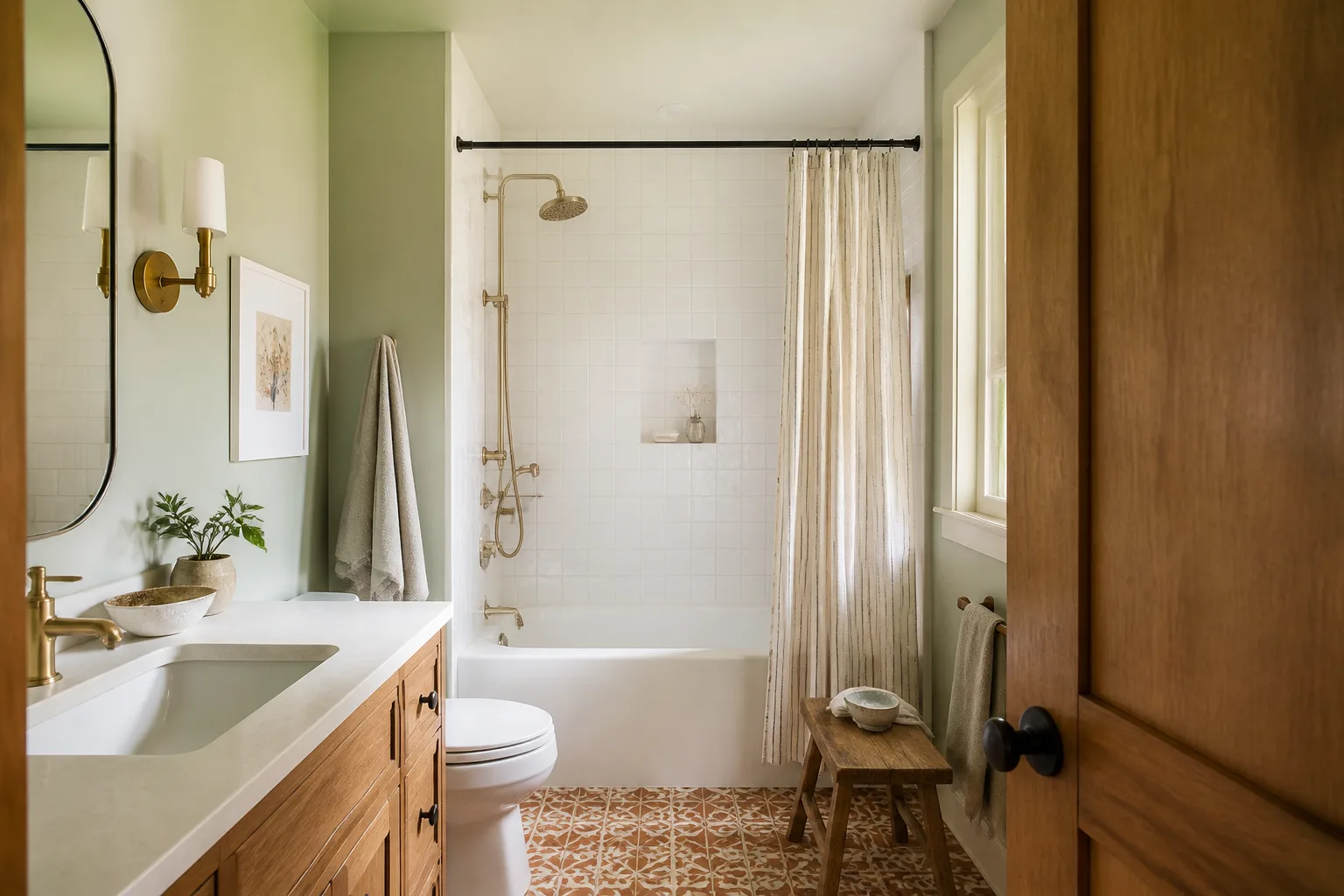
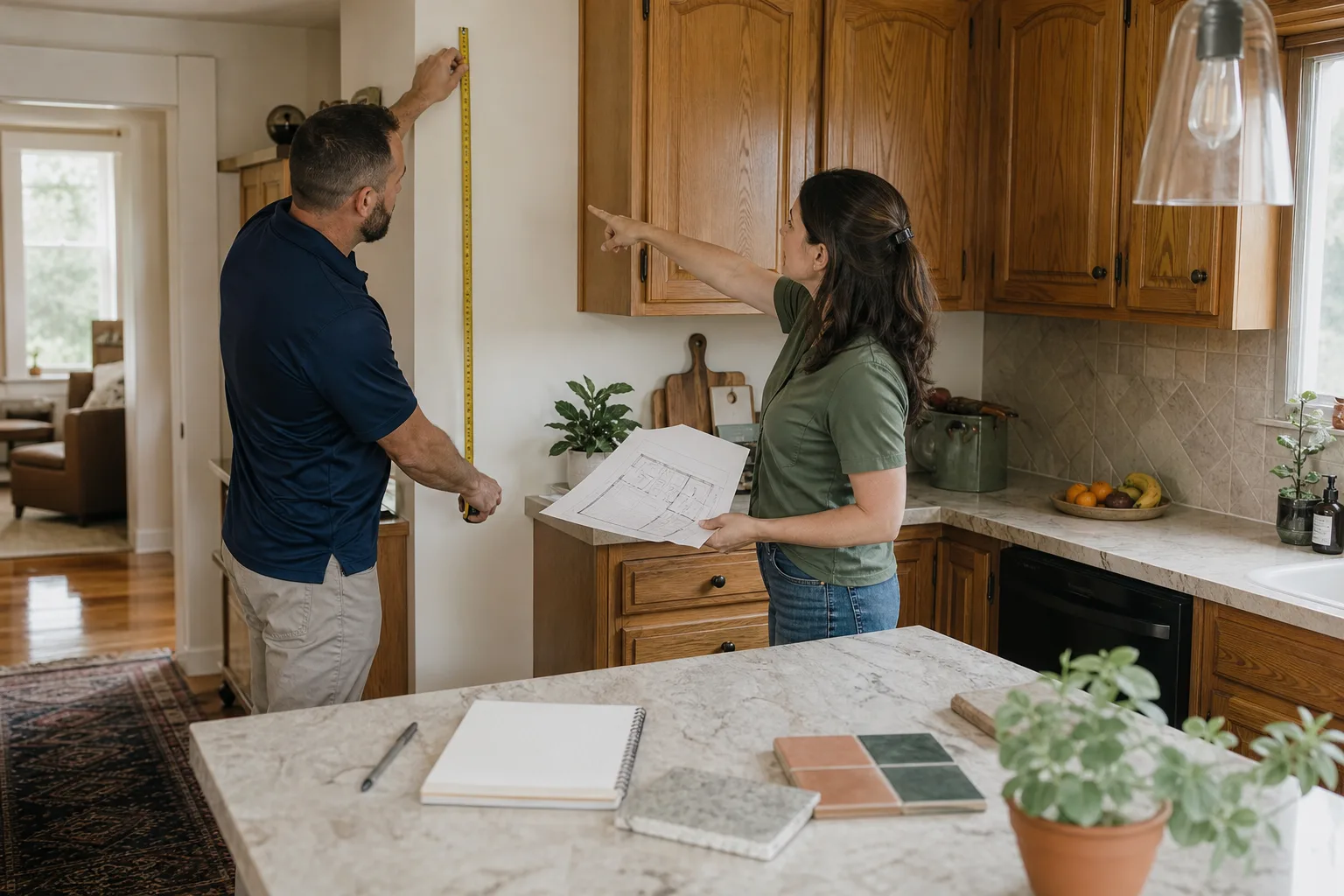
Plant Prefab’s panelized and modular lines, including the LivingHome series and custom panel builds from the Rialto and Tejon facilities, share a common approach: walls arrive with plumbing rough-ins and waterproofing already set at specific fixture centers. The compatibility gotcha for Los Angeles owners is that many early panel builds used 48-inch rough-in spacing between the valve and the drain stack, while the current standard has drifted to 42 inches to fit smaller footprints. Before you order any replacement valve trim or shower base, measure the center-to-center distance between the shower valve and the tub spout or drain. That single measurement determines whether you need a standard Kohler or Moen kit or a specific offset configuration.
For OEM parts, Plant Prefab specified fixtures that shift by production year. We’ve opened walls in Silver Lake and Mar Vista to find Kohler Purist valves in one build and Moen ExactTemp in the next, same floor plan, six months apart. That’s why we identify by model number on the valve body or the back of the trim plate rather than by what the brochure says. Aftermarket equivalents are widely available and often outperform the original on cartridge longevity, but the valve rough-in must match. We’ll take a photo of what’s behind the wall and match it before any parts are ordered.
Styles & brands we work with
Signs Your Plant Prefab Bathroom Remodeling Is Failing
- Grout cracking along panel seams, especially at the ceiling line. Prefab wall panels expand and contract at a different rate than the factory-applied finishes. Cracks at the seam usually mean the backer board has shifted, not just the grout. The fix involves re-securing the panel, not re-grouting over the top.
- The shower valve won’t hold temperature, drifting hot or cold mid-shower. Los Angeles has hard water, and the mineral buildup inside the pressure-balancing cartridge is usually the culprit. If the valve is an older Moen or Kohler model, the cartridge is getting harder to source; we stock the common replacements.
- A soft spot or slight spring in the floor near the toilet flange or tub apron. Panel-built homes route plumbing through chases that can trap moisture if a wax ring fails slowly. By the time the floor feels soft, the subfloor layer has been wet for a while. This is a repair-and-replace job, not a caulk job.
- Silicone or caulk pulling away repeatedly in the same spot. If you’ve re-caulked the same joint twice in a year, the panel behind it is moving, or the shower base was shimmed unevenly at installation. Caulk is the symptom, not the disease.
- Exhaust fan that runs but doesn’t clear steam. Panel construction is tight, which is good for efficiency but means the fan is doing all the ventilation work. A clogged or undersized duct on an original fan is a common Plant Prefab issue, and it’s the first thing we check before recommending a fan upgrade.
See the difference
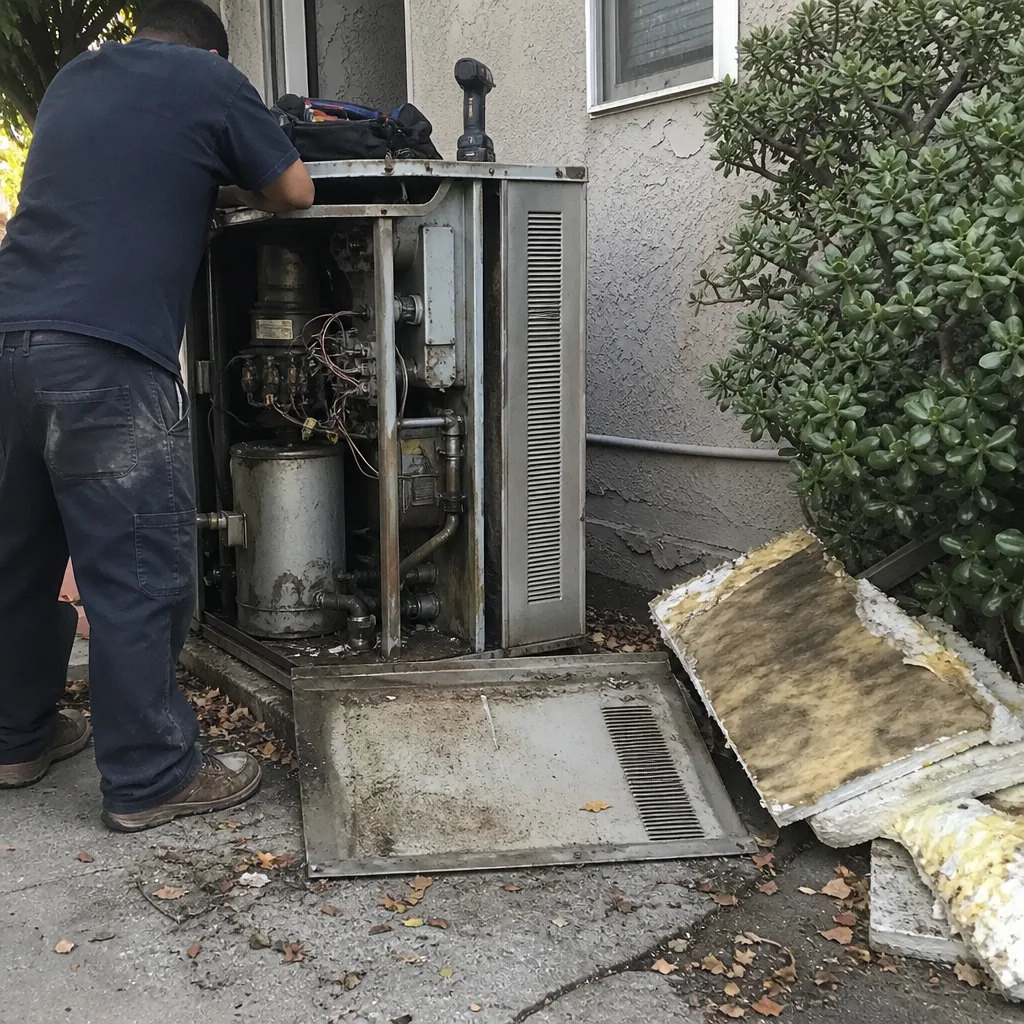 Before
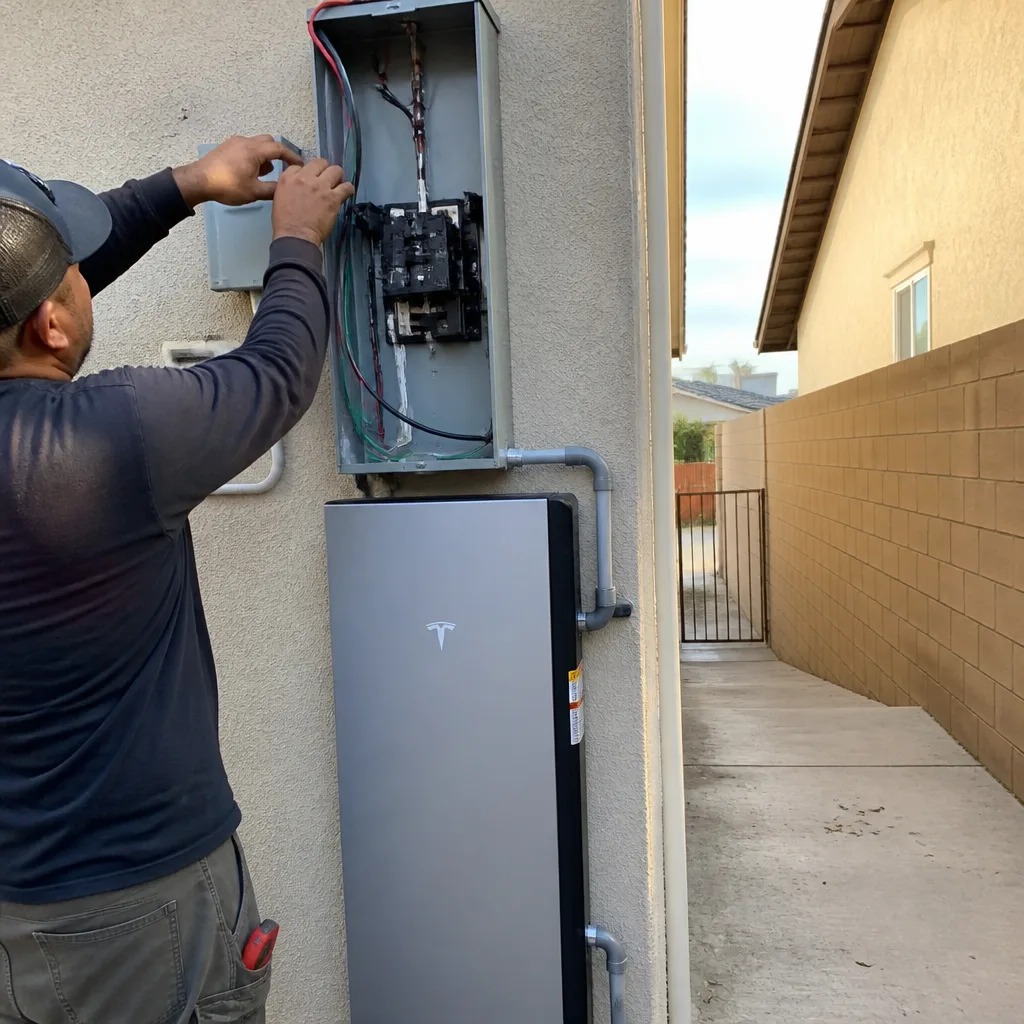 After
After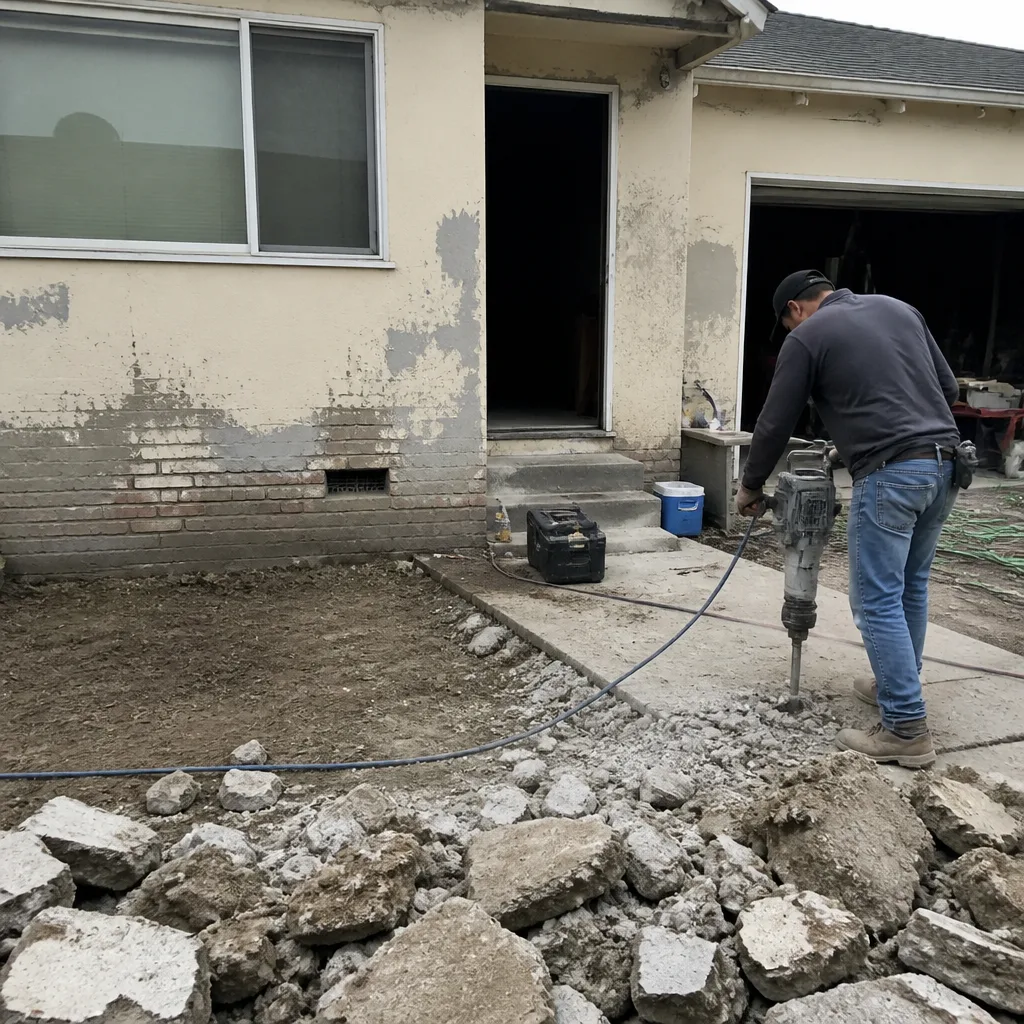 Before
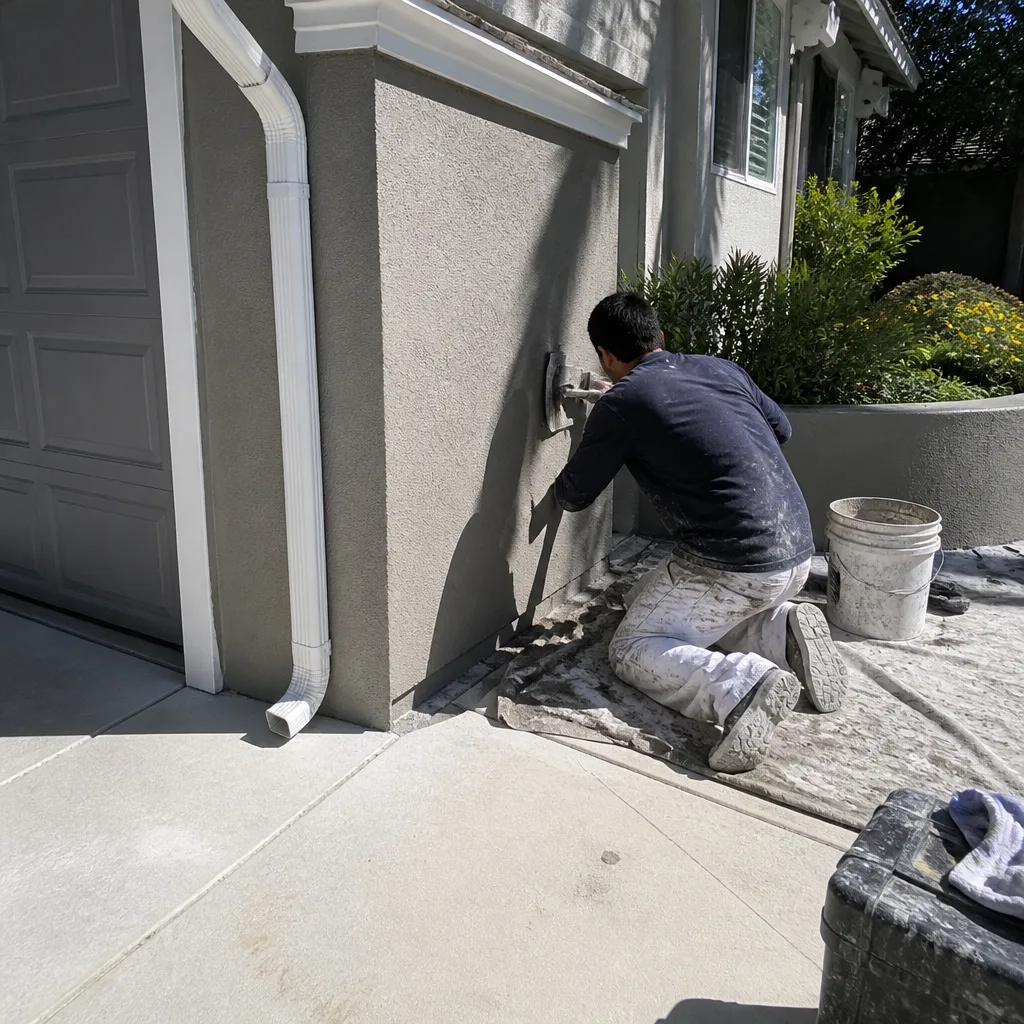 After
After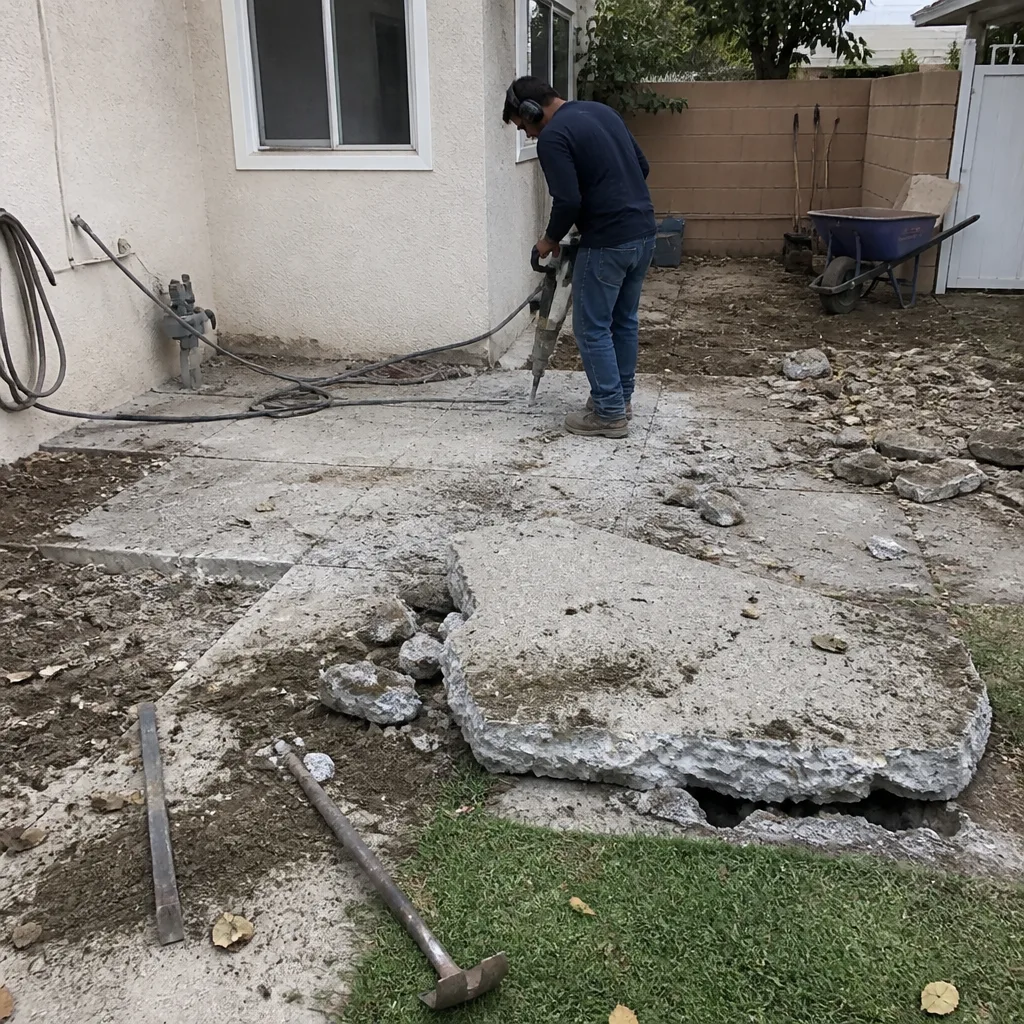 Before
 After
AfterReplacement Cost & What’s Included
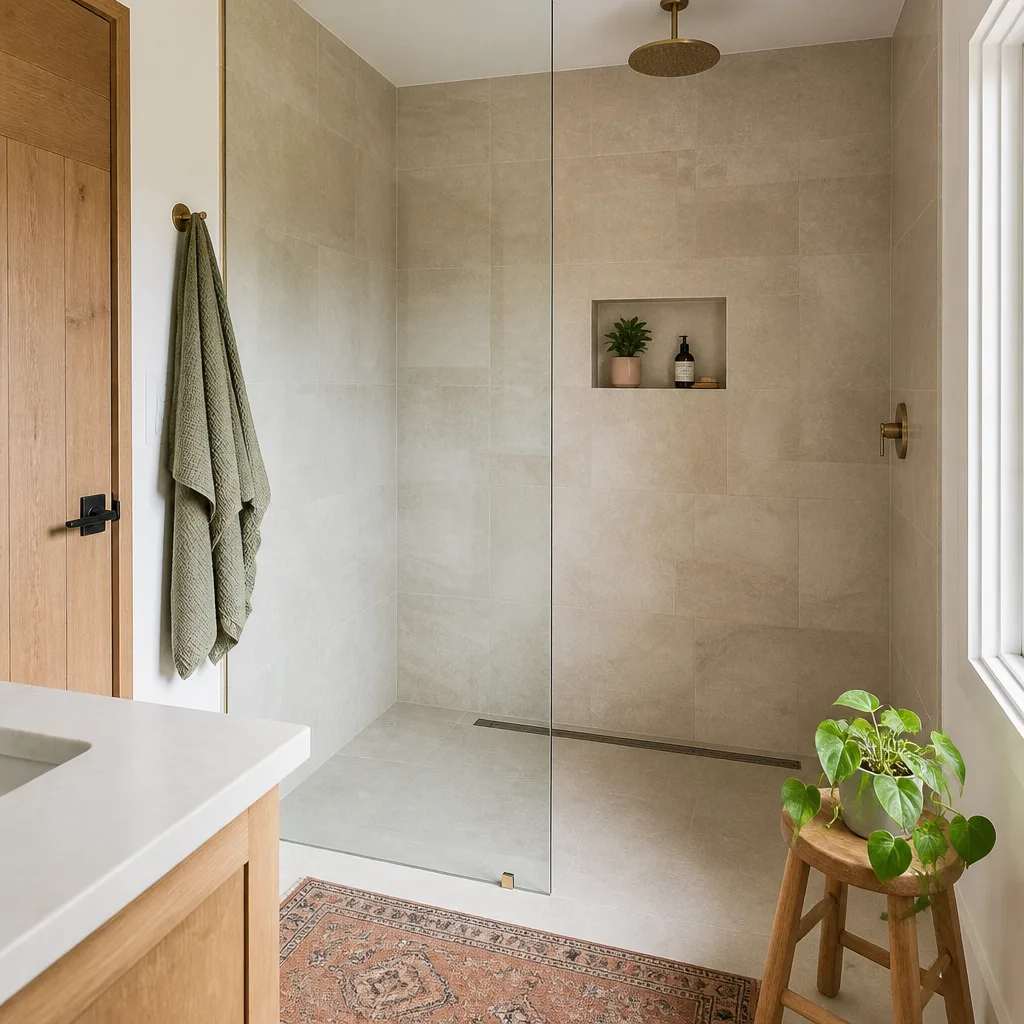
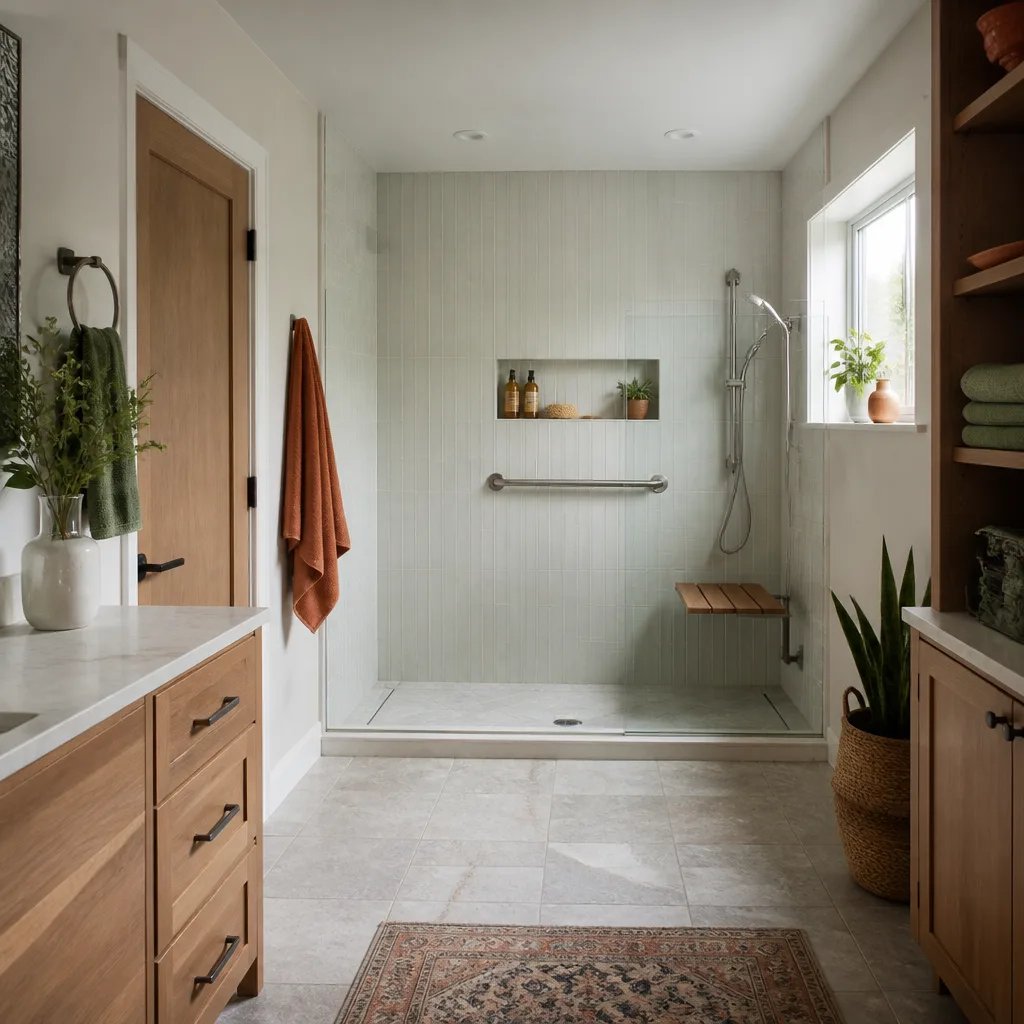
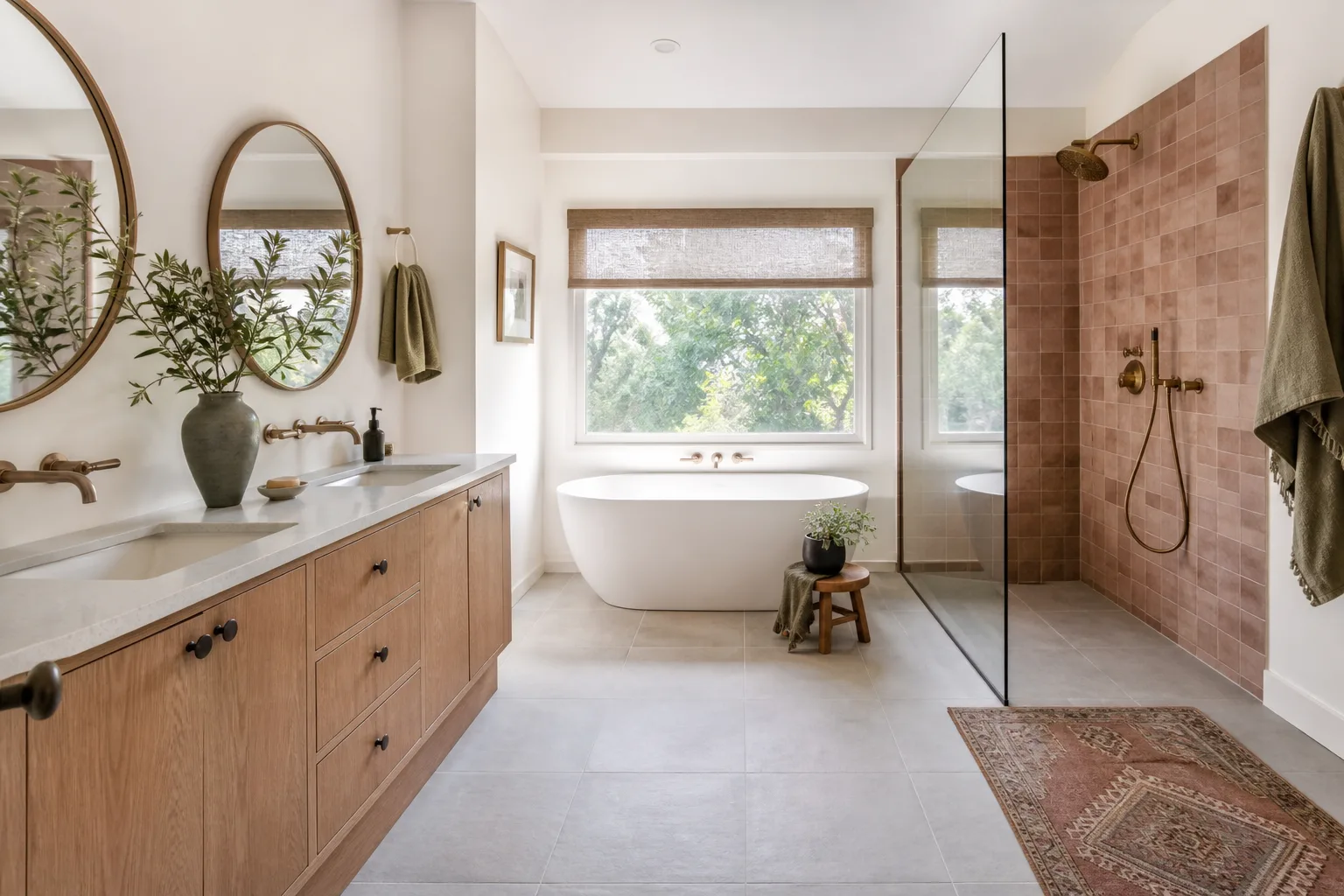
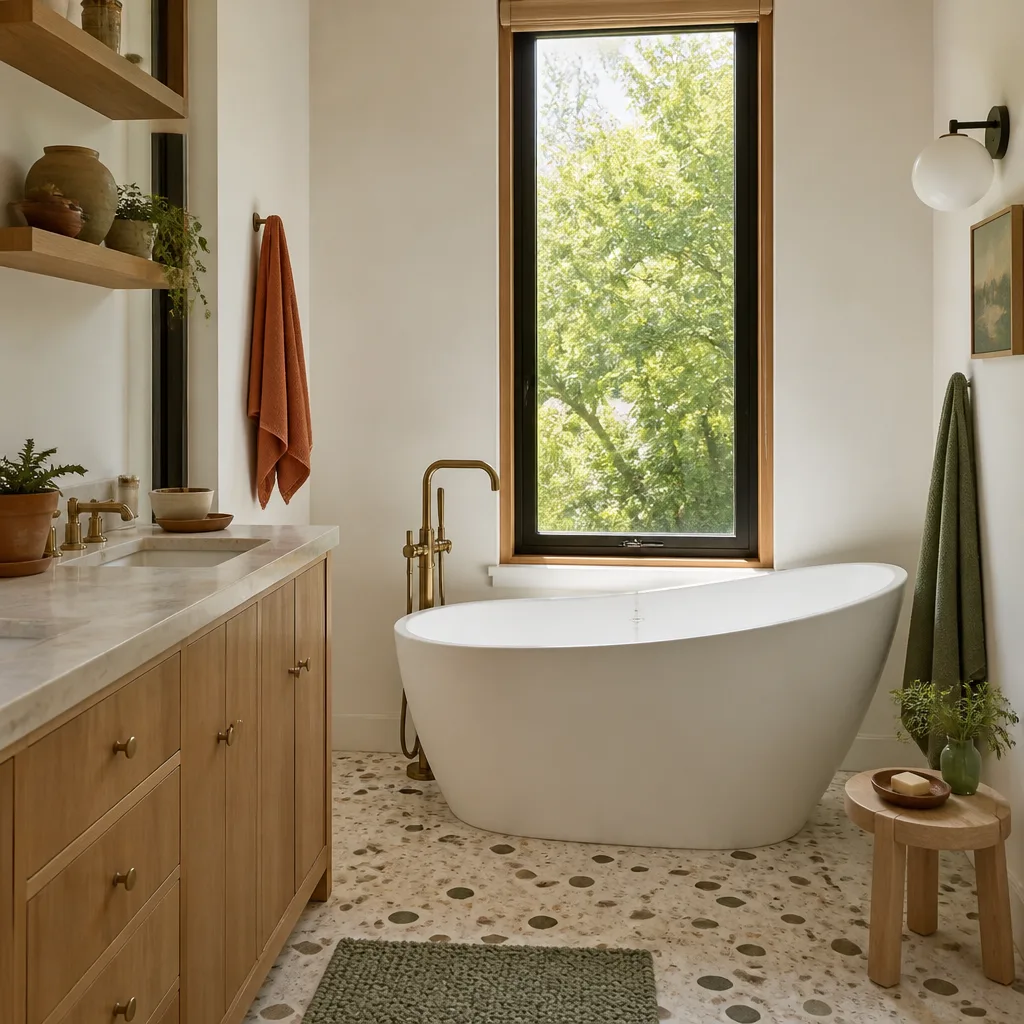
For Los Angeles, a fixture-level remodel (new valve trim, shower head, toilet, vanity, mirror, lighting, plus re-sealing joints) lands between $5,900 and $14,160. A full bathroom down-to-the-studs remodel, including new waterproofing, tile, floor, and plumbing adjustments to the panel chases, runs $10,620 – $33,040. The range is driven by what’s behind the wall. If the original waterproofing is intact and the panel hasn’t shifted, you’re paying for fixtures, finishes, and labor. If the waterproofing failed and the panel interior went wet, add the cost of opening the wall, drying it properly, and rebuilding the wet zone.
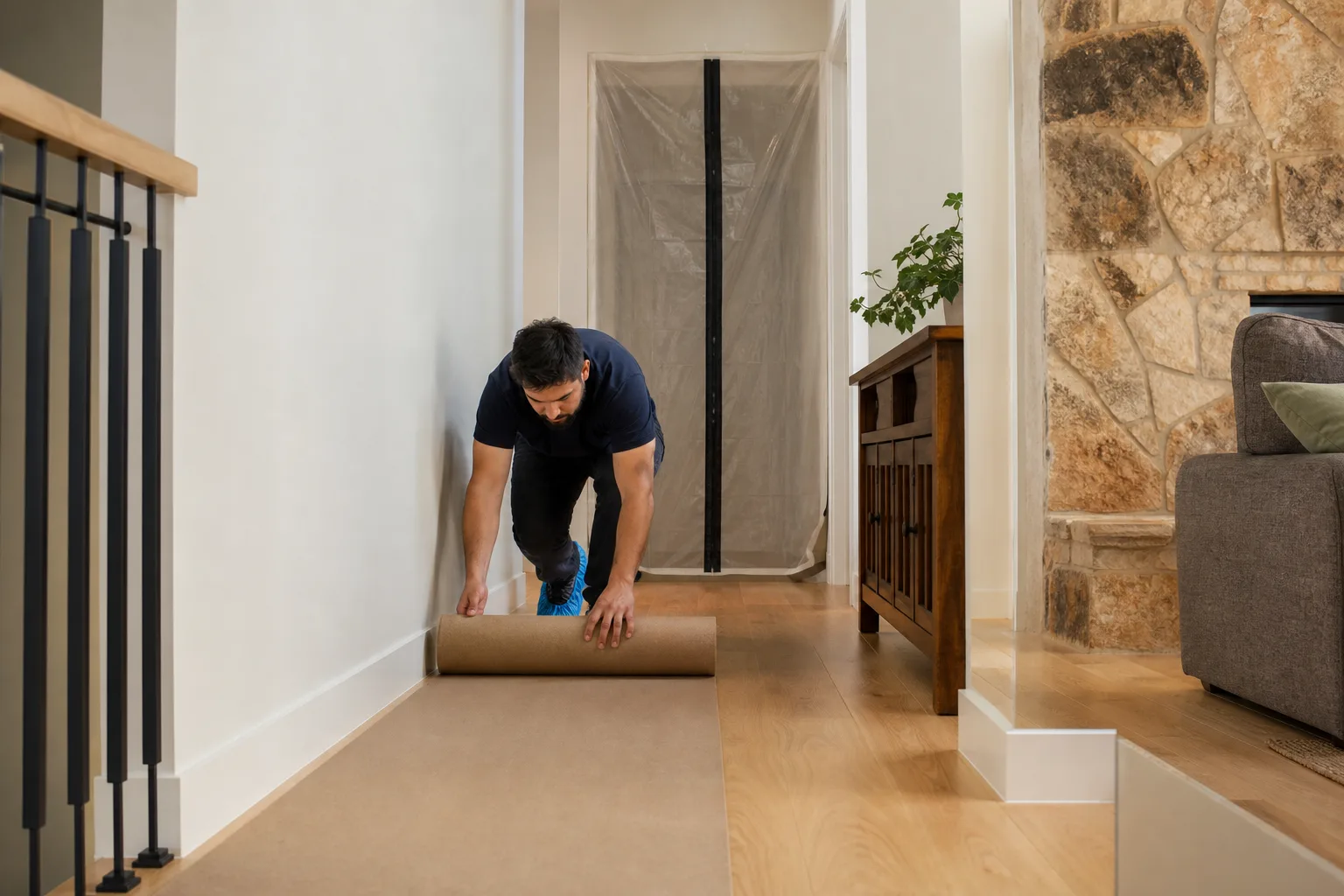
Every project gets a written line-item price before work starts. That price includes the parts, the labor, the dump fees, the shoe covers, the drop cloths, and the photo of the clean-up before the crew leaves. Nothing arrives as a surprise change order. The work carries our 365-Day Done Right Promise: if it’s not done right, we make it right.
DIY or Call Us?
An owner can safely handle a few checks: read the model number off the back of the valve trim plate, measure the center distance between fixtures, and note where the caulk is failing. That information helps whoever does the work quote it accurately. What I’d keep away from DIY is anything behind the wall. Plant Prefab panels hold mechanicals in tight chases, and cutting into one without knowing where the plumbing and wiring sit creates a bigger job than the original leak. Water lines in these homes are often routed through shared chases, so opening one wall wrong can damage the adjacent room’s rough-ins.
If the job is a cartridge swap on an accessible valve, that’s a reasonable Saturday project for the right owner. If it’s a moving panel, a failed waterproofing layer, or a valve replacement, call us at (949) 850-9896. The written scope is the promise; if it is not on the paper, we have not agreed to it yet.
FAQs
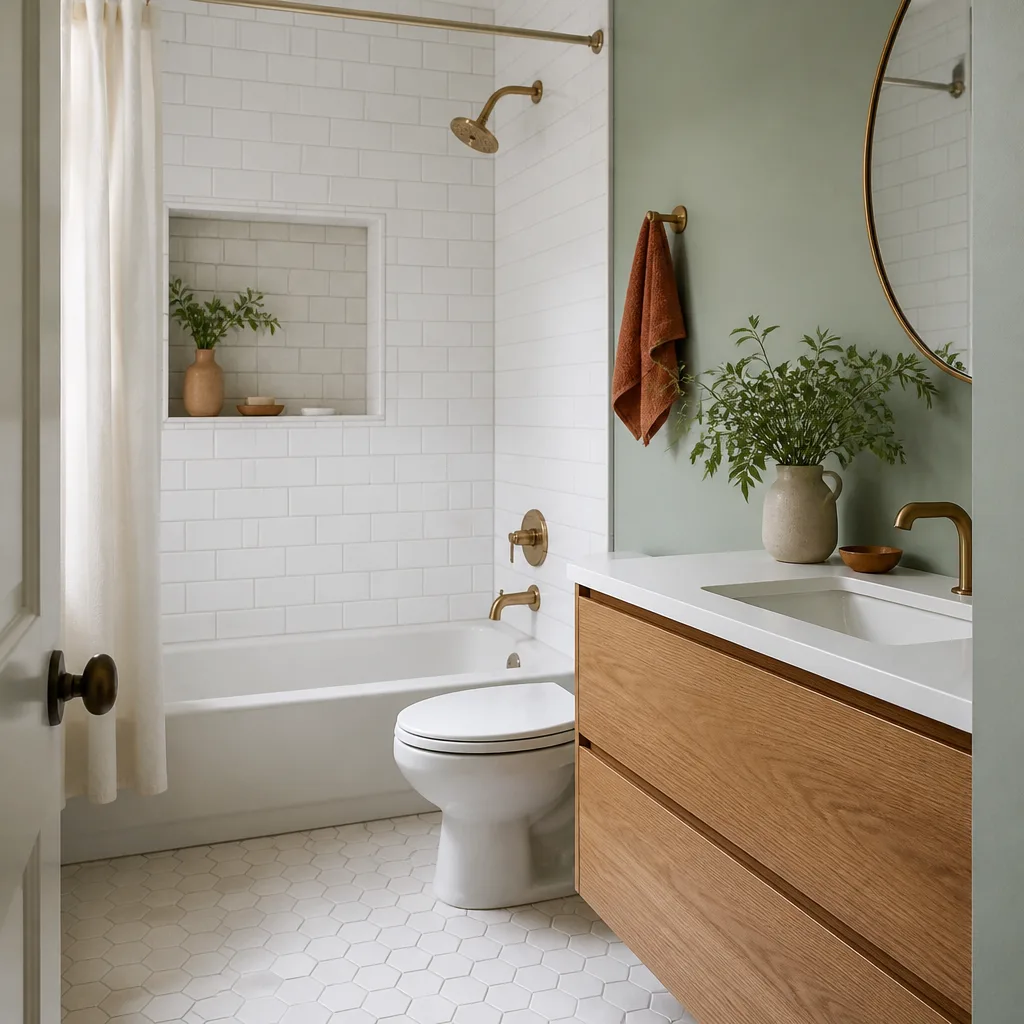
A properly rebuilt Plant Prefab bathroom in Los Angeles lasts 20 to 30 years on the waterproofing and plumbing, with fixtures like cartridges and valves realistically needing replacement around the 10- to 15-year mark depending on water hardness. The panel seams are the single most common long-term failure point, so effective waterproofing and a proper re-securing of the panel are what determine the lifespan. Call (949) 850-9896 for an exact inspection of your bathroom’s condition.
Yes, in most cases a failing valve, cracked grout line, or damaged shower base can be repaired without a full remodel, especially when the panel itself is structurally sound. We’ll open only what needs to be opened, and the written estimate will tell you exactly what the repair includes before we start. We can walk you through the repair scope by phone at (949) 850-9896.
A fixture-level refresh takes 3 to 5 working days; a full gut-and-rebuild of the bathroom runs 2 to 4 weeks depending on tile selection and whether plumbing in the chases needs to be moved. We’ll give you a schedule that names the quiet hours and protects the rest of the home, and we’ll send the clean-up photo before the crew leaves. Get in touch at (949) 850-9896 to set an inspection window.
We stock the common Kohler, Moen, and Grohe valve cartridges, trims, and shower bases that Plant Prefab specified across production years, plus the Schluter waterproofing materials used in Los Angeles remodels. For less common or discontinued trims, we’ll source the part and show you the invoice, no markup games. Call (949) 850-9896 if you have a part that’s already failing and want a straight answer on replacement.
Written by Graham Stein, Owner, Elmstead Remodeling at Elmstead Remodeling, serving Los Angeles and nearby areas.