Last updated October 8, 2026






Free written scope consultation - allowances, timeline, and change-order rules on paper before a single trade is scheduled
Bathroom Remodeling Warning Signs Every Homeowner Should Know
Most homeowners assume a bathroom renovation fails when the tile cracks or the grout stains. The truth is less visible. A 2022 California Contractors State License Board report found unlicensed contractor complaints rose 34% in Los Angeles County, and bathrooms, with their hidden waterproofing layers and buried plumbing, are the room where unlicensed work hides the longest before it fails. This guide walks through the specific, observable warning signs you can catch before signing a contract, not after the damage is already spreading behind your walls.
Quick Answer
The most reliable bathroom remodeling warning signs appear during the estimate conversation, not the demolition. A contractor who cannot name the specific waterproofing membrane they will use, asks for more than the legal 10% deposit, or says they will pull the permit after work starts is signaling a project that will cost more and fail sooner. Watch for these before any money changes hands.
Styles & brands we work with







Table of Contents
- The Waterproofing Name Test
- The Permit Conversation: What ‘We’ll Pull It Later’ Really Means
- The Deposit Red Flag: Know California’s 10% Cap
- What a Legitimate Written Scope of Work Looks Like
- In-Progress Warning Signs: What to Watch After Work Begins
- Subcontractors Who Don’t Know the Project
- What Los Angeles Homeowners Face Specifically
- Common Mistakes to Avoid
The Waterproofing Name Test
Here is a simple test you can run during the first conversation. Ask the contractor what waterproofing system they will use behind the shower tile. If they say “waterproofing membrane” or “the standard stuff,” walk away. If they say Schluter Kerdi, RedGard, or WEDI board, you are talking to someone who knows their trade.
This is not a stylistic preference. It is a structural question. The waterproofing layer is the only thing standing between your shower water and the wood framing inside your walls. In Los Angeles, where many homes were built before modern moisture management codes, that framing may already be older and more vulnerable. A contractor who cannot name the membrane has not thought about the most failure-prone part of your bathroom.
A legitimate waterproofing answer includes more than a brand name. Listen for how the membrane connects at the seams, what happens at the shower pan, and how corners are sealed. Schluter Kerdi, for example, uses a bonded fleece system with specific corner pieces. RedGard is a liquid-applied membrane rolled on in specific mil thicknesses. WEDI board is a rigid foam panel with pre-sealed joints. These are three different approaches with three different installation disciplines. A contractor who uses one should be able to tell you why they chose it for your specific bathroom layout.
At Bathroom Remodeling in Los Angeles projects, we name the waterproofing system in the written scope before any work starts. The family should be able to look up the product, read the manufacturer warranty, and confirm the installer is following the spec.
The Permit Conversation: What ‘We’ll Pull It Later’ Really Means
If a contractor says they will pull the permit after work starts, what they mean is they may never pull it at all. In Los Angeles, a bathroom remodel involving plumbing, electrical, or structural changes requires a permit from the Los Angeles Department of Building and Safety. Starting work before the permit is issued puts the homeowner, not the contractor, in legal and financial jeopardy.
The liability is specific. If an unpermitted bathroom renovation causes a leak that damages your home, your insurance company can deny the claim. If you sell the house, the buyer’s inspector may flag unpermitted work, and the sale falls apart or the price drops. If the city discovers the work after the fact, you pay double permit fees plus penalties, and you may be required to open walls to prove the work was done correctly. The contractor who suggested the shortcut has moved on.
A legitimate permit conversation sounds like this: the contractor confirms whether your project needs a permit (most Los Angeles bathroom remodels do), tells you the permit will be pulled before demolition begins, and includes the permit fee as a line item in the written scope. The inspection card is posted at the job site, and the homeowner can see it on request. No card, no credible permit story.
We have seen families in Van Nuys and North Hollywood inherit bathrooms with water damage behind tile that looked flawless from the outside. The previous contractor skipped the permit, skipped the inspection, and skipped the waterproofing details that only an inspector would have verified. The repair cost more than the original remodel.
The Deposit Red Flag: Know California’s 10% Cap
California Business and Professions Code sets a hard limit on home improvement contract deposits: 10% of the total contract price or $1,000, whichever is less. A contractor asking for 50% upfront, or even 30%, is breaking state law before the first tile is set. That is the clearest early warning sign a homeowner can get.
The logic behind the cap is simple. A contractor who needs half the project cost before starting is financing their business with your money. If they walk off the job, you are out tens of thousands of dollars with no legal recourse that will recover it quickly. The 10% cap means your maximum exposure is $1,000 while you still have the option to cancel.
Payments after the deposit should be tied to finished work, not calendar dates. A legitimate payment schedule looks like this: deposit at signing, progress payment when the rough plumbing and electrical pass inspection, another payment when the waterproofing is complete and the tile is set, and the final payment after the punch list is done and the clean-up is verified. Any contractor who asks for most of the money before most of the work is done is telling you exactly how the rest of the project will go.
Los Angeles homeowners should know this law applies to every home improvement contract in the state, regardless of what the contractor says. No contractor can waive the limit. Anyone who suggests otherwise is either ignorant of the law or willing to break it.
What a Legitimate Written Scope of Work Looks Like
A one-page invoice that says “remodel bathroom: $28,000” is not a contract. It is an invitation to a dispute. A legitimate written scope of work is a detailed document that walks room by room through what will be demolished, what will be built, and exactly what materials will be used. Here is what it contains:
- Demolition details: What is removed, what is protected, and where the debris goes. Does it name the dumpster or hauling service? Does it specify that adjacent rooms are covered with plastic barriers before dust-producing work begins?
- Line-item materials: Brand and model names for fixtures, cabinets, countertops, tile, and waterproofing. “Kohler Memoirs pedestal sink in white” is a scope. “New sink” is a wish.
- Labor breakdown: Plumbing, electrical, tile setting, drywall, painting, and finish carpentry as separate lines where applicable.
- Permit and inspection line item: The permit fee, the plan check fee if required, and the note that inspections are scheduled at specific milestones.
- Disposal and hauling fees: Construction debris from a Los Angeles bathroom remodel typically fills half a dumpster. That cost should be visible before work starts.
- Change-order process: What happens when the homeowner wants something different mid-project. The process should be written: a written change order, a price adjustment in writing, and homeowner sign-off before the change is made. If change orders are verbal, the final bill will not match the original number.
- Clean-up commitment: Specific language about how the home is left. At Elmstead Remodeling home projects, the Cedarwell Care Promise means shoe covers and drop cloths on every visit, a photo of the clean-up before the crew leaves, and quiet tools during family rest hours where possible. The scope should name the behaviors, not just the outcome.
A written price before any work starts, on every project, is not a negotiation tactic. It is the difference between a contractor who has thought through the full job and one who is figuring it out as invoices come due.
In-Progress Warning Signs: What to Watch After Work Begins
Some red flags only appear after the contract is signed and the crew arrives. Catching them early can prevent a bad project from becoming a worse one. Here is what to watch for during the first week:
- No drop cloths or plastic barriers protecting adjacent rooms. Bathroom demolition is dusty work. Drywall dust travels through an entire Los Angeles house in under an hour. A contractor who does not seal the work area before demolition does not care how your home is left. That indifference extends to the parts of the job you cannot see.
- No shoe covers at the door. This is a small thing that signals a larger habit. If the crew walks through your living room in work boots on day one, they will walk through it with drywall mud on day ten.
- Tools and materials left in family spaces overnight. Kids and construction tools do not mix. A professional crew stages materials in the work area or a designated staging zone, not the hallway where a child walks to bed.
- Subcontractors who do not know the project scope. If the electrician asks you what the plan is, the general contractor has not communicated the scope. That communication failure will show up in misaligned fixtures, wrong outlet placement, and change orders.
- No inspection card on site. When an inspection is scheduled, the inspector signs a card that stays at the property. If the contractor cannot produce it on request, the permit story is not matching the work on the ground.
We have had Los Angeles families tell us about crews who left food wrappers in the bathtub and cut tile without a wet saw, sending silica dust through the whole house. These are not isolated sloppy moments. They are the visible surface of an approach to work that will show up inside the walls too.
Subcontractors Who Don’t Know the Project
A general contractor who cannot brief their subcontractors is not a general contractor. They are a dispatcher. The distinction matters because bathroom remodeling in Los Angeles involves at least three licensed trades, typically plumbing, electrical, and tile setting, and the coordination between them is where the project either succeeds or spirals.
Here is a specific test. When the plumber arrives, ask them where the shower valve body is going. If they look at you and say “let me check with the office,” that is a red flag about the coordination behind the project. A properly briefed plumber knows the valve height, the finish, the diverter configuration, and the niche placement before they touch a pipe.
The same applies to the electrician and the tiler. The tiler should know the waterproofing system by name because they are the one installing it or preparing the substrate for it. They should know the tile layout, the niche schedule, and the trim details. If they are figuring it out on the fly, the finished product will show it.
Background-checked, uniformed technicians on every job are not a luxury. They are the only way a homeowner can verify that the person walking through the door is actually supposed to be there. A crew that rotates through unnamed, unbadged workers cannot provide that verification. You should know who is in your home, and the contractor should be able to tell you before they arrive.
What Los Angeles Homeowners Face Specifically
Los Angeles is not a generic remodeling market. The housing stock is older, the permits are stricter, and the multi-family density means one bad bathroom remodel can damage the unit below. Here are the local factors that shape bathroom remodeling warning signs:
- Older homes: Much of the San Fernando Valley and the Westside was built between 1940 and 1970. Galvanized supply lines, cast iron drains, and minimal subfloor waterproofing are common. A contractor who gives a bathroom quote without checking the plumbing condition beneath the floor is guessing.
- Seismic code: Los Angeles building code includes seismic requirements that affect how bathroom fixtures are anchored, how glass shower enclosures are installed, and how plumbing penetrations are sealed. A remodeling plan that ignores these requirements will fail inspection.
- Multi-family liability: In condominiums throughout Los Angeles, from Century City to Koreatown, a bathroom leak is not just your problem. The water travels down. An HOA will hold the unit owner responsible for water intrusion into neighboring units. A waterproofing failure in a condo bathroom is a six-figure liability, not a cosmetic issue.
- Scheduling around family life: Los Angeles families operate on specific rhythms: school drop-off at 7:45, nap time, after-school activities, dinner, bedtime. A contractor who does not ask about these rhythms is not thinking about the family living in the house during the remodel.
When we walk a bathroom in Los Angeles, we ask questions before we give pricing: When was the house built? Is this a top-floor condo or a single-family home? Where do the kids nap? Are there pets that need to be kept away from the work area? The answers shape the schedule, the containment plan, and the material choices. A contractor who skips these questions is not remodeling your bathroom. They are remodeling a generic floor plan.
Common Mistakes to Avoid
- Hiring the lowest bid without comparing scopes. A low bid that omits waterproofing, permits, and disposal is not a low bid. It is a partial bid. You will pay the rest in change orders.
- Accepting a verbal agreement as a contract. In California, a home improvement contract over $500 must be in writing. If the contractor will not write it down, they are choosing to keep the terms vague on purpose.
- Not verifying the contractor’s license. The California Contractors State License Board website lets any homeowner check a license number in under a minute. In Los Angeles, unlicensed activity is the single biggest predictor of a remodel that fails.
- Paying for materials directly to the contractor without receipts. If you are paying for materials upfront, you should have the supplier invoices in your name. Otherwise, the contractor can take your money and leave the supplier unpaid, which places a lien on your home.
- Ignoring the containment plan. Dust from a single bathroom remodel in a Los Angeles home can travel through the HVAC system and coat every surface in the house. The containment plan is not optional housekeeping. It is part of the job.
- Skipping the final walkthrough. The last payment should only happen after you have walked the bathroom with the contractor, tested every fixture, and confirmed the shower drains properly. Once the final check clears, your leverage is gone.
- Assuming the warranty is real. Ask what the warranty covers, how long it lasts, and who performs the repair work if something fails. A vague “we stand behind our work” is not a warranty. The 365-Day Done Right Promise at General Contractor in Los Angeles means something specific: if it is not done right, we make it right, for a year after the project is complete.
See the difference
 Before
 After
After Before
 After
After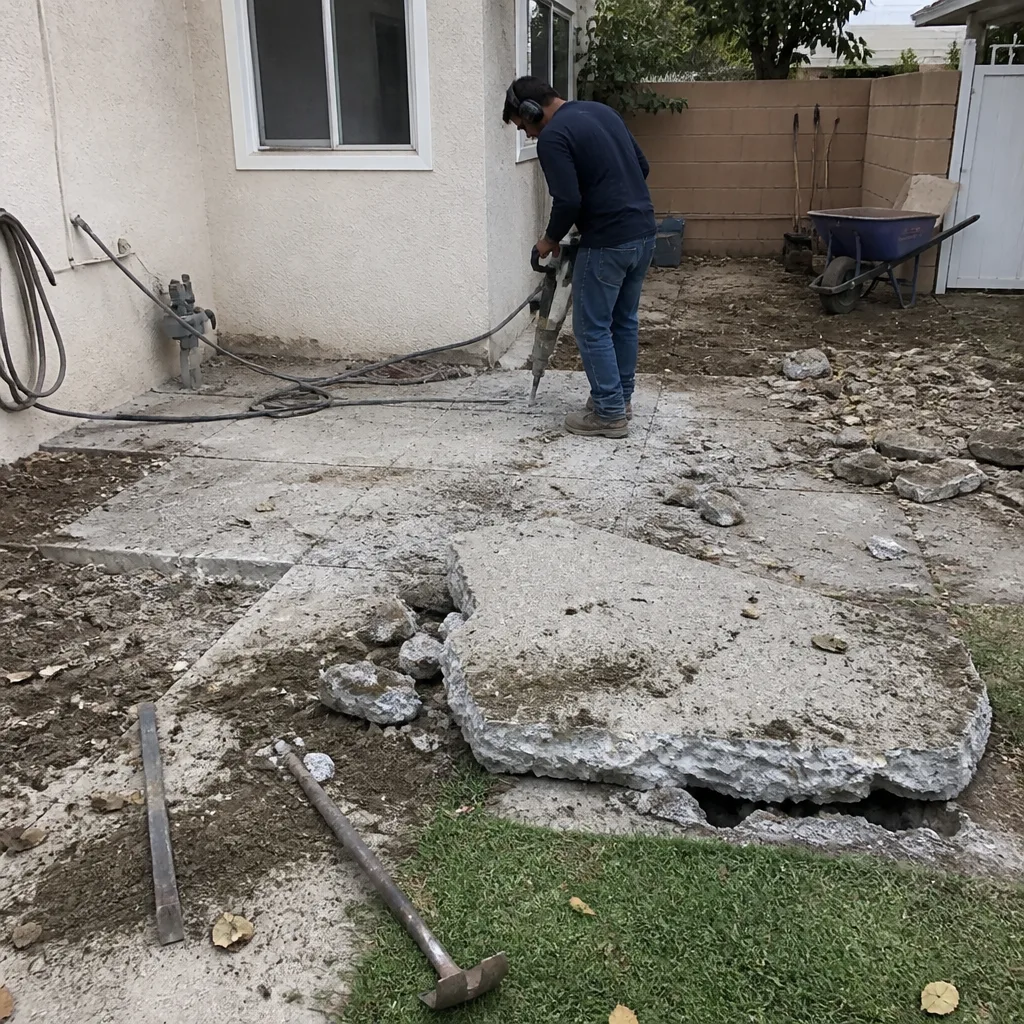 Before
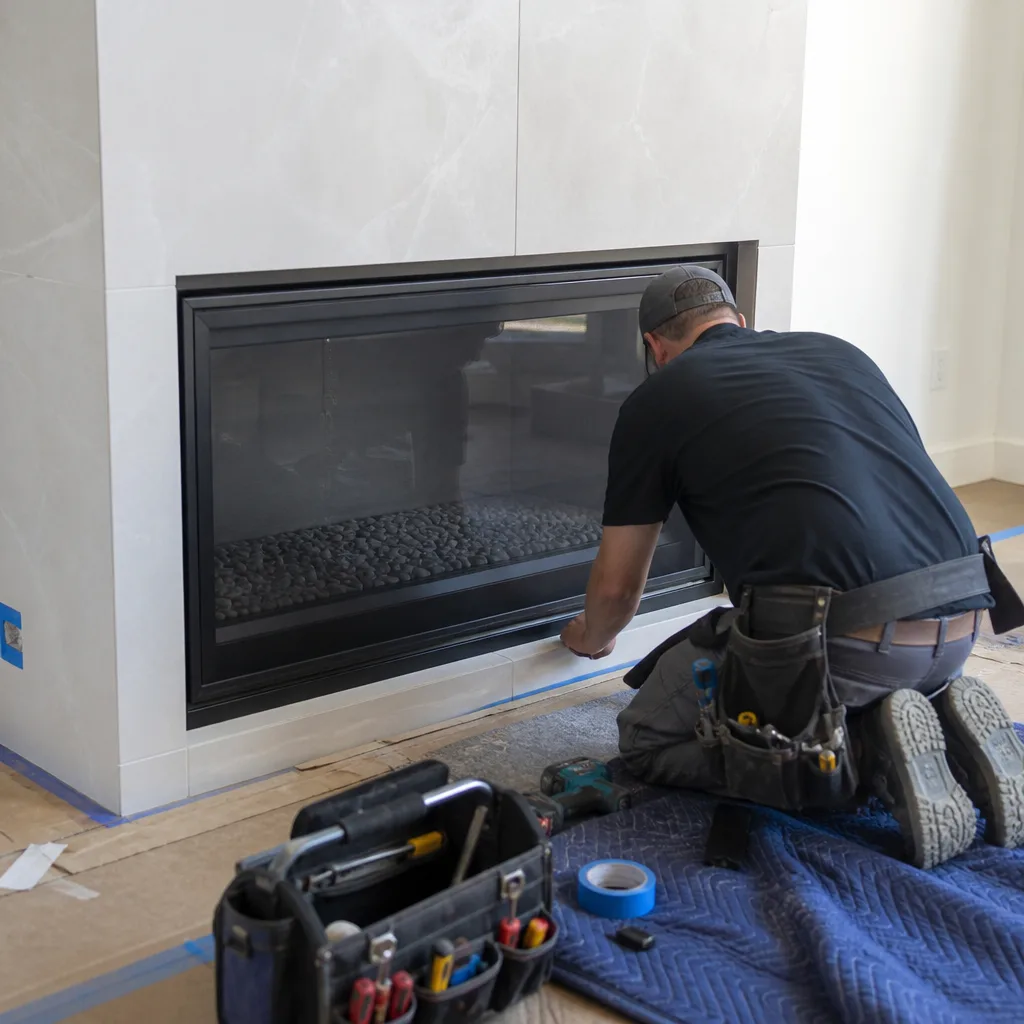 After
AfterWhen to Call a Professional

If your bathroom shows signs of a failed waterproofing layer, such as staining on the ceiling below, musty odors that return after cleaning, or tile that sounds hollow when tapped, the work of the previous contractor is already failing. Do not wait for the repair to become urgent. Water damage spreads behind walls. Call a professional who will diagnose the actual source before quoting a fix.
If you are planning a remodel and the warning signs in this guide appear during the estimate conversation, you are not overreacting by walking away. The estimate conversation is the contractor on their best behavior. It does not improve after the contract is signed.
Elmstead Remodeling offers free estimates in Los Angeles. Call (949) 850-9896 to schedule one.
Frequently Asked Questions
Check the contractor’s license number on the California Contractors State License Board website. A legitimate Los Angeles contractor will have an active license in the appropriate classification, usually B (General Building) for a bathroom remodel that involves multiple trades. If the contractor will not share the number, or the number does not match the person you are talking to, that is your answer.
California law caps deposits on home improvement contracts at 10% of the total price or $1,000, whichever is less. Any contractor demanding more than that before work starts is breaking state law. Call (949) 850-9896 if you want a contractor who follows the legal cap every time.
Most bathroom remodels in Los Angeles require a permit if they involve plumbing, electrical, or structural changes. A full remodel that moves fixtures or opens walls almost always requires one. The permit should be pulled before work begins, and the inspection card should be visible at the job site.
A change order is a written amendment to the original contract that documents a change in scope and its cost. Change orders themselves are normal. Worry about a contractor who makes changes verbally and bills for them later. The change-order process should be written into the original scope of work so both parties know the rules before anything changes.
A typical full bathroom remodel, including demolition, rough plumbing and electrical, waterproofing, tile, fixtures, and finishing, takes four to eight weeks depending on scope, inspections, and material lead times. A contractor who promises a complete remodel in two weeks is either cutting corners on waterproofing or planning to skip inspections.
Test every fixture, check the shower drainage by running water for several minutes, look for grout gaps or uneven tile, verify the caulk lines around the tub and vanity, and confirm all permits have final inspection sign-off. Do not release the final payment until the walkthrough is complete and any issues are documented in writing.
The Bottom Line

Bathroom remodeling warning signs are most visible before work starts, if you know what questions to ask. The contractor who cannot name the waterproofing membrane, asks for more than the legal deposit, or mumbles about permits has already shown you the project you will get. A legitimate scope of work names brands, line-items permits, and describes how the home is protected during construction. In Los Angeles, where older homes and multi-family buildings amplify the risk, these warning signs are not academic. They are the difference between a bathroom that lasts twenty years and one that fails quietly behind the tile. Get the answers in writing, and get the permit pulled before the first hammer swings.
Written by Graham Stein, Owner at Elmstead Remodeling, serving Los Angeles since 2005.