Last updated October 8, 2026


Free written scope consultation - allowances, timeline, and change-order rules on paper before a single trade is scheduled
The Complete Bathroom Remodeling Guide for Los Angeles Homeowners
Los Angeles bathroom remodels are different from almost anywhere else in the country, not because of style or trend, but because of the permit structure woven through them. A homeowner swapping a vanity and repainting is doing cosmetic work. A homeowner moving a drain line, adding an exhaust fan, or rewiring a GFCI outlet has entered the world of plumbing, mechanical, and electrical permits, each with its own inspection timeline. This bathroom remodeling guide walks through the full sequence, the code requirements that trip up first-timers, and the waterproofing and ventilation decisions that determine whether your remodel still looks right in year five. We’ve written it for families in Los Angeles who want to understand the whole map before the first tile comes off the wall.
Quick Answer
A bathroom remodel in Los Angeles typically runs $18,000 to $45,000 for a full gut-and-replace in a standard 5×8 or 6×9 bathroom, with permit fees adding roughly $800 to $1,500 depending on scope. The remodel involves three separate permit tracks (plumbing, electrical, mechanical) and a sequence of rough and final inspections that must close before your tile goes up. The single biggest predictor of a smooth remodel is a written contract that specifies every product by name and a waterproofing system that gets inspected and documented before tile installation begins.
Styles & brands we work with
Table of Contents
- The Los Angeles Bathroom Remodel Permit Matrix
- What a Los Angeles Bathroom Remodel Costs in 2026
- Waterproofing Systems: Schluter, RedGard, Wedi, and What Actually Works
- Ventilation Requirements Under California Building Code
- Sequencing a Remodel When Kids and Pets Live in the House
- What a Complete Written Contract Must Name
- Common Mistakes to Avoid
- When to Call a Professional
- Frequently Asked Questions
The Los Angeles Bathroom Remodel Permit Matrix
Los Angeles does not have one “bathroom remodel permit.” It has three separate permit tracks that run through the Los Angeles Department of Building and Safety (LADBS), and most contractors pull them concurrently. Understanding which ones your project triggers, and in what order they get inspected, prevents the most common remodel stall: a failed inspection with the walls already closed up.
Here is what triggers each permit in a Los Angeles bathroom remodel:
- Plumbing permit: Required when you move a fixture (relocating the toilet, tub, or sink drain), replace the rough plumbing behind the wall, or change the drain size. Swapping a fixture in the exact same location without touching the pipes generally does not require one.
- Electrical permit: Required for adding, moving, or replacing any wiring, including GFCI outlet upgrades, adding a dedicated circuit for a heated floor, or installing a new light fixture that requires new wire. A straightforward swap of an existing light fixture on existing wiring typically doesn’t trigger this.
- Mechanical permit: Required for installing, replacing, or upgrading an exhaust fan. This surprises most Los Angeles homeowners, but the LADBS treats ventilation as mechanical work. If your current bathroom has no fan and you’re adding one, which we recommend for any bathroom without a window, this permit applies.
The inspection sequence matters more than homeowners expect. Here is how it flows in order:
- Rough plumbing inspection: After the walls are opened and the new drain lines and water supply lines are run, but before any drywall or backer board goes up. The inspector checks pipe size, slope, and connection points.
- Rough electrical inspection: Same phase, different trade. The inspector confirms the wiring is correct, GFCI protection is in place, and the circuit is adequate before the walls are closed.
- Rough mechanical inspection: The exhaust fan housing and ductwork get checked for proper sizing and exterior venting before insulation or drywall covers them.
- Waterproofing inspection: This is not a separate LADBS inspection in most jurisdictions, but it must still be documented with photos and a signed record of the product used. Good contractors in Los Angeles do this as a matter of course before tile goes in.
- Final inspection: After the tile is set, the fixtures are installed, the fan runs, and the GFCI trips correctly. This closes all three permit tracks and is what releases your certificate of completion.
We have seen Los Angeles homeowners try to skip permits on a fixture move and run into trouble at resale, when the title company notices the unpermitted work and the transaction stalls. The permit fees are a rounding error compared to the cost of opening a finished wall to expose a drain line the inspector never saw.
One Los Angeles-specific note: if your home falls under the city’s Adaptive Reuse Ordinance or a Historic Preservation Overlay Zone, additional review layers apply. Parts of Los Angeles in neighborhoods like Angelino Heights, Hancock Park, and some areas of the Valley have district-specific requirements that can add two to four weeks to plan review. Your contractor should check this before demo starts.
What a Los Angeles Bathroom Remodel Costs in 2026
Los Angeles bathroom remodel pricing splits into clear tiers, and the numbers shift based on whether you’re moving plumbing, the size of the room, and whether you’re using stock or custom materials. Here are realistic ranges for the current Los Angeles market:
- Cosmetic update (no permit required): $6,000 to $12,000. New vanity, new faucet, new mirror, new light fixture, painting, maybe a new toilet. No plumbing moves, no wiring changes, no new fan. Takes three to seven days.
- Standard gut-and-replace with permited work: $18,000 to $35,000. New tile shower or tub surround, new vanity, one fixture relocation or new fan, new waterproofing, new lighting, permits and inspections included. Takes three to five weeks.
- Higher-end remodel with layout change: $35,000 to $65,000 or more. Moving the toilet, expanding the shower, new double vanity, custom tile work, heated floors, higher-end fixtures. Takes five to eight weeks.
The cost variables that move the needle most in Los Angeles:
- Plumbing relocation: Moving a toilet drain costs $1,500 to $4,000 by itself, depending on the floor structure and access below. In slab-on-grade homes common in parts of Los Angeles, the work requires cutting into concrete, which is why so many remodels keep the toilet in its existing location.
- Waterproofing choice: A Schluter Kerdi system runs $800 to $1,500 in materials for a standard shower, a liquid membrane like RedGard runs $300 to $600, and a Wedi panel system sits in the middle. We’ll cover what each one actually does in the waterproofing section below.
- Fixture tier: Kohler and Moen entry-level lines run $150 to $400 per fixture. Their mid-tier lines run $400 to $1,200. Grohe, which is well represented in Los Angeles showrooms, runs $500 to $2,000 per fixture. The spread between entry and premium is real and shows up in the written price.
- Tile selection: Basic ceramic or porcelain runs $3 to $8 per square foot in material. Natural stone or large-format porcelain runs $10 to $25 per square foot. Large-format tile is trend-forward in Los Angeles right now, but it requires a perfectly flat substrate and a more skilled installer, which adds labor cost.
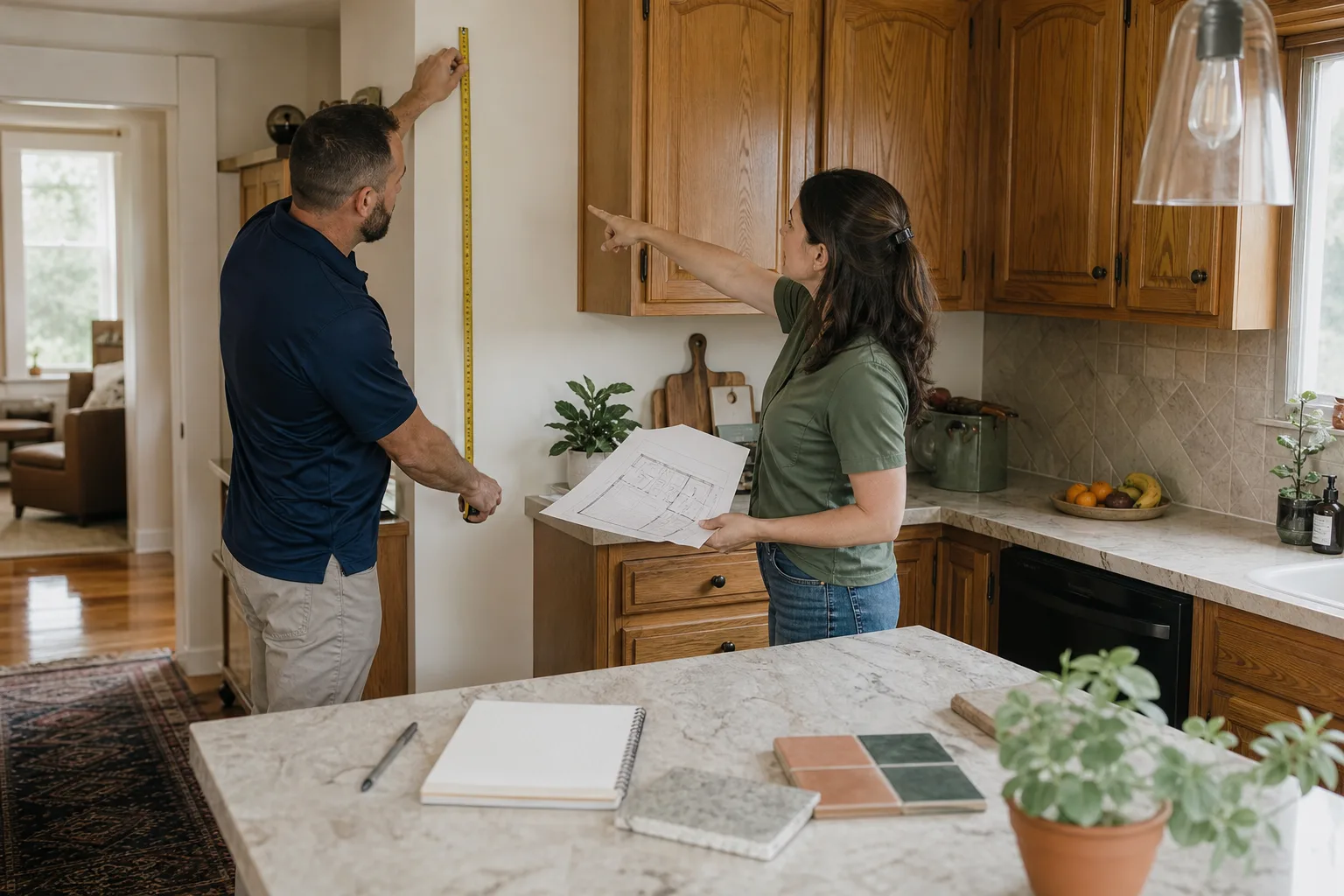
Every project we write in Los Angeles gets a written price before any work starts. No estimate that grows after the crew arrives. The price names the exact product SKUs, the exact scope, and the exact number of days before the bathroom is back in service. You should expect the same from any contractor you’re comparing.
Waterproofing Systems: Schluter, RedGard, Wedi, and What Actually Works
Waterproofing is the part of a bathroom remodel you never see after it’s done, and it is the part that determines whether your shower still looks right in year five. Los Angeles sees hard water, humid months, and wide temperature swings between the Valley and the coast, and a failed waterproofing layer shows up as efflorescence on the grout, a musty smell, or worse, rot in the studs behind the tile.
There are three main systems used in Los Angeles bathroom remodels, and each works when installed correctly.
Schluter Kerdi
A sheet membrane system from the German manufacturer Schluter. It bonds to the substrate with thin-set and creates a continuous waterproof layer across walls and floor, including corners and seams, using pre-formed bands. Schluter is the most common premium choice in Los Angeles because it is predictable, widely stocked at local tile suppliers, and backed by a manufacturer warranty that homeowners can verify independently. We specify Schluter on most showers we build.
RedGard (and other liquid membranes)
A liquid-applied membrane that gets rolled or troweled onto the substrate and cures into a rubber-like barrier. RedGard is less expensive in materials than Schluter, but the installer must apply it at the correct thickness, which is measured in mils, not coats. Too thin and it fails; too thick and it can’t cure properly. A reputable installer applies it with a thickness gauge and documents the application.
Wedi
A foam-core panel system with a bonded waterproof surface. The panels are pre-waterproofed at the factory, which removes a step of on-site application. Wedi panels are lighter and easier to handle, which speeds installation. The tradeoff is that the panels themselves cost more than cement board, and the system requires Wedi-specific sealants and fasteners.
What matters more than the system you choose is that the waterproofing gets inspected and documented before tile goes up. A photo record of the completed waterproofing layer, with corners and seams visible, is the standard we keep on every project. If a contractor can’t show you waterproofing photos from a previous job, ask why.
One Los Angeles-specific point: homes in older parts of the city, including many pre-1980 builds in neighborhoods like West Adams, Atwater Village, and parts of the Eastside, often have plaster walls instead of drywall. Plaster behaves differently around moisture, and the waterproofing product selection should account for the wall assembly. Your contractor should know this before the demo begins, not after.
Ventilation Requirements Under California Building Code
California Building Code requires that every bathroom with no operable window have a mechanical exhaust fan that vents to the exterior, not into the attic. Code also sets minimum air movement: 50 cubic feet per minute (CFM) for a standard bathroom, or 80 CFM if the fan is placed in or near a shower enclosure. These numbers are not suggestions; they are the inspection standard.
What many Los Angeles homeowners learn the hard way is that an undersized or incorrectly vented fan causes problems that take two to three years to appear. The moisture doesn’t show up as a puddle. It accumulates behind the drywall, feeds mold, and eventually shows as peeling paint, bubbled drywall tape, or a persistent smell you can’t locate. By the time you see it, the fix is invasive.
Here is what the fan installation should include:
- Correct CFM rating: A 5×8 bathroom needs 50 CFM minimum. A larger bathroom with a separate shower and soaking tub needs 80 CFM or more. Overbuying is not wasteful here; it’s more useful than underbuying.
- Duct run to the exterior: The fan must exhaust outside, through the roof or a side wall. Venting into the attic is a code violation and a common shortcut on unpermitted work in older Los Angeles homes.
- Duct sizing and length: A 4-inch duct is standard. Longer duct runs, which happen when the bathroom sits far from an exterior wall, should increase the fan CFM rating or the duct diameter. This is exactly the kind of calculation a mechanical permit review checks.
- Timer or humidity sensor: Not required by code but strongly recommended. A fan that runs for 15 to 20 minutes after a shower removes the residual moisture that causes problems. Humidity-sensing switches are standard in many Los Angeles remodels now.
The mechanical permit for a fan upgrade costs far less than the remediation for mold found behind a finished wall. We recommend adding a fan to any bathroom without one, window or not.
Sequencing a Remodel When Kids and Pets Live in the House
A bathroom remodel in a house with one bathroom is a different project than a remodel in a house with three. Los Angeles has both: older single-bath homes in neighborhoods like Highland Park and Lincoln Heights, and larger multi-bath homes in Sherman Oaks or Studio City. The sequencing decision starts with how many functioning bathrooms the family can keep during the work.
Here is how we sequence a remodel for a household with children and pets:
- Confirm the alternate bathroom schedule before demo starts. In a single-bath home, plan for a portable shower or schedule shower access with a neighbor or family member. In a multi-bath home, confirm which bathroom stays fully functional, with the door labeled so kids know which one is theirs.
- Schedule loud demolition during school hours. Jackhammers, tile saws, and framing hammers are unavoidable, but they don’t have to run during nap time or after school. We schedule the loudest work between roughly 9 a.m. and 2 p.m. where possible, and we tell the family the schedule in advance so they can plan around it.
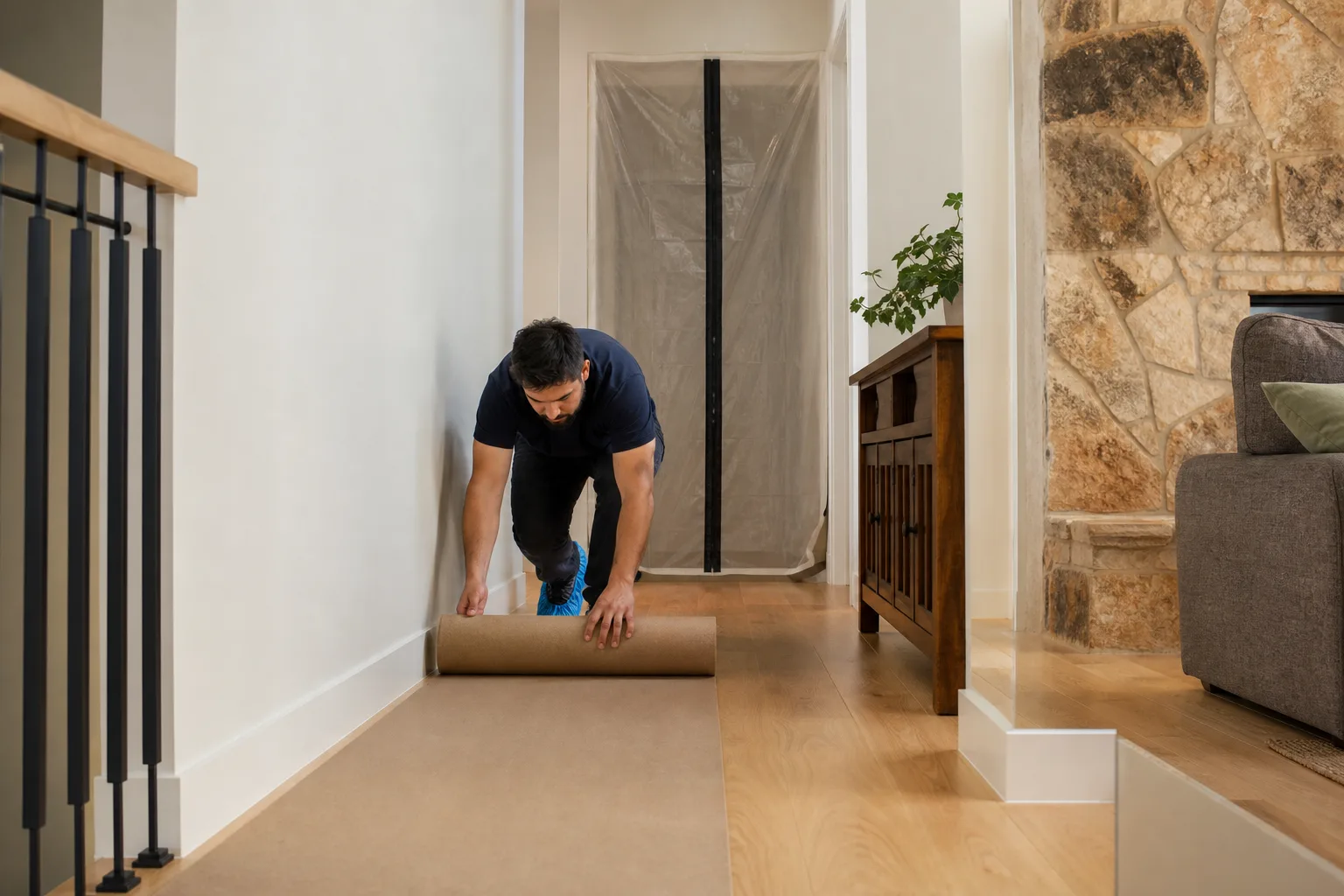
- Contain tile dust with zip-wall barriers. Tile removal produces silica dust that travels through the house. A zip-wall barrier at the doorway, with plastic sheeting from floor to ceiling and the seams taped, keeps the dust in the work zone. Shoe covers and drop cloths go on every visit, and the barrier comes down only after the dust has been cleaned.
- Keep pet-safe products where there is a choice. Some adhesives, sealants, and cleaning products are harder on pets than others. Where the spec allows, we choose products that are less volatile during curing, and we tell the family when it’s safe for the dog to be in the room again.
- Photo the clean-up before the crew leaves each day. Every visit ends with a photograph of the cleaned work area. The family knows what to expect before they open the door, and the photo becomes part of the project record.
This is the C.A.R.E. standard in action: clean up like it is our own home, ask before we move or touch anything, respect the family’s time and quiet hours, and explain the price before the work. The crew that shows up in your Los Angeles home should be able to name how they protect each of those four things on the first visit.
What a Complete Written Contract Must Name
A bathroom remodel contract in Los Angeles should read like a specification sheet, not a marketing document. The single biggest source of remodel disputes is a contract that says “install new tile” without naming the tile, the grout, or the waterproofing. Here is what a complete written contract specifies:
- Tile brand and SKU: Not “porcelain floor tile.” The manufacturer, the collection name, the specific size and finish, and the SKU. If the tile is ever damaged and needs replacement, you want to order the same lot.
- Fixture model numbers: The exact Kohler, Moen, or Grohe model for the faucet, showerhead, toilet, and tub. Not “chrome faucet.” The model number.
- Grout color name: Grout color changes the whole look of the tile, and “white grout” is not specific. Name the manufacturer and the color.
- Waterproofing product: Schluter Kerdi, RedGard, or Wedi, including the specific product and the application method. This is what protects your studs, and it should be named in the contract.
- Named allowance for owner-selected items: If you’re selecting your own mirror, lighting, or hardware, the contract names a dollar allowance for each line item. If you go over, you know before work starts. If you go under, you keep the difference.
- Permit and inspection scope: Which permits are being pulled, who is pulling them, which inspections are included, and what happens at each inspection stage.
Elmstead Remodeling gives a written price before any work starts, every time, on every project. The price names the products, the scope, and the timeline. There is no estimates that grow after the crew arrives. If you are comparing Los Angeles contractors, compare whether their written price names the same things.
Common Mistakes to Avoid
- Skipping the mechanical permit on a fan upgrade. In Los Angeles, an exhaust fan replacement that involves new ductwork requires a mechanical permit. Work done without it becomes a disclosure issue at resale, and it can slow a sale by weeks while the records get sorted out.
- Choosing the wrong waterproofing product for the wall assembly. A product that works on cement board may not be the right choice for the plaster walls in an older Los Angeles home. Your contractor should evaluate the substrate before the waterproofing goes on.
- Undersizing the exhaust fan. A 30 CFM fan in a steamy Los Angeles bathroom with no window will show mold problems by year two or three. Code minimums are a floor, not a target.
- Not specifying grout color in the contract. Grout color is the most common last-minute conflict we see. Name it in writing before the tile goes up.
- Letting the tile installer skip the waterproofing documentation. If there are no photos of the waterproofing layer before tile, you have no record that the work was done right. Ask for the photo.
- Starting demo before the full material order is confirmed. Los Angeles tile suppliers run on specific lead times, and a backorder on a specific SKU can stall a project for weeks. Confirm every line item is on hand or on schedule before the first tile comes off.
- Not protecting the rest of the house from dust. Tile demolition dust travels. A zip-wall barrier and proper floor protection are not extras; they’re part of the job.
When to Call a Professional
Some parts of a Los Angeles construction project like a bathroom remodel are safe to take on as a homeowner. Replacing a faucet, painting, swapping a vanity, or installing a new mirror are all within reach. The line changes when you open a wall, move a drain, touch wiring, or install a waterproofing layer that will protect your home for decades.
Any work that involves moving plumbing, adding or moving electrical, upgrading an exhaust fan, or waterproofing a shower should be done by a licensed contractor who pulls the permits and schedules the inspections. The risk isn’t just the code violation; it’s the slow, invisible failure that shows up years later. Elmstead Remodeling offers free estimates in Los Angeles, and we’re happy to walk through your project scope and what it will require. Call (949) 850-9896 to schedule yours.
Frequently Asked Questions
A full bathroom remodel in Los Angeles typically costs $18,000 to $45,000 depending on size, scope, and materials, with higher-end projects running $65,000 or more. The biggest cost variables are plumbing relocation, waterproofing choice, and fixture tier. Call (949) 850-9896 for a written price on your specific project, free of charge.
You need a plumbing permit for fixture moves, an electrical permit for GFCI or wiring changes, and a mechanical permit for exhaust fan work. Cosmetic changes like painting or swapping a vanity in place generally don’t require permits. A licensed contractor pulls and manages all three permit tracks.
A standard gut-and-replace bathroom remodel takes three to five weeks from demo to final inspection, assuming no structural surprises. A layout change that involves moving plumbing takes five to eight weeks. The inspection schedule and material lead times are the most common reasons a timeline extends.
Waterproofing is not a separate LADBS inspection in most cases, but the layer must be documented with photos before tile installation covers it. A reputable contractor photographs the seams, corners, and product application and keeps those photos in the project record.
California Building Code requires a mechanical exhaust fan venting to the exterior for any bathroom without an operable window. The fan must be rated at 50 CFM minimum for a standard bathroom, or 80 CFM if placed near a shower. The fan duct must vent outside, not into the attic.
It should not, and at Elmstead Remodeling it does not. You get a written price before any work starts, and the price is the price. The only changes we make are ones you ask for, and they are priced in writing before any additional work begins.
The Bottom Line
A Los Angeles bathroom remodel succeeds or fails based on what happens before the first tile comes off: the permit tracks you identify, the waterproofing product you choose, the fan you size, and the contract you sign. Families who understand the sequence finish faster, pay less in change orders, and live with a bathroom that still looks right years later. The contractor you choose should be able to show you the permit plan, name every product in the written price, and show you photos of waterproofing from past projects. See our Complete General Contractor Guide for Los Angeles Homeowners for more on vetting contractors. If you’re ready to start that conversation, we’re here.
This guide was written to serve Los Angeles homeowners with real details about local code, local homes, and local market pricing. For more on what we do, see Elmstead Remodeling home, our Bathroom Remodeling in Los Angeles page, our Kitchen Remodeling in Los Angeles work, or our General Contractor in Los Angeles services.
Written by Graham Stein, Owner at Elmstead Remodeling, serving Los Angeles since 2005.
See the difference
 Before
 After
After Before
 After
After Before
 After
After