Last updated October 8, 2026






Free written scope consultation - allowances, timeline, and change-order rules on paper before a single trade is scheduled
Construction Emergency Preparedness Guide for Los Angeles Homes
After a major seismic event, the FEMA Individual Assistance program will not reimburse emergency repairs you authorize before a damage inspection is documented. That single sequencing problem causes Los Angeles families to spend thousands of dollars on work that would have been covered if they had simply waited 72 hours and photographed everything first. This guide covers construction emergency preparedness in two distinct layers: hardening your home structurally before an earthquake, fire, or flood happens, and knowing exactly which decisions in the first 24 hours after damage are reversible, which are not, and how to tell the difference. You will learn what Los Angeles code actually requires for water heater strapping and cripple wall bolting, what to shut off and what to leave alone after an event, how to verify a contractor’s license in three minutes while out-of-state crews flood the market, and what documentation protects you when emergency tarping or board-up work begins.
Styles & brands we work with
Quick Answer
Construction emergency preparedness for a Los Angeles home means doing pre-event structural hardening that meets current California code (water heater strapping, cripple wall bolting, chimney retrofit, retaining wall drainage), then following a documented 24-hour post-event sequence: photograph all damage before touching anything, shut off gas and water only if you confirm a leak, and get a written emergency scope from a California-licensed contractor before any repair work begins. The most expensive mistake families make is authorizing demolition or repair work before insurance and FEMA documentation exists, because unreimbursed emergency repairs are a leading cause of post-disaster financial loss in Los Angeles.
Table of Contents
- Pre-Event Structural Hardening: What Los Angeles Code Actually Requires
- Retrofit Permits, Costs, and What Happens If You Skip Them
- Hillside Homes and Retaining Wall Drainage: The Overlooked Risk
- The 24-Hour Post-Event Checklist: What to Document, What to Shut Off, What Not to Touch
- Finding a Licensed Contractor During an LA Disaster: The Three-Minute CSLB Verification
- Emergency Tarping and Board-Up: What’s Permit-Exempt and What Needs Documentation
- Post-Emergency Repairs and the 365-Day Done Right Promise
- Common Mistakes to Avoid
- When to Call a Professional
- Frequently Asked Questions
- The Bottom Line
Pre-Event Structural Hardening: What Los Angeles Code Actually Requires
Los Angeles sits on a network of fault lines, and the difference between a house that rides out a 6.7 magnitude event and one that shifts off its foundation often comes down to a few hundred dollars of steel and bolts installed years before. Structural hardening is not a single project. It is a checklist of specific retrofits, each with its own code section, its own permit path, and its own failure mode if skipped.
Water Heater Strapping
An unstrapped 40-gallon water heater holds roughly 330 pounds of water. In a seismic event, that weight becomes a projectile that can rupture the gas line, flood the garage, and ignite a fire. California Plumbing Code Section 507.2 requires all water heaters in Los Angeles to be strapped with two heavy-gauge metal straps: one in the upper third of the tank, one in the lower third. The straps must be anchored to wall studs with lag bolts, not drywall anchors. We have opened walls in Los Angeles homes built before 2000 and found water heaters secured with plumber’s tape wrapped around the tank and screwed into drywall. That fails inspection every time, and it fails during an earthquake every time. The retrofit itself is one of the least expensive seismic upgrades a home can receive, typically a few hundred dollars including the permit, and it is the first thing an inspector looks for after a sale.
Cripple Wall Bolting
Homes built before 1980 in Los Angeles frequently sit on cripple walls: short wood-framed walls between the foundation and the first floor. These walls were originally built without structural sheathing or foundation anchors in many cases. California Existing Building Code Chapter A3 governs the retrofit. The work involves bolting the mudsill to the foundation with epoxy-set anchors, then sheathing the cripple wall with plywood or oriented strand board and nailing it per a prescribed schedule. In our experience with general contractor work in Los Angeles, a typical 1,200-square-foot pre-1960 home requires 40 to 60 foundation anchors, and the retrofit usually falls in the $4,000 to $8,000 range depending on crawl space access. The City of Los Angeles has streamlined this specific permit as part of its mandatory retrofit ordinance for soft-story and non-ductile concrete buildings, though single-family wood-frame homes follow the standard Department of Building and Safety process.
Chimney Retrofit
Unreinforced masonry chimneys are the single most common collapse point in Los Angeles earthquakes. The 1994 Northridge event brought down thousands of them. A chimney that collapses through a roof during shaking becomes a hazard for anyone below, and the repair after the fact is a full rebuild. The retrofit involves either demolishing the chimney below the roofline and capping it, or reinforcing it with steel and grout. Los Angeles building code now requires any new chimney to be reinforced, but existing chimneys are grandfathered until a remodel triggers upgrade requirements. If you are planning a kitchen remodeling project in Los Angeles and your chimney runs through or adjacent to the kitchen, have it evaluated at the same time. The incremental cost of reinforcing while walls are already open is a fraction of the post-earthquake cost.
Retrofit Permits, Costs, and What Happens If You Skip Them
Every retrofit described above requires a permit from the Los Angeles Department of Building and Safety (LADBS). The permit is not a formality. Unpermitted seismic work creates two problems: the work may not meet current code because no inspector verified it, and when you sell the home, unpermitted work disclosed during escrow becomes a negotiation liability. Buyers in Los Angeles are increasingly asking for Construction Permits, Codes & Inspections in CA: What You Need to Know before closing.
Current permit costs for these projects in Los Angeles are modest. A water heater strapping permit is under $100. A cripple wall bolting permit runs in the $200 to $400 range depending on the valuation of the work. A chimney retrofit permit is typically $150 to $300. The labor and materials are the real cost, not the permit itself. Here is what current pricing looks like in the Los Angeles market as of this writing:
- Water heater strapping and anchoring: $350 to $700 including permit
- Cripple wall bolting and sheathing (typical pre-1960 single-story): $4,000 to $8,000 including permit
- Chimney reinforcement or partial demolition and cap: $5,000 to $12,000 depending on height and access
- Hillside retaining wall drainage retrofit: $10,000 to $40,000 depending on wall length and soil conditions
These ranges reflect what we quote on Elmstead Remodeling home projects across Los Angeles, and they assume normal access conditions. If your crawl space is under 18 inches of clearance, expect the cripple wall number to climb. If your chimney is three stories tall with no scaffold access from the street, the chimney number climbs too. A written price before any work starts is standard practice for this kind of retrofit work, and you should insist on it.
Hillside Homes and Retaining Wall Drainage: The Overlooked Risk
Los Angeles hillside homes face a risk that flatland homes do not: saturated soil behind retaining walls. When a retaining wall holds back earth without adequate drainage, water pressure builds behind the wall during winter rains, and the wall can fail suddenly, taking a section of hillside and whatever sits on it down the slope. The January 2023 storms caused dozens of retaining wall failures across Los Angeles neighborhoods like Mount Washington, Echo Park, and the Hollywood Hills, and many of those failures were drainage problems that had been visible for years.
Every retaining wall over four feet in height requires a permit in Los Angeles, and drainage design is part of the permit review. The key components are weep holes spaced at regular intervals, a gravel drain blanket behind the wall, and a perforated drain pipe at the base that carries water to daylight. When we inspect hillside properties in Los Angeles, the first thing we check is whether the weep holes are still visible and flowing. If they are clogged or covered by landscaping, the wall is already in failure mode. Homeowners can check this themselves: after a rain, walk the length of the wall and look for water seeping through the weep holes. Dry weep holes after heavy rain on a hillside property are a warning sign, not a relief.
For homes with walls that have already begun to lean or crack, the fix is not cosmetic. A leaning retaining wall typically requires soil removal, wall reconstruction or anchoring, and new drainage. This is not a project to postpone, because a failed retaining wall can destabilize the foundation of the home above it. And in a city where hillside lots are common, this specific failure mode is under-discussed in most emergency preparedness materials.
The 24-Hour Post-Event Checklist: What to Document, What to Shut Off, What Not to Touch
The first 24 hours after an earthquake, fire, or flood determine whether your insurance claim and any FEMA assistance are processed cleanly or turned into a fight. The sequence matters more than most people realize. Here is the checklist in order.
- Photograph everything before you move anything. Walk the perimeter of the home first, then every room. Photograph cracks in walls, ceilings, and foundations from multiple angles. Photograph water stains, broken windows, and any visible structural movement. Use your phone’s timestamp feature or capture the time and date in the photo metadata. This photographic record is the baseline for every claim that follows.
- Shut off gas only if you smell gas or hear hissing. The gas shut-off valve at the meter requires a wrench to turn, and once it is off, only SoCalGas or a licensed plumber can restore service. In the days after Northridge, thousands of Los Angeles homeowners shut off gas unnecessarily and waited weeks for restoration because service crews were overwhelmed. If you do not smell gas, leave it on.
- Shut off water at the main if you see active flooding from a broken pipe. The water main shut-off is typically near the front of the property. Turning it off prevents further water damage, but photograph the water damage before you dry anything out.
- Do not turn off the main electrical panel unless there is visible damage, sparking, or water intrusion into the panel. A refrigerator full of food and the ability to charge phones matters after an event. If the panel is wet or damaged, shut it off and do not touch it again until an electrician has inspected it.
- Do not begin demolition or removal. This is the rule families break most often, and it is the most expensive mistake. Removing damaged drywall, pulling up wet carpet, or tearing out a damaged cabinet before an insurance adjuster or FEMA inspector documents it can disqualify that portion of the claim. Wait until the inspection is documented, even if it takes 72 hours.
- Document the names and license numbers of anyone who does emergency work. In the chaos after a disaster, unlicensed contractors appear from other states. Write down the name on the license, the license number, and the state that issued it. Verify it before they start.
- Keep receipts for everything. Tarps, lumber, hotel stays, meals during displacement. All of it becomes part of the claim file.
Finding a Licensed Contractor During an LA Disaster: The Three-Minute CSLB Verification
After a disaster, unlicensed and out-of-state contractors descend on Los Angeles within days. Some are legitimate tradespeople from other states who do not hold California Contractor’s State License Board (CSLB) credentials, which means they are not legally permitted to perform construction work in California. Others are outright scam operators taking deposits and disappearing. The California CSLB maintains a license verification tool that takes three minutes to use, and it is the single best protection a homeowner has.
Here is the verification sequence, step by step:
- Ask for the contractor’s license number. A licensed California contractor must provide it on all contracts, estimates, and advertising. If they hesitate, that is the end of the conversation.
- Go to the CSLB website and enter the license number. The license lookup shows the license status, the business name associated with the license, the classification (B for general building, C-36 for plumbing, C-10 for electrical, and so on), and whether workers’ compensation insurance is on file.
- Confirm the name on the license matches the person standing in front of you. License lending is a known problem after disasters, where one licensed contractor sends unlicensed crews under their number.
- Check for active disciplinary actions. The CSLB publishes suspensions, revocations, and citations. A license that is active but has recent disciplinary history deserves a second look.
The penalty for hiring an unlicensed contractor in California is not just bad work. Homeowners who hire unlicensed contractors for work over $500 have fewer legal protections if the work fails, and in some cases, the homeowner can be held liable for injuries unlicensed workers sustain on the property. In a post-disaster market where out-of-state crews are working without California licensing, this is not a theoretical risk.
Emergency Tarping and Board-Up: What’s Permit-Exempt and What Needs Documentation
Emergency tarping and board-up work occupies a specific place in Los Angeles permitting: it is exempt from permit requirements when it is genuinely emergency protective work. LADBS does not require a permit for temporary roof tarping, window board-up, or temporary shoring installed to prevent imminent collapse. But the exemption has boundaries, and understanding where those boundaries are protects you from doing permanent work under an emergency label.
Temporary tarping means tarps secured with battens and fasteners to prevent water intrusion. It does not mean replacing roof sheathing. Temporary board-up means plywood panels screwed over broken windows and doors. It does not mean framing new walls. Temporary shoring means engineered or improvised supports holding a damaged structure in place. It does not mean cutting away damaged framing. Any of those permanent repairs require permits, and starting them before documentation exists is the exact sequence that voids coverage.
Before any emergency protective work begins, get a written scope from the contractor doing the work. The scope should describe in plain language what will be done, what materials will be used, and that the work is temporary emergency protection only. This written scope serves two purposes: it establishes that the work is protective and not permanent, and it becomes part of your claim file when the adjuster asks what was done in the first 48 hours. We have never seen a homeowner regret getting a written emergency scope. We have seen many regret not getting one.
Post-Emergency Repairs and the 365-Day Done Right Promise
Once the emergency protective work is done and the insurance or FEMA inspection is documented, the permanent repair phase begins. This is where the quality of the contractor matters in ways that are not visible on a bid sheet. Post-emergency repairs in Los Angeles often involve structural work the homeowner will never see: new shear wall panels, foundation anchors, re-flashed rooflines, re-glazed windows. The work is hidden, the invoice is not, and the only thing protecting the family from discovering a problem a year later is the contractor’s post-project commitment.
Every Elmstead Remodeling project, including post-emergency repair work, carries a 365-Day Done Right Promise. If it is not done right after the job is complete, we make it right. That promise is not a marketing line. It is written into the project documentation the family receives at close, and it travels with the finished work. For insurance file purposes, families receive the written scope, the completed permit documentation from LADBS, and the close-out documentation that includes the 365-Day Done Right Promise. When a claim adjuster or a future buyer asks what work was done and who stood behind it, the answer is filed and straightforward.
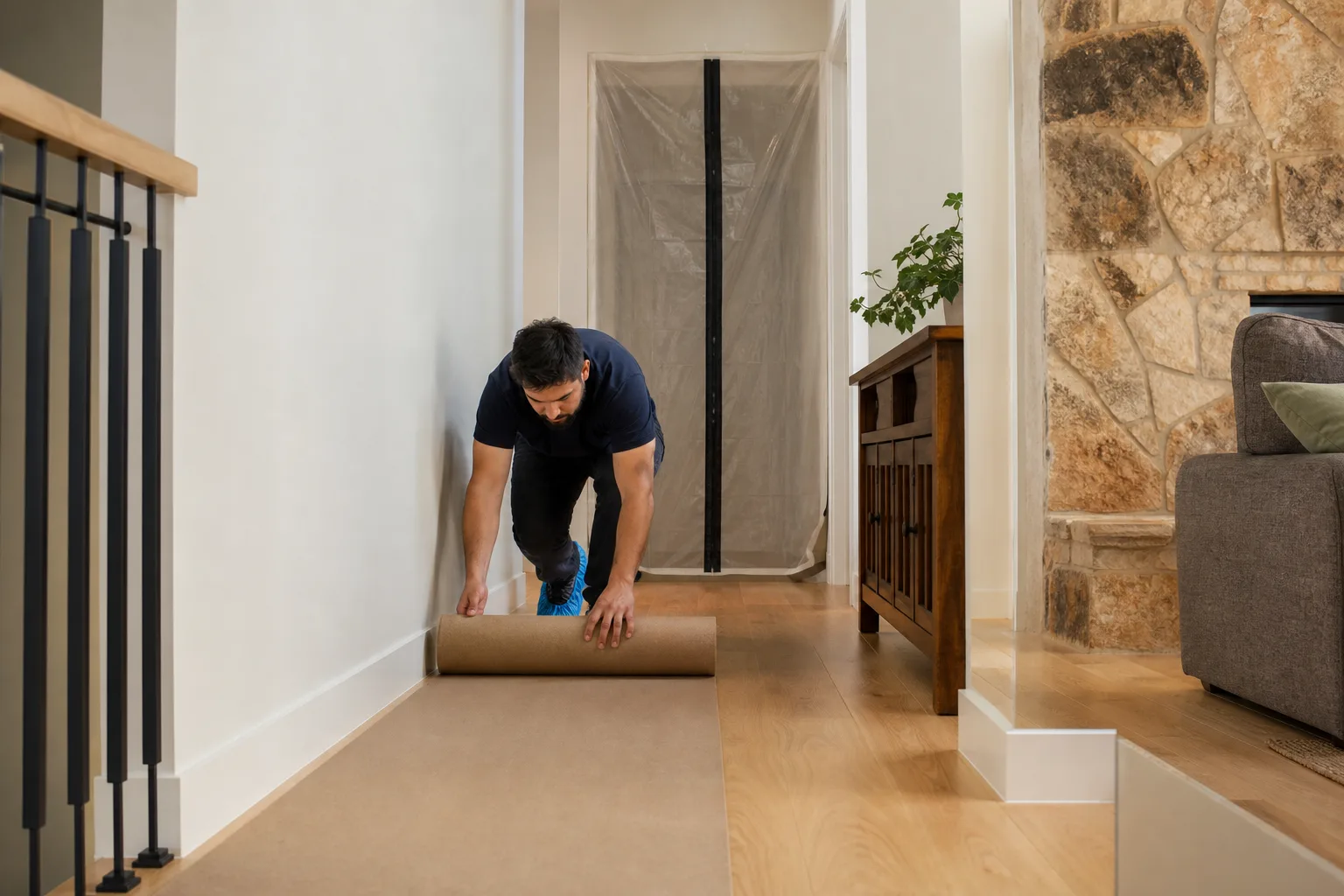
Post-emergency repairs also come with the same care protocols as any bathroom remodeling project in Los Angeles or other Elmstead work: shoe covers and drop cloths inside the house, a written price before work starts, a photo of the clean-up before the crew leaves, quiet tools during family rest hours where possible, and pet-safe product choices where available. After a disaster, the house already feels disrupted. The repair crew should not add to that disruption.
Common Mistakes to Avoid
- Shutting off the gas when there is no leak. Once the gas is off, only SoCalGas or a licensed plumber can restore it, and after a major event that could take weeks. If you cannot smell gas or hear hissing, leave the valve alone.
- Starting demolition before the adjuster documents damage. Removing broken drywall, ripped carpet, or damaged cabinetry before inspection voids coverage for those items. The 72-hour wait is worth the claim protection.
- Hiring an out-of-state contractor without a CSLB license. California requires the license for construction work over $500. An unlicensed crew means no legal recourse and potential liability for injuries on your property.
- Accepting a verbal quote for emergency work. A written emergency scope, even one written on a notepad and photographed, protects you when the adjuster asks what happened in the first 48 hours. A verbal agreement does not.
- Skipping the water heater strap retrofit because the house is “fine.” An unstrapped water heater is a 330-pound projectile during shaking. The retrofit is a few hundred dollars. The fire it prevents can cost the whole house.
- Ignoring dry weep holes on a hillside retaining wall. Clogged weep holes mean water pressure is building behind the wall. The wall can fail suddenly during the next rain, taking the soil and whatever sits on it down the slope.
- Assuming homeowner’s insurance covers earthquake damage. Standard homeowner’s policies in Los Angeles do not cover earthquake damage. Earthquake coverage is a separate policy, and the deductible is typically 10 to 15 percent of the dwelling value. Knowing this before an event changes how you plan for it.
When to Call a Professional
Some emergency preparedness steps are DIY. Strapping a water heater is a Saturday project, though the permit and inspection still apply. But structural work, hillside drainage, chimney retrofit, and post-event permanent repairs are not the place to learn as you go. The stakes are the roof over your family, the walls that hold the house up, and the documentation that protects the claim. Elmstead Remodeling offers free estimates in Los Angeles – call (949) 850-9896 to talk through your home’s specific risks and what a retrofit plan would look like.
Frequently Asked Questions
Seismic retrofitting in Los Angeles typically costs between $4,000 and $8,000 for cripple wall bolting and sheathing on a pre-1960 single-story home, $350 to $700 for water heater strapping, and $5,000 to $12,000 for chimney reinforcement, with hillside retaining wall drainage running $10,000 to $40,000 depending on wall length and soil conditions. Call (949) 850-9896 for a written quote specific to your home – estimates are free.
Yes, a water heater strapping permit is required in Los Angeles and costs under $100 through LADBS, with inspection verifying that the straps are the correct gauge and anchored to studs with lag bolts per California Plumbing Code Section 507.2. The total project including labor and permit typically runs $350 to $700.
Photograph every crack, stain, and visible movement inside and out before moving anything, then shut off gas only if you smell or hear a leak, shut off water only if a pipe is actively flooding, and wait for an insurance or FEMA inspection before beginning any demolition or removal. The documentation sequence protects your claim.
Ask for the license number, enter it on the CSLB license lookup website, confirm the business name matches the person you are speaking with, and check for active disciplinary actions – the entire process takes about three minutes and reveals whether the contractor holds a valid California license and workers’ compensation coverage.
Temporary roof tarping, window board-up, and temporary shoring to prevent imminent collapse are permit-exempt in Los Angeles as long as the work is genuinely temporary and protective, while any permanent repair like roof sheathing replacement or framing work requires a permit and should not begin before damage is documented. Call (949) 850-9896 if you need help determining where the line is.
Standard homeowner’s insurance policies do not cover earthquake damage, which requires a separate earthquake policy with a separate deductible, typically 10 to 15 percent of the dwelling coverage, and this is why pre-event structural hardening is the most cost-effective protection a Los Angeles homeowner can make.
The Bottom Line
Construction emergency preparedness in Los Angeles is a sequence, not a single action. The pre-event work – water heater strapping, cripple wall bolting, chimney retrofit, hillside drainage – is the cost-effective protection most families postpone. The 24-hour post-event sequence – photograph first, shut off only what is leaking, wait for documentation before demolition – is the financial protection most families learn about too late. And the contractor you choose for permanent repairs determines whether the work still stands a year later. A licensed contractor with a written price and a post-project promise is not a luxury in a disaster. It is the only version of this that ends well. For more guides & resources, see our blog.
Written by Graham Stein, Owner at Elmstead Remodeling, serving Los Angeles since 2005.
See the difference
 Before
 After
After Before
 After
After Before
 After
After