Last updated October 8, 2026








Free written scope consultation - allowances, timeline, and change-order rules on paper before a single trade is scheduled
Kitchen Remodeling Troubleshooting: Common Problems and How to Fix Them
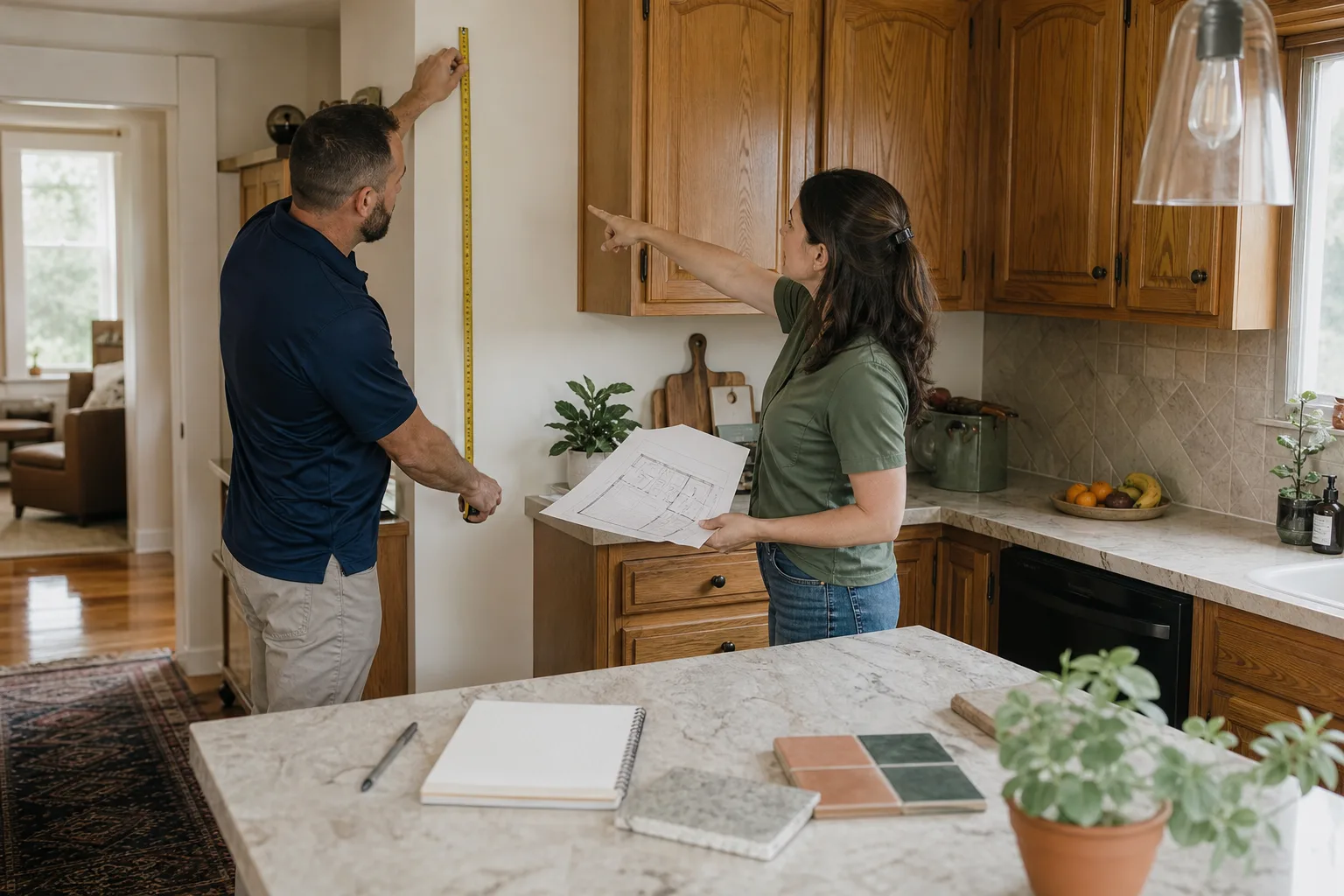
Knob-and-tube wiring, found inside walls during roughly 1 in 4 remodels of Los Angeles homes built before 1950, is not a contractor’s fault. But how they document it, price the remedy, and get it inspected is entirely their responsibility. You won’t find that distinction in most remodeling guides. You’ll find advice about picking countertops and choosing paint colors. The problems that actually derail kitchen remodels in Los Angeles happen after the cabinets come out and the walls come open. This guide prepares you for the five most common mid-project surprises, explains exactly how a responsible contractor should handle each one, and gives you the language to put in your contract before demolition day. For more on what to watch for before starting, see our Kitchen Remodeling Warning Signs Every Homeowner Should Know.
Quick Answer
Most kitchen remodeling problems surface on day two of demolition when walls open and reveal conditions no estimate could have predicted: knob-and-tube wiring, galvanized pipes, inadequate subfloors, asbestos tiles, or undersized drains. The right contractor handles each discovery with a written change order that shows you the exact added cost before any work continues. You should never pay for surprise work you didn’t approve in writing, and you should never work with a contractor who treats verbal agreements as binding.
Styles & brands we work with







Table of Contents
- The Five Hidden Discoveries Most Common in Los Angeles Kitchens
- The Written Change Order: What It Must Include and Why Verbal Approvals Fail
- What a Fair Markup on Surprise Materials Looks Like
- What to Do When Work Stalls Without Explanation
- Cabinet Alignment and Leveling Failures After Installation
- Appliance Delivery Timing Mismatches and How to Prevent Them
- Contract Language That Protects You Before Demolition Begins
- Common Mistakes to Avoid
- When to Call a Professional
- Frequently Asked Questions
The Five Hidden Discoveries Most Common in Los Angeles Kitchens
We’ve opened hundreds of kitchen walls in Los Angeles, from Echo Park bungalows to Sherman Oaks ranches to Altadena mid-centuries. The discoveries repeat with a consistency that surprises homeowners every time. Here are the five you’re most likely to encounter, what they mean, and how a responsible contractor handles each one.
1. Knob-and-tube wiring
Homes built before 1950 in Los Angeles frequently still carry knob-and-tube wiring inside kitchen walls. It’s not inherently dangerous if it’s been untouched, but the moment you open a wall and plan to install new outlets, under-cabinet lighting, or a modern appliance circuit, that wiring cannot stay. Los Angeles code requires kitchen circuits on dedicated breakers with ground wires. Knob-and-tube has no ground. The fix is rewiring the affected circuits, which pulls a permit and requires an electrician’s signature. A contractor who discovers knob-and-tube on day two should stop work in that wall, show you a photo, and bring you a written change order with the electrician’s line-item price attached. A contractor who says “we can just work around it” is asking you to live with a kitchen that won’t pass inspection and won’t safely run a modern dishwasher.
2. Galvanized supply pipes
Galvanized steel pipes were standard in Los Angeles homes built from the 1920s through the early 1960s. After 60 to 80 years, the interior of those pipes corrodes. When a kitchen remodel moves or extends supply lines, old galvanized pipe often breaks at the threads or reveals pinhole leaks under the slab. The fix is replacement with copper or PEX from the shutoff valve to the fixtures. This is not a place to economize. Reconnecting new kitchen fixtures to crumbling galvanized pipe means opening the wall again in two years when the leak shows up behind your new cabinets. A good contractor documents the condition with photos before disconnecting anything.
3. Inadequate subfloor for tile
Tile needs a subfloor that doesn’t flex. Many Los Angeles kitchens, especially in homes with raised foundations, were built with plank subflooring meant to carry linoleum or vinyl, not ceramic tile. When a contractor removes the old floor and finds plank subfloor with gaps and uneven joints, tile laid directly on it will crack at the grout lines within a year. The fix is either a layer of Schluter Ditra uncoupling membrane or a cement backer board layer, depending on the floor’s condition. This adds material cost and a day of labor, and it’s the kind of thing a responsible contractor writes into a change order before proceeding. A contractor who says “tile is fine on this” without checking the deflection rating is guessing with your floor.
4. Asbestos floor tiles under vinyl
Los Angeles homes built before 1980 often have a layer of 9-inch by 9-inch asbestos tiles hiding under the sheet vinyl in the kitchen. You won’t know until the vinyl comes up. If the tiles are intact, the safest and most economical approach is often to leave them in place and cover them with the new floor rather than abatement. If the remodel requires removing them, Los Angeles regulations require specific containment procedures and disposal. This is not a do-it-yourself moment. The concrete act of prying up those tiles releases fibers. A responsible contractor tests before disturbing, explains the two paths in plain language, and gives you a written price either way.
5. Undersized drain lines
Pre-1980 Los Angeles kitchens often have 1.5-inch drain lines where current code calls for 2-inch lines to accommodate a dishwasher drain and a garbage disposal running together. When a kitchen remodel relocates the sink or adds a dishwasher where there wasn’t one, the old drain may not meet code. The fix is running a new line back to the main drain stack. This is plumbing work that requires a permit and inspection. A contractor who discovers an undersized drain should tell you the code violation, show you the requirement, and price the replacement before cutting into any additional wall.
The Written Change Order: What It Must Include and Why Verbal Approvals Fail
Every hidden discovery in a Los Angeles kitchen remodel should produce a written change order. This document is the mechanism that keeps surprise costs honest. Here’s what it must include, step by step:
- The discovery, described in plain language. “Opened wall north of sink. Found knob-and-tube wiring serving two outlet locations. Wiring has no ground and cannot be reconnected to modern circuits under current Los Angeles electrical code.”
- A dated photo of the condition. If the contractor won’t show you a photo, ask why.
- The proposed fix, written specifically. “Run new 12-gauge NM wiring from panel to four kitchen outlets. Install new 20-amp arc-fault breaker. Patch wall to drywall-ready condition.”
- The exact added cost, broken into materials and labor. Not a range. A number.
- The schedule impact in days. “Adds two working days to electrical rough-in.”
- Your signature and the contractor’s signature before any work starts.
Verbal approvals are unenforceable. If a contractor says “it’ll be around $800, I’ll write it up later,” you have no legal protection when the written version arrives at $1,400. The written change order is your record. It’s also the contractor’s protection against you claiming you never approved the work. Both parties benefit from the document. A contractor who resists writing it down is asking you to absorb risk you didn’t agree to.
What a Fair Markup on Surprise Materials Looks Like
When a hidden discovery requires unexpected materials, the contractor will add a markup. This is normal and legitimate. The contractor is sourcing the material, scheduling delivery, paying for it upfront, and standing behind its installation. What’s fair and what’s not:
- Fair: 15 to 20 percent over the contractor’s cost on surprise materials.
- Fair: a direct pass-through of the electrician’s or plumber’s invoice plus a coordination fee, typically 10 percent, disclosed before the sub shows up.
- Not fair: 40 to 50 percent markup on surprise materials presented after the work is complete.
- Not fair: a lump-sum “we’ll take care of everything” number with no line items and no receipts.
In our experience, homeowners in Los Angeles are far more comfortable with a surprise cost when they can see exactly where every dollar goes. The line-item change order does that. It turns a confrontation into a transaction. You might not like paying for rewiring you didn’t budget for, but you can see the electrician’s price, the materials list, and our coordination fee. Nothing is hidden. That’s the difference between a contractor you trust and one you’re always negotiating with.
What to Do When Work Stalls Without Explanation
A stalled kitchen remodel is one of the most common complaints we hear from Los Angeles homeowners who hired the wrong contractor first. The wall is open, the cabinets are in the garage, and nobody has shown up for four days. Here’s how to tell the difference between a legitimate hold and a contractor who has overextended across multiple jobs.
Legitimate holds
- Inspection holds. Los Angeles building inspections happen on a schedule, and the inspector might only release the next phase after seeing the rough-in. The contractor should have told you the inspection date and what happens after it passes.
- Material backorder. Specific product lines, especially made-to-order cabinets from brands like KraftMaid or Wellborn, have factory lead times. If your cabinet order is genuinely in production, that’s a legitimate wait. The contractor should have given you the factory order date and the tracking number.
- Curing or drying time. Some materials have minimum cure windows. The contractor should have put that in the schedule before the work started.
Red flags
- The contractor stops answering the phone or returns calls only after days.
- The explanation changes between conversations.
- You see social media posts from the contractor showing active work at other job sites while yours sits silent.
- No inspection date, no material order number, no timeline was ever provided.
What to do: put your request in writing. Ask for the specific reason for the stoppage, the date work resumes, and the schedule impact. A responsible contractor answers within a day. A contractor who has overextended avoids the question. This is also where the written change-order trail protects you. You have a paper record of every conversation, which matters if the situation escalates.
Cabinet Alignment and Leveling Failures After Installation
Cabinet alignment problems appear a week or two after installation, often after the countertops are set. A door doesn’t close flush. A drawer face sits crooked. A bank of cabinets drifts a quarter-inch out of level across eight feet. These failures happen for a few reasons, and most are fixable without removing the cabinets entirely.
How they happen
- Out-of-level floors. Los Angeles homes settle. A floor that’s half an inch low across a 10-foot run will telegraph into the cabinet line if the installer doesn’t shim correctly.
- Improper shim placement. Cabinets need shims at every stud, not just at the corners. Missed studs allow the cabinet box to flex.
- Fastener failure. Using drywall anchors instead of driving into studs. Cabinets hold weight. Drywall doesn’t.
- Cheap hinges. Low-quality hinges drift under the weight of a solid-wood door. A cabinet line from KraftMaid or Wellborn ships with adjustable soft-close hinges that hold their position. Cheaper cabinet lines don’t.
Whether they’re fixable without full removal
Most alignment failures are fixable with hinge adjustment, additional shims, or refastening to studs. A door that hangs crooked because the hinge is misadjusted takes ten minutes. A cabinet box that’s twisted because it wasn’t shimmed at the studs may need to be pulled and reset, which is a half-day fix for one box. Full removal is rarely necessary unless the cabinet itself is damaged.
What protects you in the contract: language that requires the installer to return and correct any cabinet that deviates more than 1/8 inch from level or reveals a gap greater than 1/8 inch between adjacent boxes. This is a measurable standard. A contractor who won’t put a number in the contract won’t be held to one later.
Appliance Delivery Timing Mismatches and How to Prevent Them
It’s a scene we see too often in Los Angeles: the refrigerator arrives two weeks before the cabinet surround is ready. The garage becomes a storage unit. The range sits in the living room. The dishwasher boxes block the hallway. This happens because nobody sequenced the deliveries against the construction schedule.
A good project schedule ties every appliance delivery to the week it’s actually needed, not to the week the homeowner ordered it. Here’s the sequence that prevents the garage from filling up:
- Order appliances at contract signing. Some lines have long lead times. Getting the order in early prevents the opposite problem: a finished kitchen with no refrigerator.
- Schedule delivery for the week of cabinet installation. Installers stay right behind cabinet finish work.
- Have the appliance supplier hold the order if construction slips. A good supplier will store the appliance in their warehouse until you release it.
- Never accept a delivery the contractor isn’t ready for. If the schedule has slipped, call the supplier and reschedule the delivery. It’s a phone call, not a freight charge, in most cases.
This also applies to countertop slab delivery. A Cambria slab delivered before the cabinet boxes are set is a 600-pound object sitting in your driveway. The contractor should be coordinating all of this. Ask for a written delivery schedule before demolition starts. If the contractor can’t produce one, you’ve learned something useful.
Contract Language That Protects You Before Demolition Begins
The best Kitchen Remodeling services start with troubleshooting before the first hammer swing. These contract clauses, written into the original agreement, protect you from the most common mid-project disputes:
- Change-order requirement. “No additional work shall be performed and no additional charge shall apply without a written change order signed by both parties.”
- Discovery documentation. “Upon discovery of concealed conditions not visible during estimate preparation, contractor shall stop work in the affected area, photograph the condition, provide the owner a written description, and obtain written approval before proceeding.”
- Alignment tolerance. “Cabinets shall be installed level within 1/8 inch over any 10-foot run. Contractor shall correct any deviation exceeding this tolerance at no additional charge.”
- Clean-up standard. “Contractor shall leave the premises broom-clean at the end of each workday and provide photographic documentation of clean-up at project completion.”
- Permit responsibility. “Contractor is responsible for pulling all required permits and calling for all required inspections. No progress payment shall be due for work that has not passed inspection.”
A contractor who signs this language is a contractor who expects to be held to it. A contractor who balks is telling you something about how the job will go. At Elmstead Remodeling home, we put our 365-Day Done Right Promise in writing on every kitchen remodel in Los Angeles. If it’s not done right after the job is complete, we make it right. That commitment means more when it follows the same written standards you asked for in the contract.
Common Mistakes to Avoid
- Approving verbal change orders. If it’s not written and signed, the price and scope are whatever the contractor remembers. Write it down, every time.
- Paying in full before the final inspection passes. Your leverage disappears the moment the contractor has all your money.
- Skipping the permit because the contractor says it’s faster. Unpermitted work in Los Angeles is a lien and insurance risk that stays with the house when you sell.
- Accepting a lump-sum change order with no line items. “It’ll be $4,500 to handle the wiring” is not a document. You deserve to see what the electrician charged and what the contractor marked up.
- Choosing the lowest bid on a kitchen remodel. The bid that’s $20,000 under everyone else is low for a reason. Usually the reason is the change orders coming after demolition.
- Ordering appliances yourself on a random timeline. Coordinate with the contractor or live with a refrigerator in the dining room.
- Ignoring the subfloor when choosing tile. Tile failure comes from what’s underneath the tile, not the tile itself.
When to Call a Professional
Some kitchen remodeling problems are genuinely not for a homeowner to solve. If you open a wall and find knob-and-tube wiring, leave it alone and call an electrician. Asbestos-containing tiles should be tested, not disturbed. Gas line work anywhere near the kitchen requires a licensed plumber and a permit. Galvanized pipe replacement means shutting off your main water supply and working inside walls. None of this is weekend-project territory. The wrong approach to any of these creates a more expensive problem than the one you found. If you’re in Los Angeles and want a kitchen remodel handled by a contractor who documents discoveries, writes the change order before the work, and leaves the house clean every single day, Kitchen Remodeling in Los Angeles starts with a free estimate. Call (949) 850-9896 and a live person picks up, 24/7.
Frequently Asked Questions
Hidden discoveries in Los Angeles kitchens typically add $3,000 to $15,000 depending on what’s found. Knob-and-tube rewiring for a single kitchen runs $4,000 to $8,000. Galvanized pipe replacement adds $2,500 to $6,000. Subfloor correction for tile adds $1,500 to $4,000. Asbestos tile abatement can run $2,000 to $5,000. A written change order should show you every line item before any payment is discussed. Call (949) 850-9896 if you want a contractor who prices discoveries honestly.
Only if a hidden condition is discovered that could not be seen during the estimate walkthrough, and only with your written approval on a change order first. Any contractor who presents you a larger number after the fact, without documentation, is not following the process. Ask for a written price before any work starts, every time.
Yes, for structural, electrical, plumbing, or mechanical changes. A kitchen remodel that touches walls, wiring, drains, or gas lines requires permits and inspections. Your contractor should pull the permit in their name, not ask you to pull it as owner-builder. Owner-builder permits leave you legally responsible for the workmanship.
A full kitchen remodel in Los Angeles, including demolition, rough-in, drywall, cabinets, countertops, tile, and finish work, typically takes 6 to 10 weeks depending on the scope and the city’s inspection schedule. Made-to-order cabinets from lines like KraftMaid or Wellborn can add 4 to 8 weeks of lead time before installation even begins. Get the full schedule in writing before demolition day.
Yes, most families in Los Angeles live at home during a kitchen remodel, though it means setting up a temporary kitchen in another room. The contractor should contain dust with plastic barriers, keep walkways clear, and use quiet tools during children’s nap and school hours where possible. Ask about the clean-up standard before you sign. We provide shoe covers and drop cloths on every visit, and we photograph the clean-up before the crew leaves.
Put your request in writing. Ask for the specific reason for the stoppage, the date work resumes, and the updated schedule. Give them 48 hours to respond. If they don’t respond, contact your local Los Angeles building department to check the permit status and consider consulting a construction attorney. Most legitimate holds have a clear explanation attached, like an inspection wait or a material backorder. Silence is a red flag.
If you’re looking for General Contractor in Los Angeles who documents everything in writing, you can also explore our Bathroom Remodeling in Los Angeles work or call (949) 850-9896 to ask about either.
The Bottom Line

Kitchen remodeling problems are inevitable in older Los Angeles homes. What separates a good remodel from a nightmare is not whether surprises happen; it’s how the contractor handles them when they do. You want a written change order with photos, line items, and your signature before any additional work starts. You want a contract that names specific tolerances and clean-up standards. You want a delivery schedule that sequences appliances against construction, not against impulse. And you want a contractor who answers the phone. None of this requires a construction degree. It requires a contractor willing to write things down.
Written by Graham Stein, Owner at Elmstead Remodeling, serving Los Angeles since 2005.
See the difference
 Before
 After
After Before
 After
After Before
 After
After