
Last updated October 8, 2026





Free written scope consultation - allowances, timeline, and change-order rules on paper before a single trade is scheduled
Home Remodeling Warning Signs Every Homeowner Should Know
Most contractor red flags get discussed in the abstract: trust your gut, get three bids, read the reviews. But the signs that actually predict a bad remodeling outcome are concrete and checkable before any agreement is signed. A contractor who gives a verbal price and says he’ll “write it up later” is describing the exact conditions under which scope creep, and the disputes that follow, almost always begin. This guide names the specific documents, behaviors, and contract clauses that separate a careful contractor from a risky one, with context from two decades of Home Remodeling services across Los Angeles neighborhoods.
Styles & brands we work with







Quick Answer
The clearest home remodeling warning signs are specific and verifiable: no written line-item contract, a price that leans on “allowances” without dollar figures attached, a contractor who cannot name his subcontractors, crews that arrive without floor protection, and a warranty that is a spoken promise instead of a written commitment. For more guides & resources on spotting problems early, see our blog. Any single one of these is worth pausing over. Two or more appearing together is a signal to walk away before the work begins.
Table of Contents
- Document Red Flags: What a Risky Contract Looks Like
- License and Insurance Checks Every Los Angeles Homeowner Should Run
- On-Site Behavioral Red Flags That Predict a Bad Finish
- Material Substitution Warning Signs and How to Spot Them
- What a Healthy Warranty Looks Like Versus a Hollow One
- Allowance Traps: The Pricing Loophole That Causes the Most Disputes
- California-Specific Warning Signs Homeowners in Los Angeles Should Know
- Common Mistakes to Avoid
- When to Call a Professional
- Frequently Asked Questions
- The Bottom Line
Document Red Flags: What a Risky Contract Looks Like
The contract is the single most predictive document in a remodeling project. In our experience across Los Angeles, nearly every dispute we have been called in to fix traced back to a gap in the written agreement, not a failure of craftsmanship. A contractor who will not put the scope in writing is not being casual. He is preserving room to argue later about what was included.
The first red flag is the absence of a written contract entirely. In California, a home improvement contract over $500 must be in writing under state law. A contractor who proposes a kitchen remodel in Los Angeles on a handshake is either unaware of the law or counting on you being unaware of it. Neither is reassuring.
The second red flag is a contract that describes the work in broad categories without quantities, dimensions, or named products. “Kitchen remodel, cabinets, countertops, flooring, paint” is a description of a room, not a scope of work. A careful contract names the cabinet line, the countertop material and edge profile, the square footage of flooring, the number of outlets being added, and the finish schedule. If you cannot picture the finished room from the contract alone, the contract is not done.
The third red flag is a price that references allowances without attaching dollar figures to each one. We cover that trap in detail later in this guide, but the short version is this: an allowance with no number is not a budget, it is a blank check.
Finally, watch for the absence of a lien waiver process. In California, subcontractors and material suppliers can file a mechanic’s lien against your property if the general contractor does not pay them, even if you have already paid the general contractor in full. A careful contractor explains upfront how lien releases will be collected from every sub and supplier before each payment is released. A contractor who does not mention lien waivers at all is a risk to your property title, not just your kitchen.
- No written contract when California law requires one for any job over $500.
- Scope described in vague categories instead of quantities, dimensions, and named products.
- Allowances with no dollar figures attached to each line.
- No lien waiver process explained before work begins.
- A price given verbally with a promise to “write it up later.”
At Elmstead Remodeling, the written price is given before any work starts, every time, on every project. That is not a sales tactic. It is the document that makes every other promise on the job enforceable. If a contractor is reluctant to put the price in writing before the crew arrives, the rest of the project will likely be just as reluctant to commit.
License and Insurance Checks Every Los Angeles Homeowner Should Run
California has one of the strongest contractor licensing systems in the country, and it gives Los Angeles homeowners a specific, free tool to verify a contractor before signing: the Contractors State License Board, or CSLB, license lookup. The process takes about three minutes and it tells you more than any review site ever will.
Here is the step-by-step check every homeowner should run before hiring a remodeling contractor in Los Angeles:
- Get the contractor’s license number. A licensed California contractor is required to include the number on all advertising, contracts, and bids. If it is not printed on the proposal, that is itself a red flag.
- Run the number on the CSLB website. Confirm the license is active, not expired, suspended, or revoked. Confirm the name on the license matches the person or company you are dealing with. Confirm the classification covers the work being proposed. A painting contractor with a C-33 license is not licensed to perform a structural remodel.
- Confirm workers’ compensation insurance is in force. The CSLB lookup shows whether the contractor carries workers’ comp. If a contractor has no employees and works alone, he may be exempt. If he brings a crew, the exemption evaporates.
- Ask for a certificate of insurance directly. The certificate should name the homeowner as an additional insured and show general liability coverage with a current effective date. An expired certificate is worse than no certificate because it shows the contractor stopped paying attention.
- Verify the bond amount. California requires a $25,000 contractor license bond. It is not insurance for your project, but it is a signal the contractor maintains the minimum legal standing to operate.
Why does this matter specifically in Los Angeles? Because the city has a large volume of unlicensed activity and a high rate of worker injury claims. If a worker is injured on your property and the contractor does not carry workers’ comp, the injured worker can file a claim against your homeowner’s insurance. In some cases, the homeowner is held personally liable. The insurance check is not bureaucracy. It is the difference between a remodel that stays on budget and one that ends in a lawsuit.
The crew we send to a Los Angeles home is background-checked and uniformed, and our paperwork is structured so the lien waiver process is explained before the first hammer swings. Homeowners should expect the same level of transparency from any contractor they consider. If a contractor hesitates to give you his license number, that hesitation is the entire answer.
On-Site Behavioral Red Flags That Predict a Bad Finish
Some warning signs only appear after the crew arrives. By then, the contract is signed and the deposit is paid, but that does not mean you are out of options. The first week of a remodel is a preview of the entire project. What you see in those first days is what you will get in the final walkthrough.
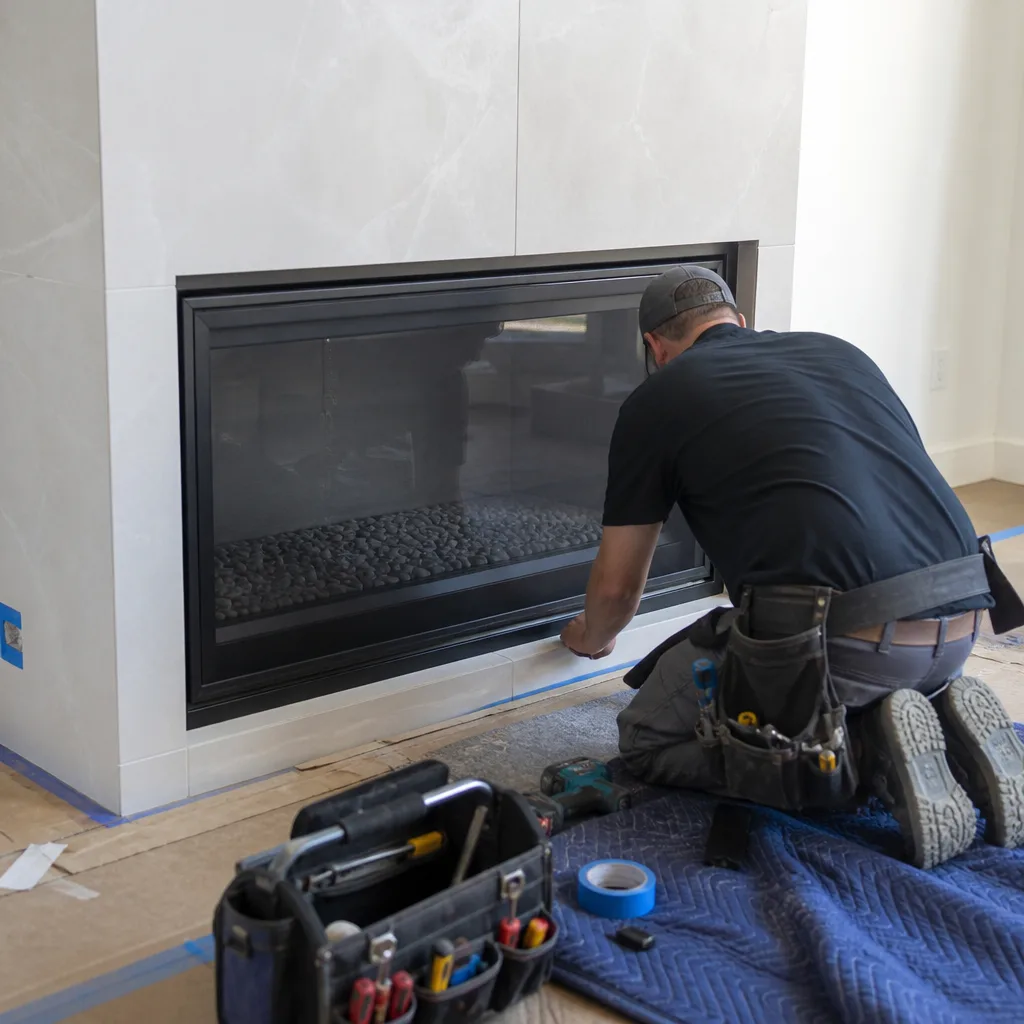
The most telling on-site behavior is what the crew does with the floors. A careful remodeling contractor protects the path from the door to the work area with drop cloths or floor protection before any materials come in. A careless crew walks straight through with work boots and tools. In older Los Angeles homes with original hardwood, that difference is measured in thousands of dollars of damage. The contractor who skips floor protection is showing you, in the first hour, how he will treat the rest of the house.
Daily cleanup is the next signal. Some debris is unavoidable during demolition, but the end of each workday should leave the site walked through, swept, and organized. A pile of drywall dust left on the stairs for a week is not a busy crew. It is a crew without a process. At Elmstead Remodeling, shoe covers and drop cloths are included on every visit, and a photo of the clean-up is taken before the crew leaves each day. That photo is proof the home was left right, not a promise that it will be.
Then there is the subcontractor question. A general contractor should be able to name every trade working on your project: the plumber, the electrician, the countertop fabricator, the tile setter. If you ask who is doing the electrical work and the contractor says “my guy,” that is not an answer. Subcontractors the GC cannot name are workers the GC cannot control, schedule, or hold accountable. In Los Angeles, where remodels often involve structural changes and seismic retrofitting, that lack of control is a genuine risk.
- No drop cloths or floor protection on arrival, before tools come in.
- No daily cleanup at the end of each workday.
- Subcontractors the GC cannot name or describe by trade and license status.
- A crew that moves personal items without asking, including furniture, wall hangings, or children’s belongings.
- No designated workspace, so the crew’s tools and materials spread through the living areas.
Each of these behaviors predicts something specific about the finished project. No floor protection predicts damage to existing surfaces. No daily cleanup predicts a final walkthrough full of dust and paint splatter. Unnamed subcontractors predict a schedule that slips while the GC waits on someone he cannot reach. A crew that does not ask before moving things predicts a family that spends the project stepping around their own home.
Material Substitution Warning Signs and How to Spot Them
Material substitution is where the money goes missing in a remodel. It happens quietly, usually mid-project, and it is almost always described as an honest swap: “The cabinet line we quoted had a six-week lead time, so we went with a comparable one that ships tomorrow.” The word “comparable” is doing a lot of work in that sentence.
The first warning sign is a bid that does not name brands or grades. A proposal that says “cabinets” without naming a manufacturer, wood species, finish, or construction method is a proposal that allows any cabinet at any price point. A proposal that says “quartz countertops” without naming Cambria, Silestone, or Caesarstone, and a specific color and edge profile, is a proposal that allows any quartz at any quality. When the product is not named, the contractor controls what arrives. That is not selection. That is surrender.
The second warning sign is a contractor who objects when you specify products. A homeowner who says “we want Kohler fixtures in the bathrooms” and is told “you don’t want to be locked into a brand, let me get you something just as good” is being talked out of a verifiable, warrantied product into an unverifiable substitute. There are times when a product is genuinely unavailable, and a good contractor will tell you that in writing with a proposed alternative and a price adjustment. But a contractor who resists named materials from the start is protecting his margin, not your remodel.
The third warning sign is the mid-project substitution with no written change order. In California, any change to scope or materials should be documented in writing before the change is made. If the countertop that arrives is not the one in the contract and there is no change order explaining why, the homeowner has just received a product they did not sign for at a price they may not have agreed to. “We had to substitute” is not a legal basis for changing your countertop. A written change order with a signature is the only mechanism that protects you.
Here is a useful question to ask before signing anything: “Can I verify the brand and grade of every product in this scope?” If the answer is yes, the contract will name them. If the answer is no, or if the question seems to annoy the contractor, walk away. At Elmstead Remodeling, the materials list travels with the contract and includes named partners like KraftMaid and Wellborn for cabinets, Cambria and Silestone for countertops, and Kohler for fixtures. These are brands with manufacturer warranties homeowners can verify independently. That verification is the point.
What a Healthy Warranty Looks Like Versus a Hollow One
Every contractor says their work is guaranteed. Very few can tell you what that guarantee actually means when the paint blisters or the tile cracks six months after the final check clears. A warranty is a document with defined terms, not a sentence spoken during a sales conversation.
A hollow warranty sounds like this: “If anything goes wrong, just call us. We’ll take care of it.” Notice what is missing: no time frame, no definition of what “wrong” means, no named point of contact, no response window, no statement of what “take care of it” includes. If the contractor changes his phone number or simply stops answering, the promise evaporates because it never existed in writing.
A healthy warranty names the duration, the scope, the exclusions, the process, and the person responsible. It says something like: “For 365 days after project completion, if any installation defect is identified, we will repair or replace the affected work at no charge. Claims are submitted by phone to the same number used throughout the project, and a response is provided within one business day.” That is a commitment with teeth because it is specific enough to enforce.
The 365-Day Done Right Promise at Elmstead Remodeling works this way. It is stamped on every project, it has a named point of contact, and it includes a defined response window. If the work is not done right, we make it right. That is not a slogan. It is the longest-standing post-project commitment in our service area, and it survives because it is written, not spoken.
When you are comparing contractors in Los Angeles, ask each one to show you their warranty in writing. Not describe it, show it. A contractor who cannot produce a written warranty document during the bidding phase will not suddenly produce one after the work is done. The document either exists before the project starts or it does not exist at all.
Allowance Traps: The Pricing Loophole That Causes the Most Disputes
The word “allowance” appears in more remodeling contracts than any other single term, and it is responsible for more disputes than all other causes combined. An allowance is a placeholder the contractor inserts when a product has not been selected yet. The problem is not the concept. The problem is that many allowances carry no dollar figure at all, or carry a figure so low that every actual product choice will exceed it.
Here is how the trap works in a Los Angeles kitchen remodel. The contract says “Cabinet allowance: TBD” or “Plumbing fixture allowance: $800.” That sounds like a line item, but it is not. It is a starting point. The homeowner selects cabinets that cost $12,000, and the contractor says the allowance was $5,000, so $7,000 is added to the price as a change order. The homeowner is already committed to the project, the old kitchen is already demolished, and the change order arrives as a surprise. That is not a discovery. That is how the contract was designed.
The fix is simple and contractors who resist it are telling you something important: every allowance must carry a specific dollar figure, and that figure must reflect the actual cost of a product the homeowner would reasonably select. An $800 plumbing fixture allowance in a bathroom where a single Kohler shower system costs $1,200 is not a realistic allowance. It is a low-ball number designed to keep the contract price attractive while guaranteeing a change order later.
Ask the contractor this question before signing: “What happens if I choose a product that costs more than the allowance?” The answer should be immediate and boring: the difference is added as a written change order before the product is ordered, and you sign it before any money changes hands. That is how the allowance system is supposed to work. At Elmstead Remodeling, the written price we give before any work starts includes named materials wherever possible, so the allowance conversation usually only applies to finish selections the homeowner wants time to make. When it applies, the dollar figure is attached to the line and discussed before the contract is signed.
California-Specific Warning Signs Homeowners in Los Angeles Should Know
Remodeling in Los Angeles carries risks and requirements that homeowners in other states never encounter. The most important of these is seismic code. Los Angeles sits in Seismic Design Category D, which means structural changes to load-bearing walls, foundations, and additions must meet stringent earthquake resistance standards. A contractor who proposes removing a wall without mentioning shear wall requirements, hold-downs, or a structural engineer is either skipping the engineering or planning to handle it “in the field.” Neither is legal.
The second California-specific warning sign is permit avoidance. Los Angeles Department of Building and Safety permits are required for most kitchen and bathroom remodels, any change to plumbing or electrical systems, and any structural alteration. A contractor who suggests skipping the permit to “save time and money” is asking you to accept liability for unpermitted work that will surface during a future home sale and can block financing, insurance, or the sale itself. Permits are not optional paperwork. They are the document that proves the work was inspected and approved.
The third warning sign is neighborhood-specific and practical. Los Angeles homes range from 1920s Spanish bungalows in Highland Park to mid-century post-and-beam houses in the hills to 1990s tracts in the Valley. Each era has its own construction methods, its own failure modes, and its own permitting history. A contractor who gives the same bid and the same approach for a 1927 home with original plaster and a 1995 home with drywall is not doing the necessary investigation. In our experience, older Los Angeles homes frequently hide galvanized plumbing that fails during remodel pressure tests, ungrounded electrical systems that must be brought to code when touched, and floor framing that has settled unevenly. A careful contractor plans for these discoveries and discusses them before demolition, not after.
- Seismic retrofit requirements omitted from a structural scope.
- Permit avoidance proposed as a money-saving shortcut.
- No plan for typical older-home discoveries like galvanized pipe, ungrounded wiring, or settled framing.
- Ignoring local soil and drainage conditions that affect foundation work in hillside neighborhoods.
- A bid that does not account for Los Angeles permit fees and inspection timelines.
Common Mistakes to Avoid
- Accepting a verbal price and paying a deposit before anything is written down. Once money moves, leverage shifts. The written price must precede the deposit, every time.
- Choosing the lowest bid without comparing scopes. A low bid that omits permits, engineering, or realistic allowances is not a better price. It is a partial price.
- Not verifying the CSLB license and workers’ comp coverage. Three minutes on the CSLB website can prevent a claim against your homeowner’s insurance.
- Signing a contract with unnamed materials. If the brand and grade are not in writing, the contractor controls what shows up.
- Paying large upfront deposits. California law limits the down payment for home improvement work to 10% of the contract price or $1,000, whichever is less. A contractor asking for 30% to “cover materials” is violating state law.
- Allowing mid-project changes without written change orders. Any scope or material change not documented in writing becomes a dispute waiting for the final invoice.
- Ignoring the first week of on-site behavior. No drop cloths and no daily cleanup in week one is the same as no drop cloths and no daily cleanup in week ten.
When to Call a Professional
Some homeowners catch the warning signs before signing and simply move on to a better contractor. Others notice them mid-project, after the contract is live and the work has begun. If you are in the second group, a professional consultation can help you understand your options: terminating the agreement, demanding written change orders before releasing more money, or bringing in a licensed contractor to assess the work already completed. If you are in the first group, the call is simpler: get a serious, written, line-item scope with named materials and real allowances before any commitment. Elmstead Remodeling offers free estimates throughout Los Angeles, and our general contracting in Los Angeles includes a written price before any work starts. Call (949) 850-9896 to schedule yours.
Frequently Asked Questions
The most common warning sign is a contractor who will not put the full scope and price in writing before work begins. In California, any home improvement contract over $500 must be written, and a verbal price with a promise to “write it up later” is the starting point for nearly every scope dispute we see in Los Angeles. Call (949) 850-9896 if you want a written, line-item price before any commitment.
Run the contractor’s license number through the CSLB online license lookup. Confirm the license is active, the name matches, the classification covers your project, and workers’ compensation insurance is in force. The check takes about three minutes and is free. Any contractor who hesitates to provide a license number is giving you the answer you need.
An allowance is a placeholder dollar figure for a product that has not been selected yet, like cabinetry or tile. It becomes risky when the figure is unrealistically low or missing entirely, because the final cost of your actual selection will exceed the placeholder and the difference becomes a change order you did not anticipate. Every allowance should carry a realistic dollar figure and a written process for handling the difference.
California law limits the down payment for home improvement work to 10% of the contract price or $1,000, whichever is less. A contractor who requests 30%, 40%, or half up front is either unaware of state law or disregarding it. Neither is a contractor you want working on your home.
If the contractor carries workers’ compensation insurance, the worker’s claim goes through that policy. If the contractor does not carry workers’ comp, the injured worker can file a claim against your homeowner’s insurance, and you may be held personally liable. This is why verifying workers’ comp coverage before hiring is not optional in Los Angeles.
A real warranty includes a defined duration, a description of what is covered, a named point of contact, a response window, and the process for making a claim. A warranty that is only a spoken sentence (“if anything goes wrong, just call me”) is not enforceable and disappears the day the contractor stops answering the phone. Ask to see the written warranty document before you sign anything.
The Bottom Line
The warning signs that predict a bad remodeling outcome are not mysterious. They are concrete, checkable, and visible before any agreement is signed: no written line-item contract, allowances without dollar figures, a license that does not check out on CSLB, no workers’ comp certificate, crews that arrive without drop cloths, materials that are never named by brand, and a warranty that lives only in conversation. Each of these is avoidable. If you are planning a kitchen, bathroom, or whole-home remodel in Los Angeles, our kitchen remodeling and bathroom remodeling teams start every project the same way: with a written price, named materials, and a 365-day commitment in writing. Call (949) 850-9896 for a free estimate.
Written by Graham Stein, Owner at Elmstead Remodeling, serving Los Angeles since 2005.
See the difference
 Before
 After
After Before
 After
After Before
 After
After